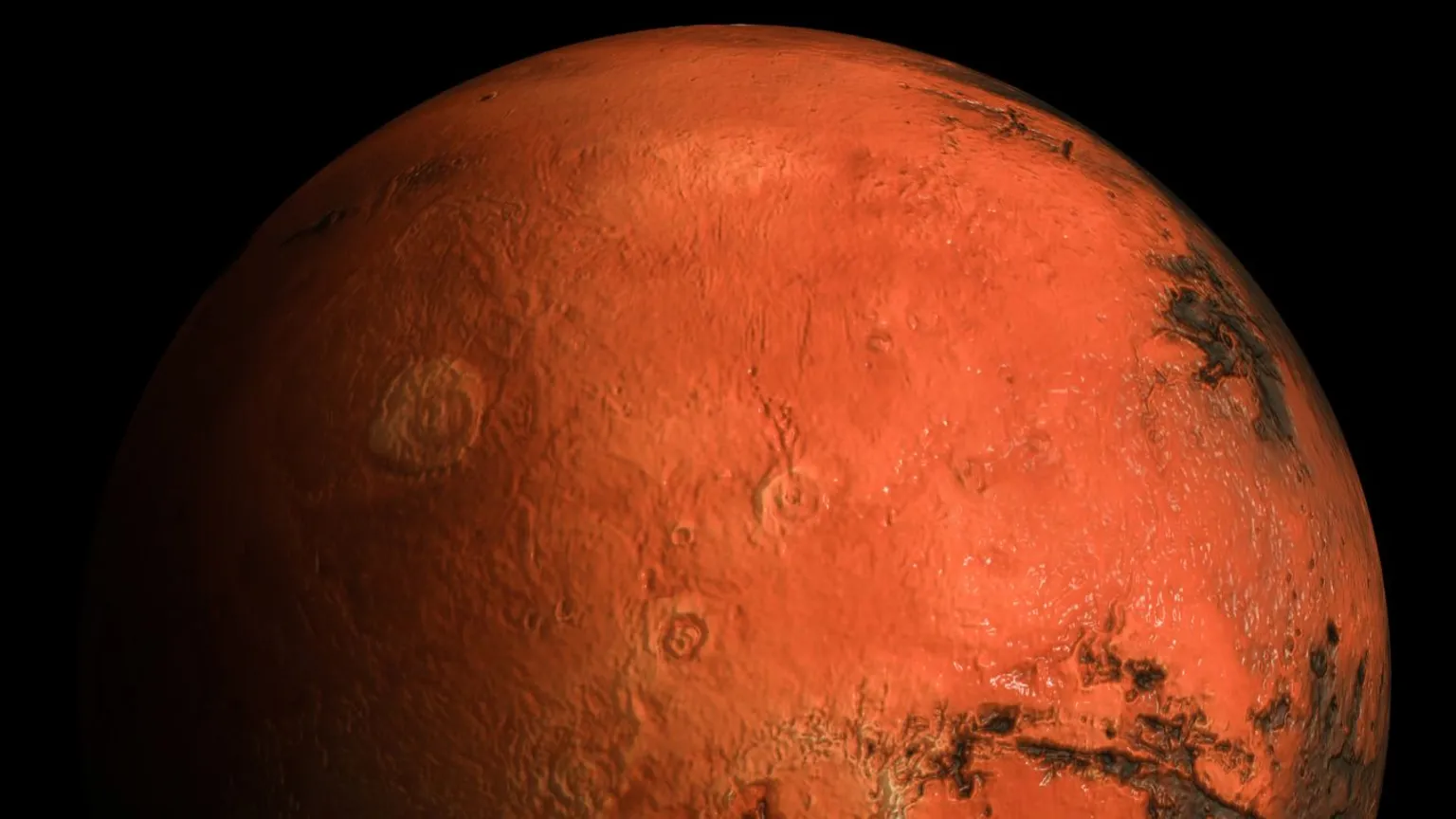
For the first time, researchers say they have captured evidence of electrical activity in Mars’ atmosphere, suggesting the planet can generate lightning.
Nasa’s Perseverance rover, which landed in the Jezero Crater in 2021, has been examining the area for signs of past life and studying the planet’s environment for over four years.
The rover’s SuperCam instrument detected short electrical bursts, which scientists have nicknamed “mini lightning,” through both sound and electromagnetic measurements.
A team of French scientists analysed 28 hours of audio data collected over two Martian years, equivalent to 1,374 days on Earth, and linked these discharges to the movement of dust across the surface.
These electrical events were most often observed during dust storms and from swirling dust devils. Dust devils are small, rotating columns of air formed when hot ground air rises quickly, and their spinning motion can create static electricity.
Dr Baptiste Chide, lead author of the study, told Reuters, "These discharges represent a major discovery, with direct implications for Martian atmospheric chemistry, climate, habitability and the future of robotic and human exploration."
The research team at the Institute for Research in Astrophysics and Planetology in France now believes that Mars can be added to the list of planets, including Earth, Jupiter, and Saturn, known to exhibit atmospheric electrical activity.
However, some experts remain cautious. Particle physicist Dr Daniel Pritchard, writing in the journal Nature, said that while the audio recordings "provide persuasive evidence of dust-induced discharges," the lack of direct visual confirmation means "some doubt will inevitably remain as to whether this really was Martian lightning."
He noted that "given the history of this field, the debate is likely to continue for some time."
The discovery complements other recent findings on Mars. Earlier this year, scientists identified rocks with unusual markings, known as leopard spots and poppy seeds, which contain minerals formed by chemical reactions possibly tied to ancient microbes.
While these features may result from natural processes, Nasa said they could be among the clearest signs yet of past life on the planet.
Although Mars is now a dry, frigid desert, evidence suggests that billions of years ago it had a denser atmosphere and liquid water, creating conditions that may have supported life. Perseverance was sent to Jezero Crater because its landscape hints at an ancient river delta, a site where water may have once flowed and sustained living organisms.































Comments
Sign in with Google to comment, reply, and like comments.
Continue with Google