African Union focuses on security, governance, and climate at 39th Summit
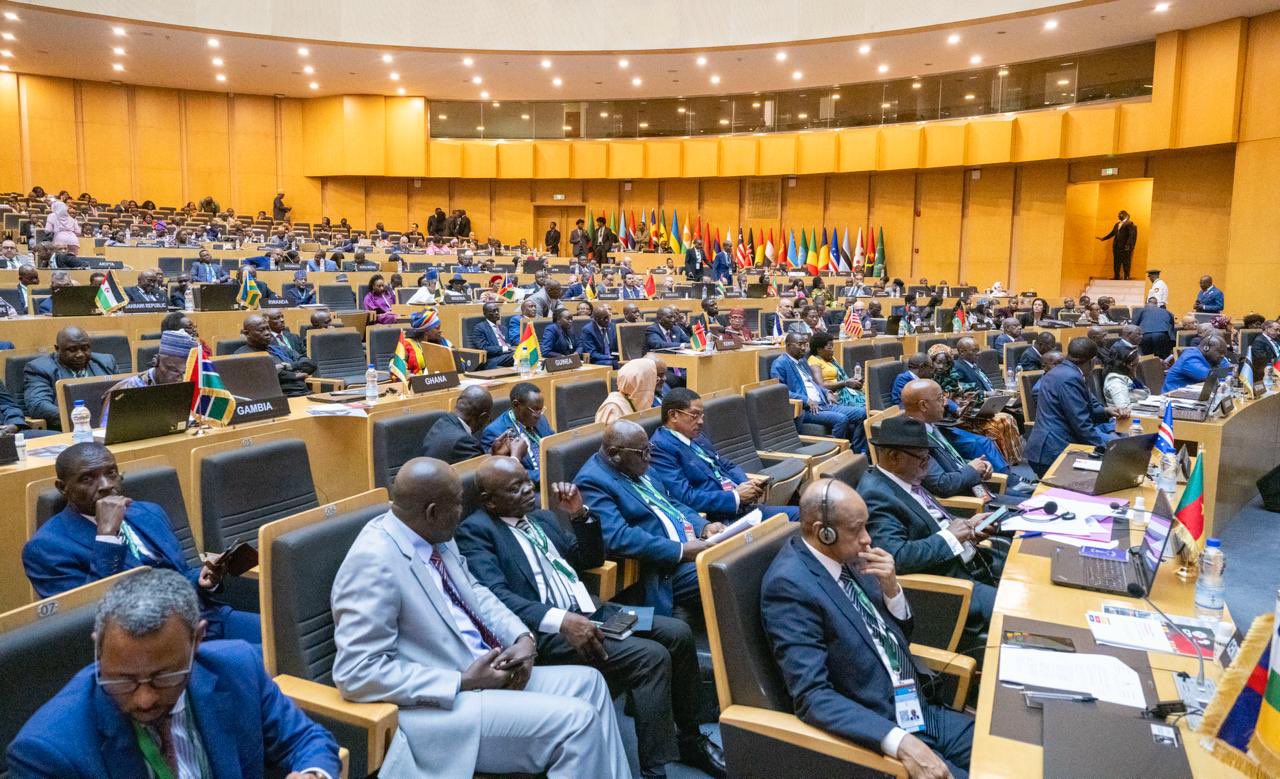
The 39th African Union summit opened amid calls for an end to violence in Palestine and across multiple African nations, highlighting the intertwined challenges of humanitarian crises, climate shocks, and political unrest.
Leaders across Africa gathered in Addis Ababa this weekend to confront rising instability on the continent and abroad, placing urgent focus on peace, governance, and the pressing water crisis.
The 39th African Union summit opened amid calls for an end to violence in Palestine and across multiple African nations, highlighting the intertwined challenges of humanitarian crises, climate shocks, and political unrest.
The chairman of the African Union Commission, Mahmoud Ali Youssouf, said the plight of Palestinians cannot be ignored. “In the Middle East, Palestine and the suffering of its people also challenge our consciences. The extermination of these people must stop,” he said during his address on Saturday.
Youssouf stressed the need for adherence to global legal norms. “International law and international humanitarian law are the basis of the international community,” he said, calling for the removal of the Israeli blockade that restricts essential goods from reaching Palestinians.
Since October 2023, Israel’s attacks on Gaza have claimed at least 72,045 lives and injured 171,686, with hostilities continuing despite declared ceasefires.
Attention also turned to Africa’s persistent conflicts. “From Sudan to the Sahel, to eastern Democratic Republic of Congo (DRC), in Somalia and elsewhere, our people continue to pay the heavy price of instability,” Youssouf said, insisting that African nations must intensify efforts toward the “silencing of the guns.”
The summit, which runs over two days, has drawn heads of state from all 55 African Union member countries. Agenda items include regional security, governance challenges, threats to democratic institutions, and the impact of climate change on water and sanitation.
United Nations Secretary-General Antonio Guterres praised the AU for championing multilateralism amid a fractured world and pushed for reform of the UN Security Council to include a permanent African seat. “This is 2026, not 1946. Whatever decisions about the African World around the table, Africa must be at the table,” he said.
Water and sanitation dominate this year’s discussions. Ethiopian Prime Minister Abiy Ahmed emphasized responsible water management as a cornerstone of development.
“Water is more than just a resource. It is a foundation of development, innovation and stability,” he said. “Here in Ethiopia, we have learned that responsible water management is central to guiding development wisely.”
The continent faces increasing tensions over water access. Disputes range from Egypt and Ethiopia over the Nile to clashes between farmers and herders in Nigeria. Other challenges include protests over service failures in Madagascar and disease outbreaks triggered by floods and droughts.
Reporting from Addis Ababa, Al Jazeera’s Haru Mutasa noted that unresolved issues from previous summits, particularly reductions in global aid, remain a pressing concern.
“There seems to be not enough money to the people who are in need,” she said, highlighting the impact of ongoing crises in Sudan and the DRC, where fighting has led to famine and mass displacement.
The situation in South Sudan has also reignited, as conflict continues to destabilize the region. On Saturday, explosions were heard near a Sudanese Armed Forces base in Dilling, South Kordofan, after drones from the Rapid Support Forces struck the area.
Africa is home to roughly 1.4 billion people, including around 400 million young people aged 15 to 35. Yet the continent is led in many countries by long-serving presidents, a factor observers say has contributed to coups and unconstitutional changes in nations such as Mali, Burkina Faso, Guinea, Niger, and Guinea-Bissau.
Experts say the summit provides a chance for African leaders to coordinate priorities with global partners and address shifting international alliances. With global attention on a potential “new world order,” the gathering also underscores Africa’s demand to play a decisive role in shaping its futur




Comments
Sign in with Google to comment, reply, and like comments.
Continue with Google