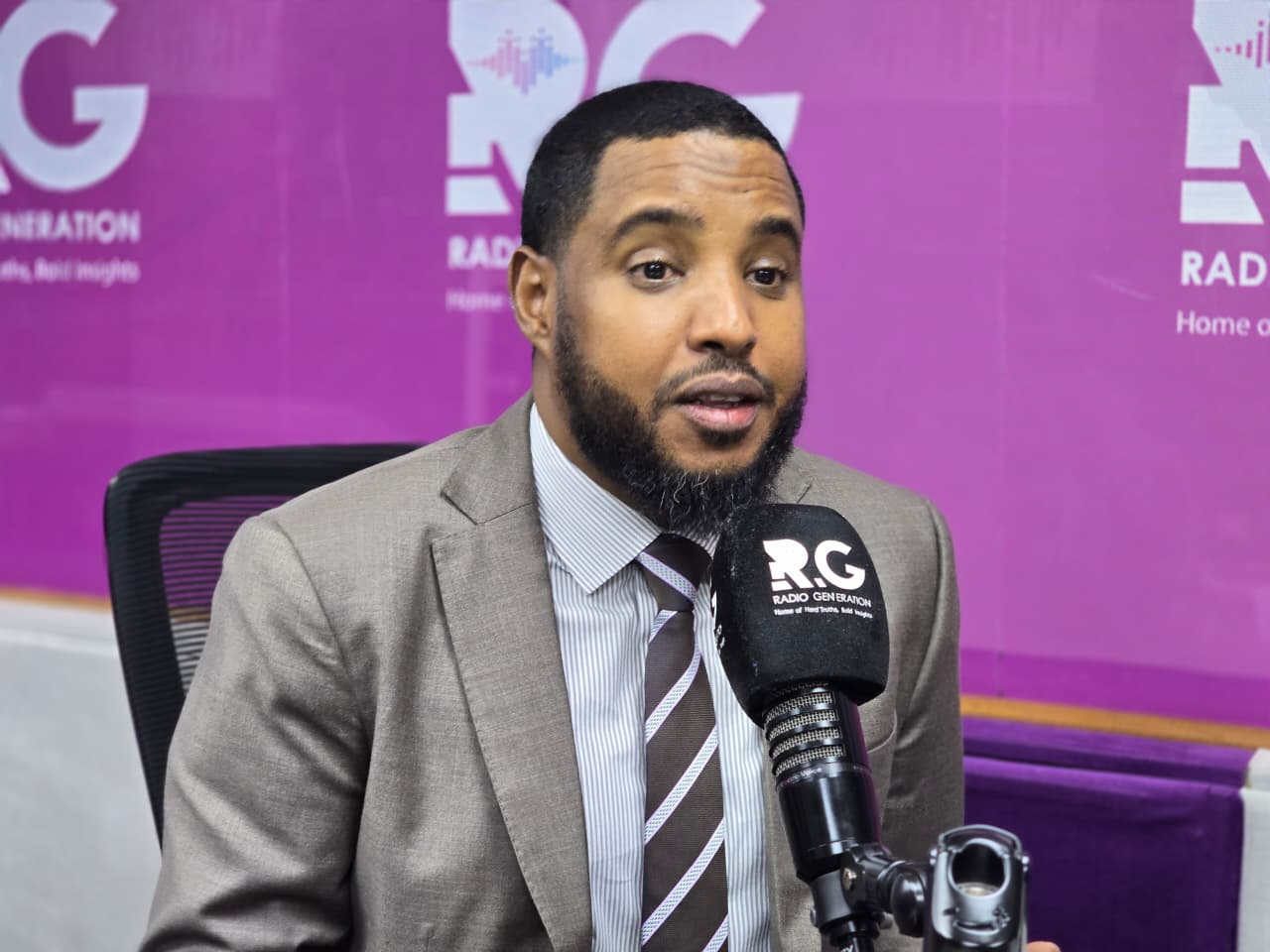
Public Policy Analyst Leonard Khafafa warns that a standoff between Kenya’s Council of Governors and Senate signals a deep accountability crisis.
Allegations of extortion, misuse of oversight powers, and a recent physical confrontation have exposed systemic governance failures, raising concerns about corruption, institutional integrity, and the erosion of public trust in Kenya’s devolved system of government.
Speaking during a Radio Generation interview on Wednesday, he described the conflict as a manifestation of deeper structural problems.
“This is clearly an arrangement and understanding that has gone wrong,” he said, pointing to allegations by governors that senators are demanding payments in exchange for favourable oversight outcomes.
The Senate is constitutionally mandated to oversee county governments and ensure accountability in the use of public resources.
However, governors have accused senators of abusing this role through extortion, prompting the Council of Governors to threaten a boycott of Senate committee proceedings.
His remarks come shortly against the backdrop of a standoff between governors and the Senate which escalated in recent months, with several county chiefs increasingly snubbing summons from the Senate County Public Accounts Committee (CPAC), citing intimidation and political harassment.
The dispute dates back to late January 2026, when the committee intensified summons requiring governors to appear and respond to Auditor-General queries on county spending.
Council of Governors, led by chair Ahmed Abdullahi, formally announced on February 9, 2026, that governors would boycott appearances, accusing senators of “harassment, intimidation and humiliation” during oversight sessions.
Governors argue that repeated summons disrupt service delivery and exceed the Senate’s oversight mandate, insisting they should only appear once per audit cycle.
Senators, led by CPAC chair and Homa Bay Senator Moses Kajwang', have rejected the claims, accusing governors of attempting to evade accountability.
Despite the boycott, some governors defied the directive. Narok County governor Patrick Ntutu and Kitui Governor Julius Malombe appeared before the committee, reaffirming divisions within county leadership.
Others failed to honour summons, prompting sanctions. Among those cited for skipping sessions include governors such as Homa Bay Governor, Gladys Wanga, Kirinyaga Governor, Anne Waiguru and Nakuru Governor, Susan Kihika, who were among 11 governors fined Sh500,000.
Earlier, governors, including Nandi Governor Stephen Sang, Siaya Governor James Orengo and Laikipia Governor Joshua Irungu, were listed among those who failed to appear before the committee. Additional cases involved Samburu Governor, Lati Lelelit, Isiolo County GovernorAbdi Guyo and Mombasa Governor Abdulswamad Nassir.
In response, the Senate has escalated the matter by threatening arrests, fines, and even suspension of county funding for non-compliance.
Some governors now risk referral to anti-corruption agencies if they fail to appear within stipulated timelines.
The standoff highlights a broader constitutional tension between national oversight and county autonomy, with both sides holding firm positions, raising concerns over accountability and service delivery across counties.
Khafafa noted that while the claims remain unproven, they raise serious questions about integrity within public institutions.
“At this point in time, none of us has tangible evidence of impropriety, but it is still up there in the air,” he said.
He argued that the allegations suggest a mutually reinforcing cycle of corruption. “It presupposes then that there is one party that is guilty and wants to pay their way out,” he stated, adding that disagreements may arise over the value of the extortion.
The analyst linked the dispute to broader concerns about the misuse of county funds. “Given what we see as the money that goes to the counties and what is delivered, money never works. People take it and move away with it,” he said.
Tensions escalated following a recent confrontation involving Samburu Governor, Jonathan Lati Lelelit, with some Senators like Edwin Sifuna, which Khafafa described as “very unfortunate.”
He criticised the physical handling of the governor by senators, saying it crossed constitutional boundaries.
“When you get hold of a sitting governor and you drag him into the precincts of Parliament, that is manhandling,” he said. “It’s not only an insult to the Office of the Governor, it’s also an insult to the people who elected him.”
According to Khafafa, the Senate has legal mechanisms to compel compliance without resorting to force.
“Senate has tools, it can issue summons that are enforceable by the police,” he explained, questioning why lawmakers would instead use physical means.
He framed the issue as a misuse of authority, distinguishing between lawful power and coercion.
“Senators do not have dunamis, they cannot, by any stretch of the imagination, lay their hands on a governor to enforce an arrest,” he said. “What we are seeing is an abuse.”
Khafafa further argued that the current crisis has brought to light long-suspected practices within oversight processes.
“If the Council of Governors had not spoken of extortion, what are you paying for?” he posed, suggesting that informal financial dealings may have influenced outcomes in the past.
He also questioned inconsistencies in how governors are treated. “What has happened is not anything that is unique. So why was he (Lati Lelelit) given the unique treatment?” he asked, referring to the recent confrontation.
For Khafafa, the unfolding dispute signals a breakdown in institutional accountability and public trust.
As the standoff continues, the crisis reaffirms growing concerns about the effectiveness of oversight mechanisms and the integrity of Kenya’s devolved governance framework.