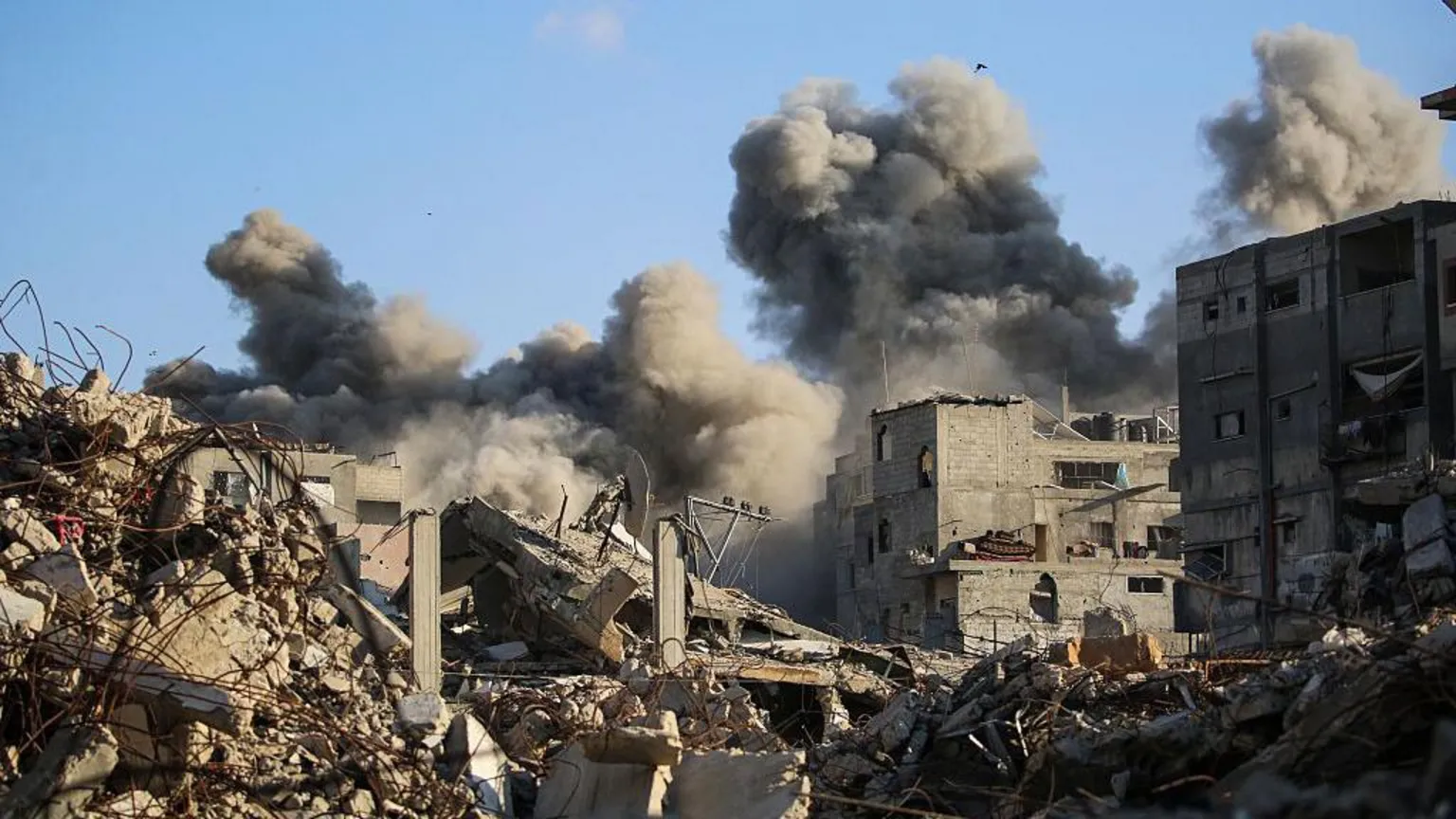
A day of deadly strikes and confusion in Gaza on Sunday ended with Israel saying it would resume enforcing a ceasefire after carrying out air raids following an attack on its forces in Rafah. Israeli officials blamed militants for firing on troops, while Hamas denied any knowledge of clashes and warned that breaches could unravel the fragile truce.
The military said its forces were targeted by gunfire and an anti‑tank missile as they worked to clear tunnel networks and other sites in southern Gaza, and that it struck back to remove the threat.
Hospital staff reported heavy casualties across the territory after a series of strikes, and residents described explosions and smoke filling the sky as ambulances raced to hit sites.
In a statement the Israel Defense Forces said it “had begun renewed enforcement of the ceasefire” and pledged to “respond firmly to any violation of it.” It did not specify if earlier steps to block aid convoys had been reversed, leaving aid groups uncertain about access for those in need.
President Trump, speaking to reporters on arrival in Washington, said the ceasefire remained in force while suggesting that some of the shooting could be the work of unruly elements inside Hamas.
He said the group had been “rambunctious and they've been doing some shooting” and suggested the actions might be by “some rebels within” Hamas, adding: "Either way it's gonna be handled properly. Toughly but properly."
Under the US‑brokered agreement that began on 10 October, fighting was to stop, Israeli forces would pull back to a yellow line in parts of Gaza, and aid flows would increase.
The deal also involved exchanges: Hamas released surviving hostages and some remains, and Israel freed hundreds of detainees and returned bodies in reciprocal moves.
The Rafah incident left two Israeli soldiers dead; officials named them as Major Yaniv Kola and Sergeant Itay Yavetz. Prime Minister Benjamin Netanyahu spoke to defence chiefs and ordered action against targets in Gaza, according to his office.
Eyewitnesses in Rafah described strikes joined by artillery, with blasts shaking neighborhoods and sending displaced people fleeing.
In Khan Younis residents reported at least a dozen air raids, calling the attacks a ring of fire that sent up towering plumes of smoke and sparked panic among those already sheltering from months of conflict.
Medics said strikes hit civilian gathering points. A doctor at al‑Aqsa Hospital said nine bodies were brought in after two separate attacks — one on a tented seaside café in al‑Zawaida and another on a building in Nuseirat.
Another doctor at Al‑Awda Hospital said four bodies arrived after a strike on a school that was serving as a shelter, and that women and children were among the dead. Local sources reported six of those killed in one hit were members of al‑Qassam Brigades, and named Yahya al‑Mabhouh, a battalion commander, among the dead.
Hamas has also accused Israel of permitting an armed gang of looters to operate with impunity in areas under Israeli control, and faces pressure from other armed groups and local militias that have fought inside Gaza during the wider war.
The al‑Qassam Brigades said it had lost contact with fighters in some areas, adding: "Contact with our remaining groups there has been cut off since the resumption of war in March of this year. Therefore, we have no connection to any events taking place in those areas, and we cannot communicate with any of our fighters there, if any of them are still alive."
The United States said it had received “credible reports” of plans by Hamas to attack Palestinians in Israeli‑held parts of the Strip — a move Washington said would breach the understanding and risk undoing gains made by diplomacy.
Hamas denied plans for such an attack, and officials on both sides continue to trade accusations even as envoys head to the region to try to prevent the truce from collapsing.
Sunday’s violence was the most intense since leaders met recently in Egypt under a banner of peace, and it underscored how fragile the calm remains.
With diplomats and mediators due in the region, pressure is rising for both sides to stick to the terms of the ceasefire and avoid actions that could drag the area back into full‑scale war.































Comments
Sign in with Google to comment, reply, and like comments.
Continue with Google