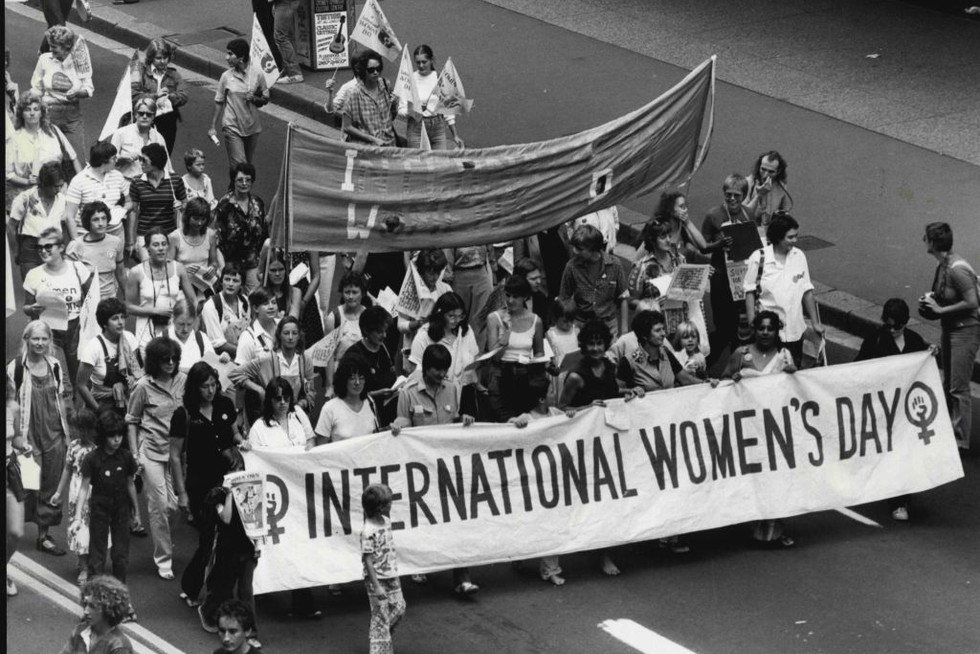
Every year for the past century March 8 has been recognised as International Women's Day.
Many governments and organisations mark the occasion by celebrating the role and rights of women across the world.
Historically, women and girls have not been treated as equal to men and boys and across the world, women still face discrimination because of their gender.
International Women's Day was first celebrated more than one hundred years ago, in 1911.
The day was inspired by the work of thousands of suffragists, who were campaigning for more rights for women, including the right to vote.
The United Nations officially recognised International Women's Day in 1977 and some countries recognise International Women's Day as a public holiday including in China, Russia and Uganda.
The struggle for women's rights began long before International Women's Day was established though.
For example, only since the suffragette movement in the early 20th Century did women get the right to vote here in the UK.
For thousands of years, women have faced discrimination in many societies across the world.
In ancient Rome, laws - created by men - ensured that women had no public voice and no role in public life.
Confucian philosophy in China suggested women held less status than men, with the 3rd century writer Fu Xuan musing in a now famous poem, "How sad it is to be a woman! Nothing on earth is held so cheap."
This inequality between genders continued until the 19th Century, when an afternoon tea sparked a revolution.
An American rights activist, Elizabeth Cady Stanton, held the first Women's Rights convention in New York in 1848.
She called for changes to be made to the laws so that women could have an equal place within society.
Elizabeth, and others like her, wanted women to have the right to vote, and to have control over their own money and property.
She finally forced changes in the law for women in America, and people took notice.
In 1869 the National Woman Suffrage Association was formed in the US, and its main aim was to make sure women had the right to vote.
Countries all around the world witnessed a rise in women's suffrage movements and in 1888 the International Women's Council was formed, to promote equality and human rights for women.
The suffrage movements in the UK were a huge source of change. These women chose to challenge the norms of society. Find out more about the amazing women who have changed the world.
Women had very few rights at all, especially once they were married.
Even Queen Victoria, the British monarch, didn't think women should have anything to do with politics. Her belief, which was shared by many people at the time, was that a woman's place was at home.
But World War One changed the way the public viewed women. While millions of men were fighting abroad, women had to take on many of the roles and responsibilities the men had left behind.
On 6 February 1918 an important law was passed that changed the UK forever.
It was called the Representation of the People Act 1918. It was an important law because it finally recognised the part women had played in the war, and gave them the right to vote for the very first time.
Before this law, women weren't allowed to vote in general elections at all.
And so began the first real steps of change and a fight for equality that continues in modern society today