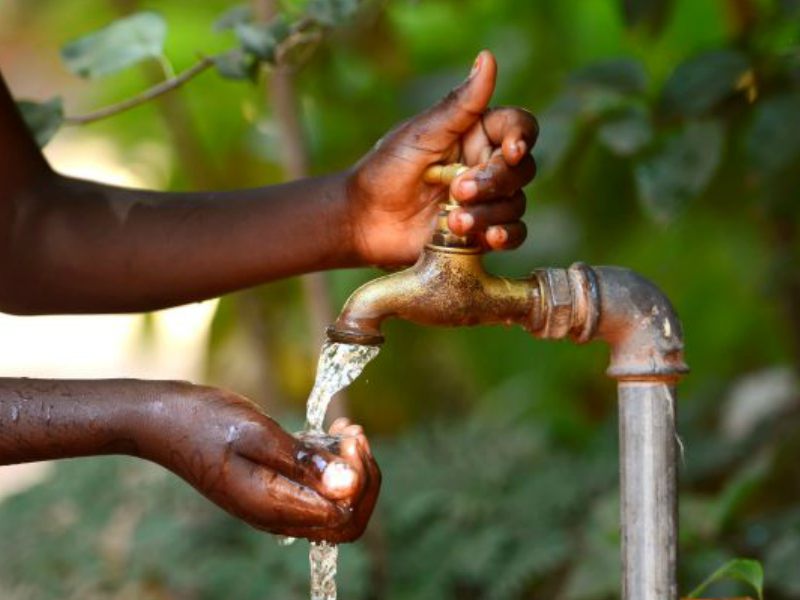
A new water pipeline project in Kwale County has transformed access for households and livestock, cutting distances and lowering costs.
Commissioned on Thursday by Kenya’s National Drought Management Authority, (NDMA), the initiative also introduces solar-powered systems and automated dispensing, improving efficiency, public health and resilience in a region frequently affected by water scarcity and prolonged dry periods.
NDMA said the Taru-Roka-Egu-Kwa Kalinga Water Pipeline Extension Project is already delivering tangible benefits to communities, reducing the burden of long-distance water collection.
According to the agency, access to water has improved markedly following the project’s completion.
“Household water trekking distances have reduced to less than 500 metres,” the authority said.
The reduction in distance is expected to ease the daily workload for residents, particularly women and children, who often bear the responsibility of fetching water.
Livestock keepers have also seen improvements, with water points now located closer to grazing areas.
“Livestock watering distances have reduced from over 5 kilometres to less than a kilometre,” the statement added.
The project has also reduced the cost of water, providing financial relief to households in the drought-prone region.
“Water tariffs have also dropped from Sh10 to below Sh5 per 20-litre container,” the authority said.
Speaking during the commissioning, NDMA Board Chairman Shallow Yahya said the project’s impact extends beyond water access to broader social and economic improvements.
“Shorter distances to water, lower costs for households, improved public health, better school attendance, and reliable access for livestock even during prolonged dry periods are evidence of enhanced resilience,” he said.
Access to reliable water sources is a long-standing challenge in parts of coastal Kenya, where communities often face seasonal shortages and prolonged dry spells.
The new pipeline extension is aimed at ensuring a steady and dependable water supply, helping communities better withstand the effects of climate variability.
Officials say the project also incorporates modern technology to enhance efficiency and sustainability.
“The project integrates climate-smart innovations, including solar-powered pumping to reduce operational costs and carbon emissions,” the authority said.
The use of solar energy is expected to lower operational expenses while supporting environmental conservation efforts.
In addition, the project features a pilot automated water dispensing system designed to improve management and accountability.
“A pilot automated water dispensing system to strengthen accountability, minimise water losses, and improve revenue collection,” the statement noted.
Such systems are increasingly being adopted in water projects to ensure transparency and long-term sustainability, particularly in areas where resources are scarce.
The improvements are expected to have a wide-ranging impact on local communities, including better health outcomes due to improved access to clean water.
Reliable water access also supports education, as children spend less time fetching water and more time in school.
For pastoralist communities, closer and more reliable water sources for livestock are critical in sustaining livelihoods, especially during dry periods when water scarcity can lead to significant losses.
The commissioning of the Taru-Roka-Egu-Kwa Kalinga Water Pipeline Extension Project marks a significant milestone in efforts to strengthen resilience in Kwale County.
The NDMA says the project demonstrates how targeted infrastructure investments, combined with innovative technology, can address long-standing challenges and improve living conditions in vulnerable regions.
As climate change continues to affect water availability across Kenya, similar initiatives are expected to play an increasingly important role in supporting communities and ensuring sustainable access to essential resources.