Mudavadi confirms 252 citizens linked to Russia war role
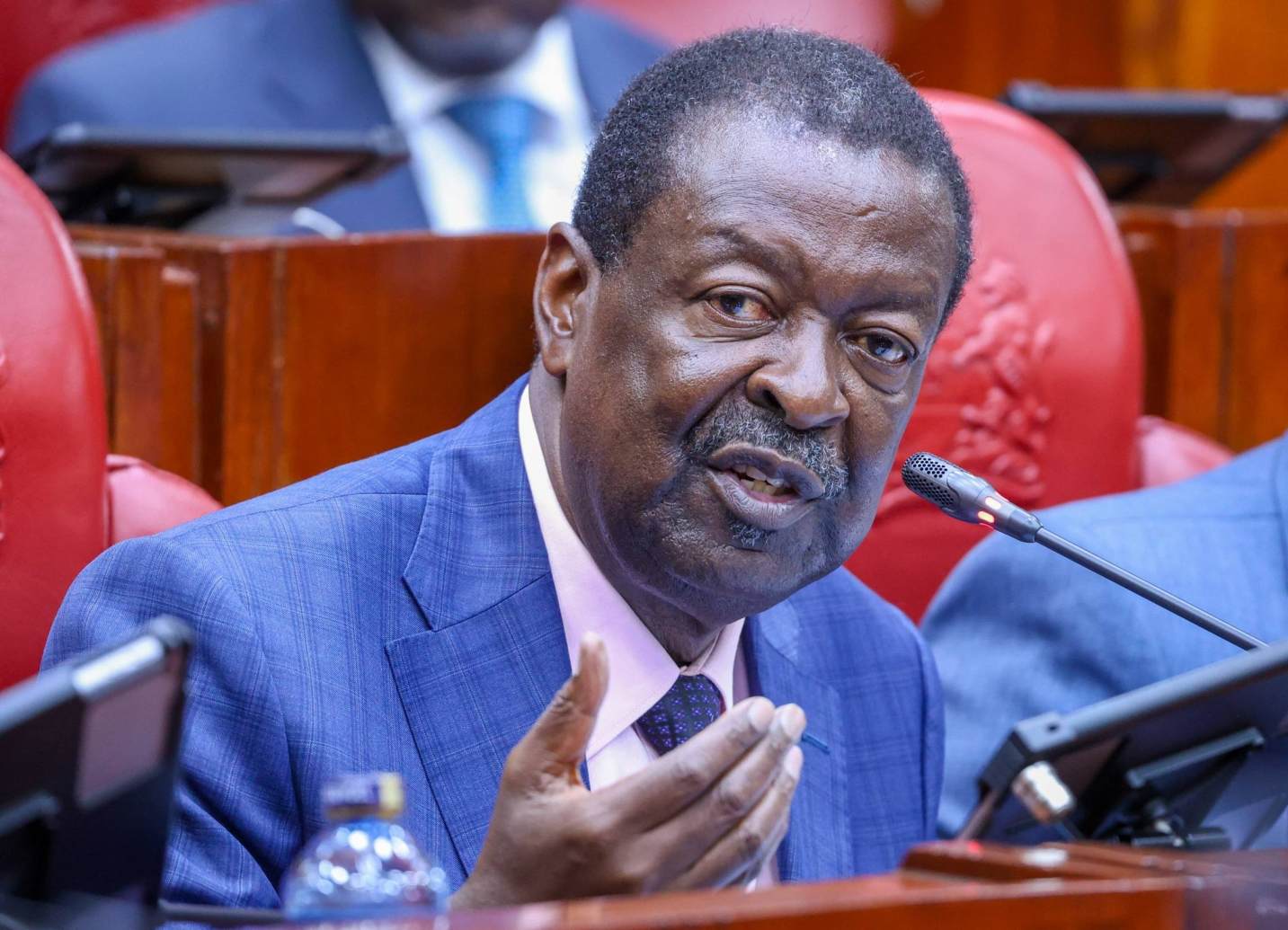
Prime CS Musalia Mudavadi told the Senate that at least 252 Kenyans are linked to Russia’s military operations, with some missing, injured or repatriated, as Kenya tightens crackdowns, diplomacy and legal safeguards.
Prime Cabinet Secretary Musalia Mudavadi has revealed the scale of Kenyan youth recruitment into Russia’s military operations, with dozens missing, injured, or repatriated.
The government says deceptive networks and voluntary enlistment both played roles, as investigations, diplomatic efforts, and legal reforms intensify to halt recruitment, support affected families, and strengthen safeguards for citizens seeking jobs abroad.
Presenting a statement to the Senate on Thursday, he disclosed that at least 16 Kenyans have been reported missing in action, while 38 are currently in Russian hospitals under restricted access.
A further 165 are believed to be actively involved in what Russia terms “Special Military Operations.”
“To date, forty-seven (47) Kenyans have been rescued, with the Kenyan Embassy in Moscow facilitating their safe repatriation home,” he said.
Two Kenyans, Evans Kibet and Macharia Willi Muniu, are being held as prisoners of war by Ukraine, while three others have been confirmed dead.
The government estimates that about 252 Kenyans may have been enlisted, although the actual number could be higher.
The statement also noted that more than 1,000 Kenyans are currently living, studying, or working in Russia.
Mudavadi said investigations have established that recruitment is being carried out by unregistered agencies and individuals operating across multiple countries.
“It has been established that the recruitment is being conducted by unregistered agencies, and individuals operating either in Kenya, Russia or third countries like Qatar and United Arab Emirates,” he said.
According to the government, the scheme primarily targets unemployed individuals and former security personnel.
Some Kenyans working in the Middle East are also said to have abandoned their jobs to join the operations.
Despite concerns about exploitation, the government acknowledged that many recruits were aware of the risks.
“Contrary to prevailing reports, majority of Kenyans enlisted with full knowledge and willingly. They signed valid contracts,” Mudavadi said.
He added that financial incentives were a major factor, including signing bonuses of up to Sh3million and monthly salaries of up to Sh350,000, alongside promises of citizenship and gratuities.
Investigations are being led by the Directorate of Criminal Investigations, supported by other state agencies.
Arrests have already been made, including individuals linked to a deregistered recruitment agency accused of trafficking and attempted enlistment.
The government said it has intensified crackdowns on rogue recruiters, shutting down more than 600 non-compliant agencies and strengthening monitoring at airports and border points.
Efforts are also underway on the diplomatic front. Mudavadi said he recently held talks with Russian Foreign Minister Sergey Lavrov, resulting in key commitments.
“There will be no more enlisting of Kenyans to the Special Military Forces of Russia Federation,” he said.
The two countries also agreed to facilitate consular access for affected Kenyans, support voluntary disengagement from military roles, and expedite compensation processes for families.
In addition, Kenya is pursuing a bilateral labour agreement with Russia to create “a safe and regular pathway for Kenyans seeking legitimate work.”
The government is also engaging Ukraine to secure the safety and repatriation of Kenyans held there, including efforts to facilitate consular visits and potential transfers.
Authorities acknowledged gaps in existing laws that may have enabled the recruitment schemes.
“There is therefore need to review the existing legislation and criminalize the act of recruiting without a license, and proscribe stiffer deterrent penalties,” Mudavadi said.
While the Counter-Trafficking in Persons Act provides severe penalties, other laws governing recruitment carry lighter sanctions, which officials say are inadequate.
To address this, Kenya is seeking to strengthen its legal framework, including proposed amendments and accession to international conventions against mercenary activities.
Support systems have also been established for affected families, including counselling services, consular assistance, and reintegration programmes for returnees.
Public awareness campaigns and a 24-hour call centre have been introduced to help Kenyans verify overseas job offers and avoid fraudulent schemes.




Comments
Sign in with Google to comment, reply, and like comments.
Continue with Google