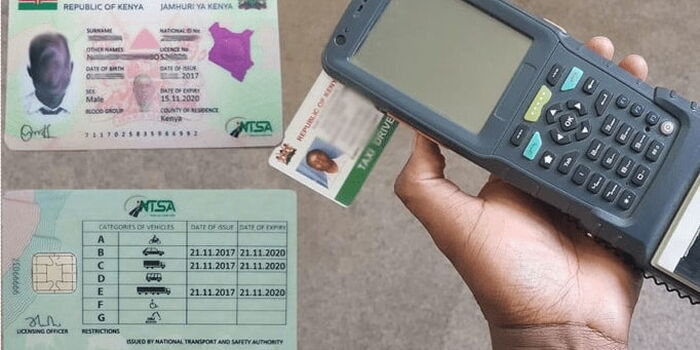
Motorists aged 60 and above will soon face stricter licence renewal rules, requiring annual applications and compulsory medical assessments. The move, announced by the National Transport and Safety Authority (NTSA), aims to enhance road safety by ensuring older drivers remain fit behind the wheel.
“Within the new curriculum for drivers, once you hit 60 years, you will be required to renew your licence every year and not every three years,” NTSA Manager for Road Safety Programmes, Samuel Musumba, said in an interview with Radio Generation on Thursday.
Musumba explained that as part of the annual renewal, drivers must submit a medical assessment report to NTSA.
“As you renew every year, we will be asking you for a medical report. It is not about knowing what you are going through, but it will be a report just like any other,” he said.
He added that the checks focus on safety, advising drivers over 60 to avoid speeding and plan journeys carefully.
Currently, all drivers in Kenya, regardless of age, renew their licences every three years without mandatory medical assessments. The proposed changes, part of NTSA’s long-term road safety measures, have not yet been presented to Parliament. Legislation and public input are required before the annual renewals take effect.
The announcement coincides with government approval of a public-private partnership for the second-generation smart driving licence. The Cabinet decision, made on Monday, shifts management of the programme from NTSA to private investors after repeated operational delays and missed targets.
Launched in 2017, the smart licence project aimed to issue five million cards. Eight years later, only 2.1 million have been distributed, with NTSA producing 342,492 licences in the year ending June 2025—falling nearly 15 per cent short of the 400,000 target.
An Auditor General report also found 572,674 unprinted cards worth Sh176 million idle in NTSA stores, while more than four million blank cards delivered under the original contract with National Bank of Kenya remain unaccounted for after the bank was acquired by Access Bank.
NTSA officials say slow uptake has been partly due to motorists preferring yearly electronic licences over three-year smart cards. However, the move to involve private investors indicates the underlying challenges extend beyond user choice.
The second-generation smart driving licence will introduce a chip-based card system with features such as an instant fines mechanism, a mobile licence wallet, and a merit and demerit points system. The cards will store personal data, traffic offense history, fines, and digital signatures, allowing real-time verification, automated fines, and continuous monitoring of driver behaviour.
Officials hope that private sector involvement will improve efficiency, speed up delivery, and address operational bottlenecks that have long hindered the smart licence programme.































Comments
Sign in with Google to comment, reply, and like comments.
Continue with Google