President William Ruto has expressed concern over the exploitation of Kenyan music artistes, particularly those in the Gengetone and Urbantone genres, citing the loss of their intellectual property through questionable contracts with foreign entities.
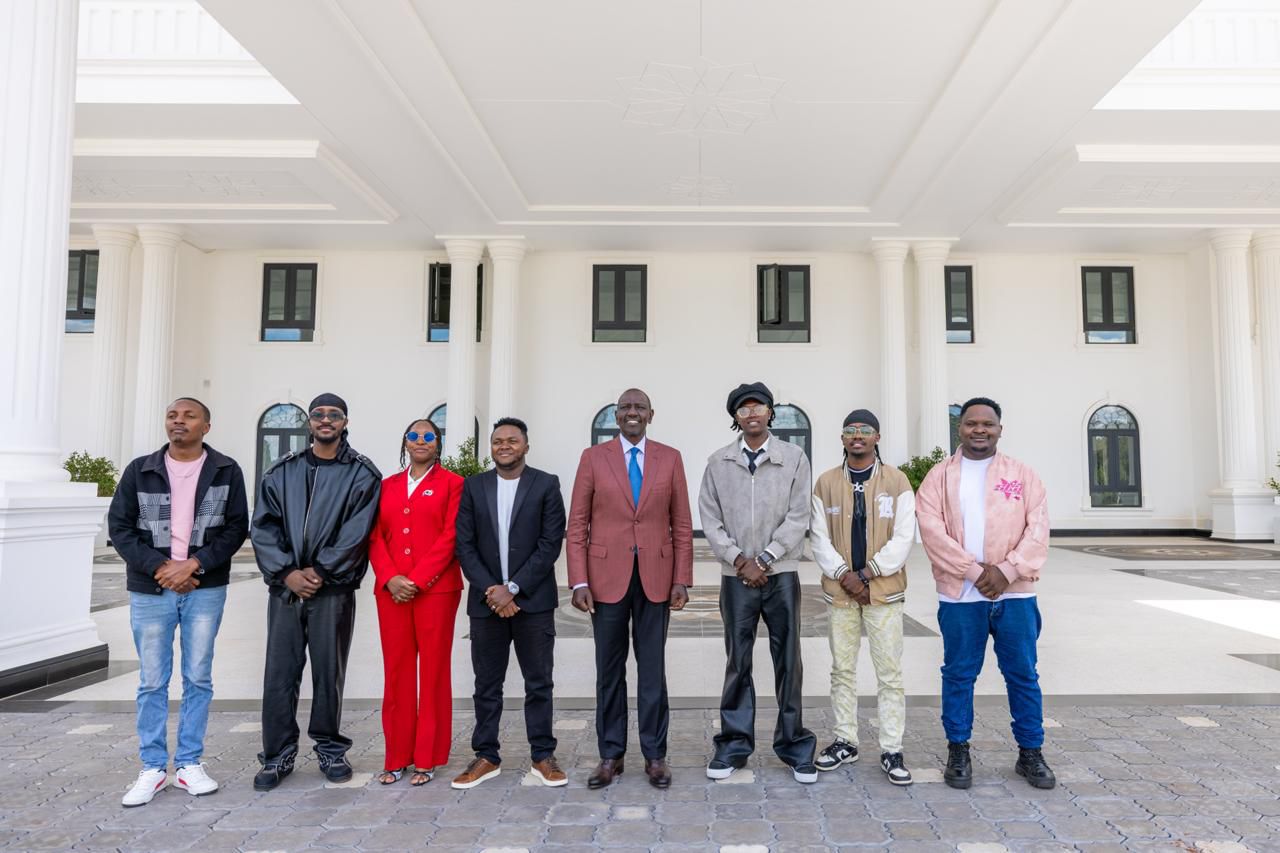
Speaking after a meeting with several young musicians, the President revealed that over 700 songs have been affected, including the 2022 hit “Sipangwingwi” by Exray, which had become a cultural touchstone for many Kenyans.
“I met Gengetone and Urbantone artistes, who shared deeply troubling experiences regarding the loss of rights to their music due to questionable contracts with foreign entities,” President Ruto said.
“It is regrettable that our young creatives continue to face exploitation despite their immense talent and contribution to our cultural identity.”
The head of state announced that the government has facilitated legal support for affected artistes to ensure they are adequately represented in court.
“We have agreed on practical measures to safeguard their interests and ensure they receive fair reward for their work,” he noted.
President Ruto also highlighted ongoing legislative efforts to strengthen protection for the creative industry.
He has requested the National Assembly, through the Majority Leader, to fast-track the Creative Economy Bill 2026 alongside critical copyright reforms.
“These measures are necessary to protect our artistes, strengthen intellectual property rights, and secure the future of Kenya’s creative economy,” he said.
The government has also established a digital portal on the e-Citizen platform to aid in the collection and distribution of royalties, making it easier for musicians to receive payments for the use of their work.
The President’s remarks come amid growing concern that young Kenyan artistes are increasingly vulnerable to exploitation by foreign production companies and distributors, who often acquire rights under contracts that are not fully understood by the musicians.
“The protection of intellectual property is not just about money; it is about preserving the cultural legacy of Kenya,” said President Ruto.
“Our artistes are ambassadors of our culture, and their work must be respected and rewarded fairly.”
During the meeting, the artistes shared stories of lost revenue, unfulfilled contractual obligations, and difficulties navigating foreign copyright systems.
Government officials present assured them of continued support in legal matters and in the creation of systems to prevent further exploitation.
President Ruto’s intervention signals a renewed government focus on protecting artistes’ rights and addressing systemic issues in the music industry.
If successfully implemented, these measures could serve as a blueprint for safeguarding intellectual property across Kenya’s wider creative sectors, including film, literature and digital media.
“This is a step toward ensuring that our creatives can innovate without fear of exploitation, and that their contributions to Kenya’s identity are properly valued,” the President added.