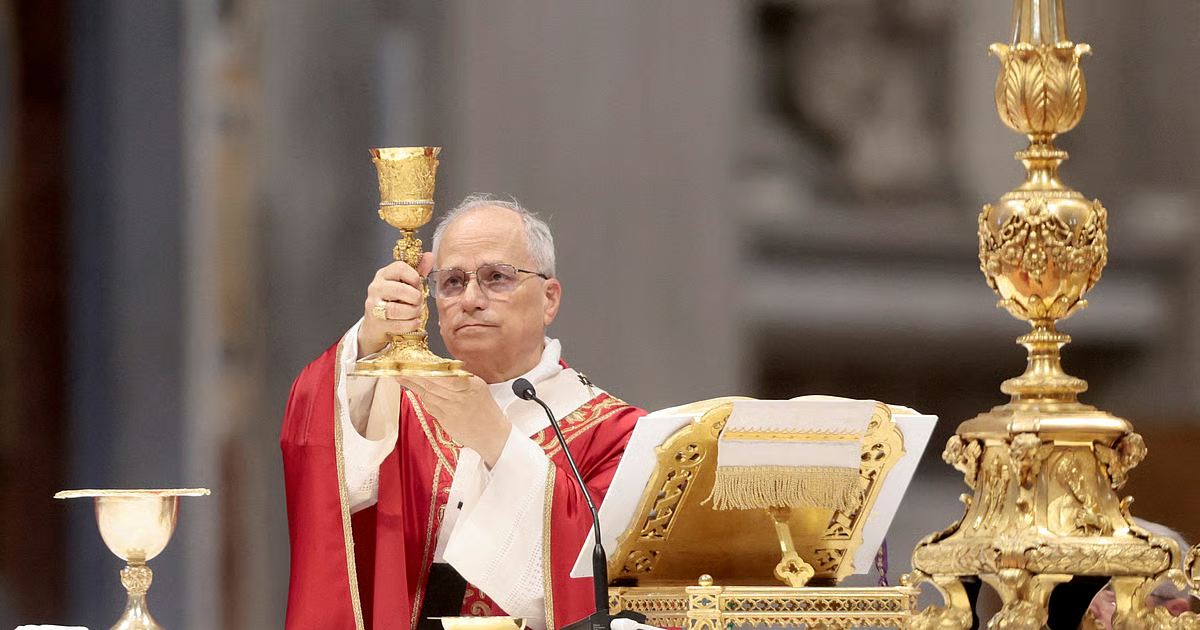
Pope Leo XIV has issued a strong appeal for calm and dialogue as the Middle East plunges deeper into violence following a deadly military strike that killed Iran’s Supreme Leader Ayatollah Ali Khamenei on Saturday, February 28, 2026.
With fears of a wider regional war rising, the Pope urged leaders to halt the cycle of attacks and return to talks before the crisis spirals beyond control.
Speaking as tensions mounted, Pope Leo warned that force and threats would only deepen pain and destruction. He stressed that lasting peace cannot be built through weapons or revenge.
“Stability and peace are not achieved through mutual threats, nor through the use of weapons, which sow destruction, suffering, and death, but only through reasonable, sincere, and responsible dialogue,” stated Pope Leo.
He called instead for "reasonable, sincere, and responsible dialogue," urging all parties to step back before the situation becomes irreversible.
"I make a heartfelt appeal to all the parties involved to assume the moral responsibility of halting the spiral of violence before it becomes an unbridgeable chasm," the Pope warned.
The Pope’s message came after a joint military assault by the United States and Israel targeted Iran’s top leadership in Tehran.
The operation, named Operation Epic Fury by Washington and Roar of the Lion by Israel, struck the Beit Rahbari compound in central Tehran on the night of February 28. The strike killed Ayatollah Khamenei and several senior officials at the scene.
The attack involved bunker-buster munitions and hit political offices, military sites, and nuclear facilities at the same time. More than 200 people were reported dead across Iran, with hundreds injured. Those killed included senior commanders of the Islamic Revolutionary Guard Corps and members of Khamenei’s family.
Iran responded with heavy force, launching hundreds of ballistic missiles and drones at Israel and United States military bases across the Gulf. Targets included sites in the United Arab Emirates, Qatar, Kuwait, and Bahrain. The exchange of fire has raised global alarm about the risk of a broader and more destructive conflict.
As the crisis deepened, Kenya’s Ministry of Foreign Affairs issued urgent safety notices to citizens living or working in Iran, Israel, Qatar, the United Arab Emirates, Bahrain, Kuwait, Saudi Arabia, Jordan, and Iraq. Kenyans in the region were advised to remain on high alert and take extra safety measures.
The government directed the immediate evacuation of Kenyan nationals from Israel and Iran. Foreign Affairs Principal Secretary Roseline Njogu instructed all citizens in affected countries to register with the nearest Kenyan embassies to allow quick contact and support in case of emergency.
After a missile landed near the Kenyan Embassy in Tel Aviv, officials reaffirmed that diplomatic missions are protected under international law. Prime Cabinet Secretary Musalia Mudavadi also called on all sides to embrace dialogue and rely on mechanisms under the United Nations Charter to settle disputes.
In his closing remarks, Pope Leo urged world leaders to restore diplomacy to the centre of international relations. He said ordinary people who only wish to live in peace must not pay the price of political and military rivalry.
The Pope also asked Christians around the world to pray not only for the Middle East, but for other conflict-hit regions including Ukraine, Gaza, and Pakistan.































Comments
Sign in with Google to comment, reply, and like comments.
Continue with Google