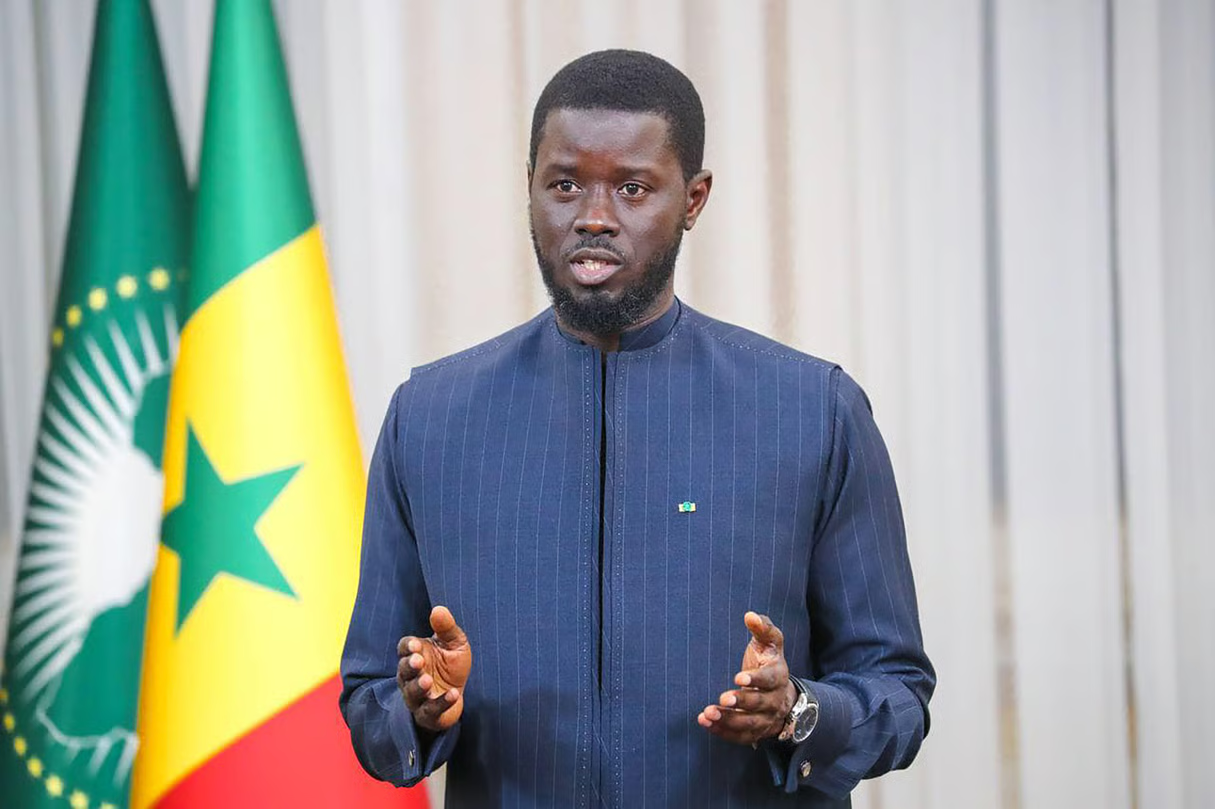
Senegal's official journal on Tuesday showed that President Bassirou Diomaye Faye had formally signed into law new legislation on same-sex relations that have proved contentious abroad despite broad political support within the majority Muslim country's parliament.
Several human rights groups had voiced concerns about the bill, including warning that it would dissuade people at risk from illnesses like HIV/AIDS from seeking help.
UN High Commissioner for Human Rights Volker Türk called the law "deeply worrying" and said it "flies in the face of the sacrosanct human rights."
Latest Stories
- Ruto brushes off critics, says insults won’t shake his grip on Mt Kenya
- Woman jailed for three years over child theft linked to love triangle dispute
- Tourism Authority, dismisses claims of tourists being held at Maasai Mara lodge
- FKF boss Hussein Mohammed suspended over alleged misappropriation of Sh42 million CHAN funds
- IEBC registers 1.87 million new voters as drive nears deadline
The new bill implements a series of new laws and alterations to existing laws and penalties, including the following:
- Acts against nature,' a term used to designate same-sex relations, will now be punishable by 5 to 10 years in prison, rather than 1 to 5 years as at present
- The same law also now carries vastly increased potential fines of 2-10 million Senegalese francs (roughly $3,500 to $17,600), compared to 100,000 to 1.5 million previously
- Prime Minister Ousmane Sonko said the maximum penalties would apply if the sex was with a minor
- The law specifies that 'acts against nature' relate to homosexuality, bisexuality, 'transsexuality,' zoophilia and necrophilia
- Despite the tougher penalties, the bill still classifies the offenses as 'misdemeanors' rather than crimes, contradicting one of Sonko's election pledges
- Those found guilty of 'promoting' or funding same-sex relationships could also face jail time of between 3 and 7 years
- The bill also includes potential jail sentences of 3 to 7 years for people found to have leveled baseless allegations of same-sex relations against somebody
Public attention to the legislative process was heightened in February, amid a string of arrests on suspicion of breaching the laws, including the arrests of two local celebrities.
This led to frequent and often salacious domestic reporting on the various allegations and searches. Some were also accused of "voluntary transmission of HIV," which can also carry a 10-year jail term.
The law championed by Prime Minister Ousmane Sonko sailed through a parliamentary reading earlier in the month. No lawmakers voted against the proposals, three abstained.
Becuase of a first-past-the-post electoral system, Sonko's left-wing populist PATSEF party dominates the Assembly, with 130 of 165 seats.
Dozens of countries in Africa have laws on the books prohibiting and punishing same-sex relations. In Uganda, Mauritania and Somalia it can carry the death penalty.
LGBTQ rights group ILGA World had appealed to President Diomaye Faye not to sign off on the law, despite the parliamentary consensus. It called on him to uphold "respect for individual liberty and the human person."
UNAIDS, meanwhile, said it was "deeply concerned" by the bill, arguing that criminalization only "causes people to turn away from health services," such as those for HIV sufferers.

Comments
Sign in with Google to comment, reply, and like comments.
Continue with Google