Senator Wambua raises alarm over AI 'cloning' of the dead, calls for regulation
In recent years, a growing trend known as “digital resurrection” has emerged, where AI is used to recreate the voices, images, or behaviour of people who have died.
The rapid expansion of artificial intelligence is now raising concern in the Senate, with lawmakers warning that the technology is advancing faster than existing laws and is beginning to influence even deeply personal aspects of human life, including memory and relationships with the deceased.
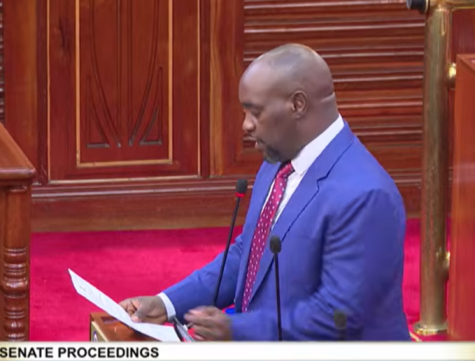
Kitui Senator Enoch Wambua has called for urgent action from the Senate to establish clear regulations guiding the use of Artificial Intelligence (AI) in both public and private spaces, warning that its reach is already extending into sensitive areas of human interaction.
Speaking at the Senate on Tuesday, Wambua said AI is no longer confined to routine digital functions but is now shaping complex human experiences, including how people relate beyond the living.
“In fact… it’s even gone to a level… that people are able now to converse with the dead using AI,” he said.
His remarks were in response to a report on proceedings of an artificial intelligence conference held between November 28 and 30, 2025, which examined how Parliament can help shape responsible use of AI.
Wambua told senators that lawmakers must take a more active role in understanding and regulating the technology, noting that it is quickly becoming central to the future.
“That’s where the future is going… that’s where the world is going,” he told the chamber, cautioning that the speed of development requires urgent oversight.
He added that AI is not limited to institutional use but is increasingly entering private life, making it necessary for Parliament to prepare broader safeguards.
“I’m saying that the Parliament must… apply ourselves on how to recognize the use of this possible AI in the chambers, outside the chambers, in our public… and private lives,” he said.
In recent years, a growing trend known as “digital resurrection” has emerged, where AI is used to recreate the voices, images, or behaviour of people who have died.
In 2024, a Spanish television programme triggered international debate after participants were allowed to hear AI-generated voices of deceased relatives speaking back to them, raising questions about grief, memory, and emotional healing.
Experts say that while such technology may provide comfort, it also risks blurring the line between reality and artificial reconstruction, potentially affecting how people process loss and remember loved ones.
Others warn that it raises difficult ethical issues around consent and ownership, especially since the deceased cannot approve the use of their likeness or voice.
There are also concerns that companies could profit from recreating personal memories tied to grief, turning deeply emotional experiences into commercial products.
Ethicists caution that while AI-generated replicas may feel realistic, they remain artificial and could interfere with natural acceptance of death, possibly prolonging emotional distress.
The wider debate reflects growing global concern over the rapid evolution of artificial intelligence, including risks such as false memories, identity manipulation, and emotional influence.
For Senator Wambua, the priority is ensuring that regulation keeps pace with innovation. He urged Parliament to act swiftly to put in place safeguards that guide how AI is used before it becomes deeply embedded in everyday life without clear rules.




Comments
Sign in with Google to comment, reply, and like comments.
Continue with Google