US launches strikes on Iran after helicopter downing near Strait of Hormuz
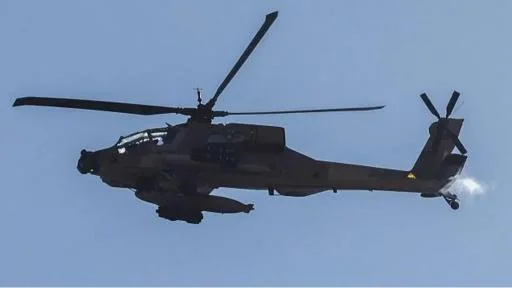
US Central Command says airstrikes on Iranian positions were launched hours after a US Apache helicopter was shot down near the Strait of Hormuz. The US says the action was proportional and reports explosions along the Persian Gulf.
Tensions escalated sharply in the Middle East after the United States carried out airstrikes on Iranian positions following claims that a US military helicopter was shot down over the Strait of Hormuz.
The strikes, confirmed by US Central Command, came within hours of the incident and were described as a direct response to what Washington called Iranian aggression, with explosions later reported along parts of the Persian Gulf coastline.
According to the US military, the operation began at 17:00 EST (22:00 BST) on Tuesday. US Central Command said the action was taken after the downing of a US Apache helicopter near the Strait of Hormuz.
The command stated, "The mission is a proportional response to unjustified Iranian aggression," adding that blasts were observed along the coastal areas of the Persian Gulf and near the strategic waterway.
The helicopter incident involved two US pilots who were later rescued using a sea drone, according to Centcom. It marked the first time the US military publicly confirmed the use of such a vessel in a rescue mission.
“There were two pilots involved, both are safe and uninjured,” Donald Trump wrote on Truth Social. “Nevertheless, the United States must, of necessity, respond to this attack.”
US officials said the aircraft was targeted using a drone launched by Iran, though they noted it remained unclear whether the strike was intentional.
Shortly after, US Central Command announced strikes inside Iran, describing them again as “a proportional response to unjustified Iranian aggression.” Reports from US news site Axios indicated the strikes focused on Iranian air defence and radar systems. Iranian state media later reported explosions along the Persian Gulf coast, including in Bandar Abbas, Qeshm, and Sirik.
In Washington, Mike Johnson said he was present when Trump made the decision to proceed with the strikes. “We lament that it became necessary,” he said, adding that “we're gonna have to take care of this business”.
In a phone interview with ABC News, Trump blamed Iran directly for the escalation. “This is a response to what they did, they did with our helicopter last night, and I believe the response should be very strong, very powerful, and that's what this one is,” he said.
On the Iranian side, Foreign Minister Abbas Araghchi issued a warning, saying Iran “will leave no attack or threat unanswered”. He added, “Despite its defeats on the battlefield, the U.S. opted to test our determination,” posting the remarks on X.
The incident has further heightened fears of a wider confrontation in the Gulf region, especially around the Strait of Hormuz, a key global oil shipping route. Both sides have signalled readiness for further action as diplomatic tensions continue to rise.
A video segment referenced in the reporting asked: “Has Donald Trump lost control of the Iran war?”




Comments
Sign in with Google to comment, reply, and like comments.
Continue with Google