Exporters, importers face new tea levy rules as government explains structure and refunds
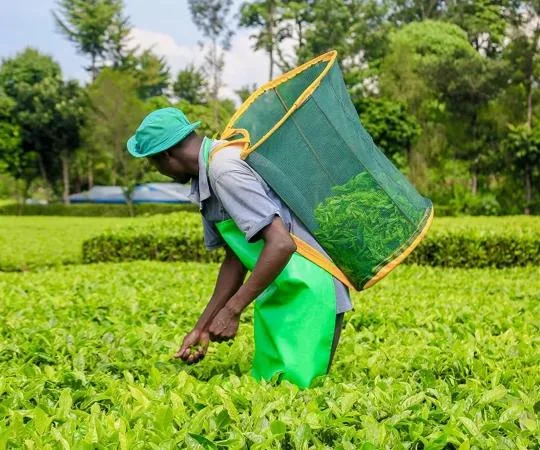
The new framework took effect through Gazette Notice No. 82 of April 1, 2026, and is expected to fund key areas such as marketing, research, infrastructure development and regulation of the tea industry.
Exporters and importers in Kenya’s tea sector are now operating under a new levy system that targets both external sales and imports of made tea, with authorities insisting the changes are meant to stabilise the industry and strengthen long-term competitiveness.
The Tea (Levy) Regulations, 2026 introduce a charge of 0.8 per cent on export transactions, calculated from either auction value or customs value for direct sales. At the same time, imported made tea will attract a full 100 per cent levy on the value of every shipment.
The new framework took effect through Gazette Notice No. 82 of April 1, 2026, and is expected to fund key areas such as marketing, research, infrastructure development and regulation of the tea industry.
The Tea Board of Kenya (TBK) said the decision is tied to efforts aimed at addressing structural problems that have affected the sector, including weak pricing, poor global marketing, declining tea quality and limited processing into higher-value products.
“The government is revitalising the tea industry in order to ensure the competitiveness of Kenya tea and enhance returns to tea farmers,” TBK said.
Officials stressed that tea growers will not directly shoulder the cost of the levy, arguing that payment will be collected at export and import level.
“This being an export and import levy, it is payable by tea exporters and importers and not by the tea grower,” the ministry stated.
Under the new sharing plan, 50 per cent of the levy will support farmer income and price stability, while 20 per cent will go to research activities. Infrastructure development will receive 15 per cent, with the remaining 15 per cent directed to regulation and oversight of the sector.
Authorities estimate the levy at about Sh2.28 per kilogramme of made tea and maintain that Kenya’s rates remain competitive when compared with other tea-producing countries.
“It is imperative to note that similar levies are charged in other tea-producing and consuming countries to promote development of their tea industries,” the ministry said, naming Sri Lanka, India, Bangladesh and Pakistan.
Beyond financing, the funds are also expected to support Kenya’s push into new and emerging markets including China, West Africa, Russia, North America and parts of Asia.
The Tea Board has also outlined plans to strengthen international distribution through warehousing hubs in strategic locations such as the Democratic Republic of Congo, the United Arab Emirates, Ghana and China.
“Enhanced market development activities and opening up of warehousing hubs in key emerging markets will strengthen Kenya tea’s global presence,” the statement said.
Part of the wider reform agenda includes shifting focus towards value addition, where more tea is exported in packaged, branded and specialty forms rather than bulk raw exports.
The government also intends to use the levy to support research into improved tea varieties and new products, while strengthening regulation to curb malpractice in the sector.
Issues flagged include green leaf handling malpractices, imitation of premium Kenyan tea brands in foreign markets and governance gaps along the value chain.
To support industry transition, exemptions have been introduced for certain categories including value-added teas packed in containers of less than 10 kilogrammes, tea extracts and aromas, and tea processed in Export Processing Zones and Special Economic Zones for local consumption.
“This move is aimed at promoting local tea value addition,” the agency said.
In response to concerns from traders over deals signed before the levy came into effect, TBK has also introduced a refund mechanism.
Exporters who purchased tea or entered into contracts between January 1 and April 30, 2026, may apply for reimbursement of levy payments already made.
“TBK will consider refunding the tea levy for amounts paid by tea buyers and exporters in respect of teas purchased between January 1, 2026 and April 30, 2026,” the board said in a circular issued on May 4.
Applicants will be required to provide auction records, proof of payment and documentation showing existing contractual obligations with overseas buyers.
“This is meant to address transitional challenges and ensure that traders do not incur losses arising from contractual commitments entered into prior to the commencement of the tea levy,” the statement added.



Comments
Sign in with Google to comment, reply, and like comments.
Continue with Google