
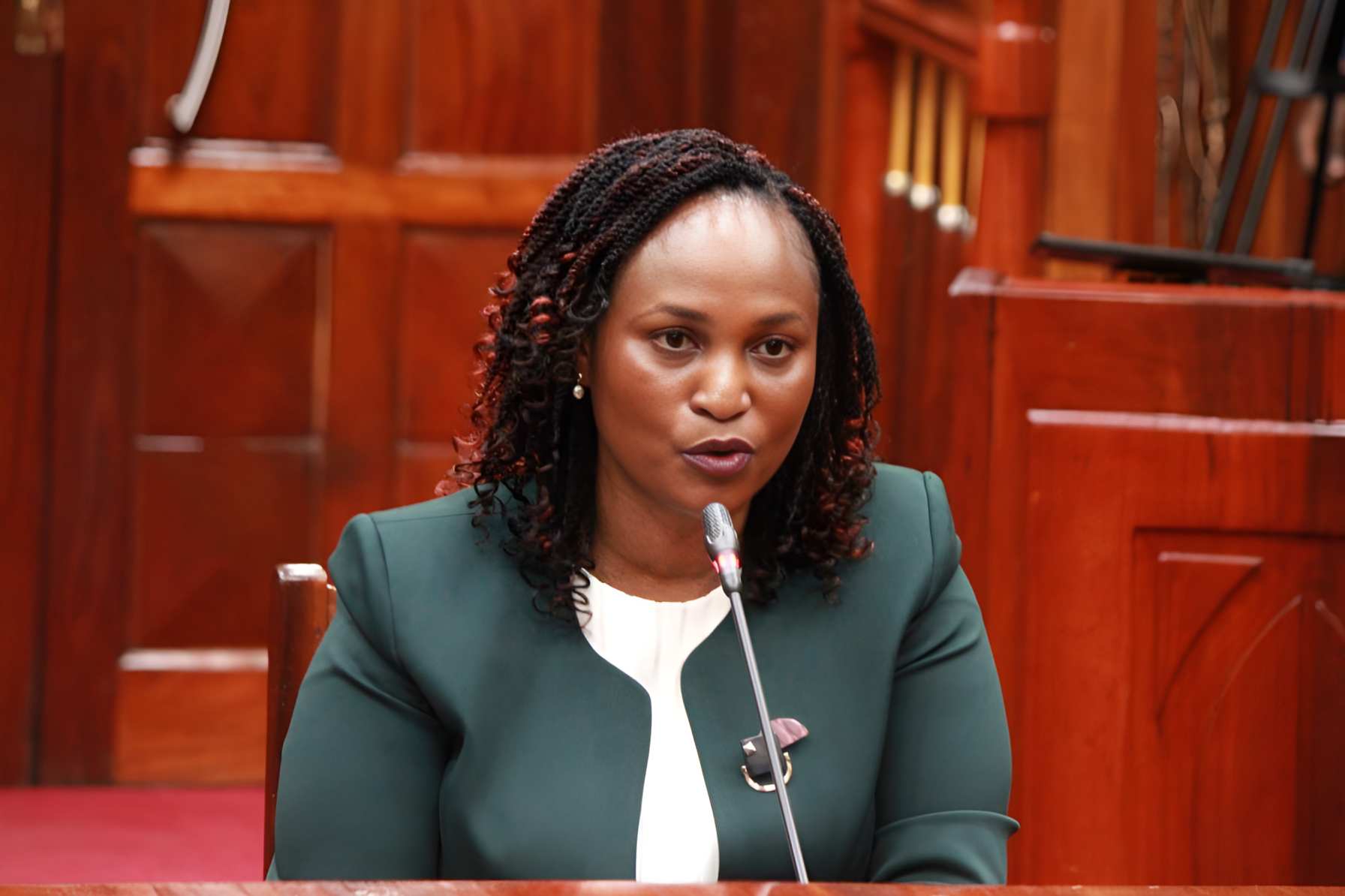
Political parties will be required to take the two-thirds gender principle into account when preparing candidate lists for the 2027 General Election, IEBC Commissioner Ann Nderitu has said, reviving one of Kenya’s longest-running constitutional debates on women’s representation.
Nderitu said the Independent Electoral and Boundaries Commission (IEBC) would implement the requirement in line with legal guidance that shaped the 2022 election, putting political parties at the centre of efforts to improve gender balance on the ballot.
“In the last general election, we were guided by the court that the list of candidates submitted by a political party must meet the two-thirds of either gender, the gender rule. This time also, we expect to implement that,” Nderitu said during an interview on Citizen TV on Sunday night.
The principle is contained in Article 27(8) of the Constitution, which requires the State to take legislative and other measures to ensure that no more than two-thirds of members of elective or appointive bodies are of the same gender.
Article 81(b) separately provides that no more than two-thirds of members of elective public bodies should be of the same gender.
The commissioner explained that amendments had been forwarded to Parliament to strengthen implementation of the requirement and make the provision clearer ahead of the 2027 polls.
She also urged political parties to go beyond simply meeting the legal threshold and deliberately increase the number of women they nominate.
“We cannot have an election where a whole range of half of the population is grossly under-represented,” she said.
The figures from the 2022 election show the scale of the challenge.
Women won 29 of the 290 constituency-based National Assembly seats, representing 10 percent of those positions.
Seven women were elected governors, up from three in 2017, while only three women won the 47 directly elected Senate seats.
After nominated positions were included, the National Assembly had 82 women among 349 members, or about 23.5 per cent. The Senate had 21 women among 67 members, representing about 31 per cent. Combined, women accounted for 103 of Parliament’s 416 members, leaving the legislature below the constitutional two-thirds gender threshold.
The gap was also evident at county level. In 2022, 115 women were directly elected as Members of County Assembly out of 1,450 elective MCA seats, while women occupied seven of the 47 gubernatorial positions.
The IEBC has previously demonstrated that it can demand changes to party lists. In 2022, the commission rejected nomination lists from parties that failed to meet the two-thirds gender principle and gave them deadlines to submit revised lists. By May 12, 2022, 75 of 77 National Assembly party lists and 68 of 69 Senate lists had complied, according to IEBC data.
However, compliance at the nomination stage did not translate into a Parliament that met the constitutional threshold after the election.
The Court of Appeal has held that the gender principle applies to the composition of elective bodies, including the National Assembly and Senate, and noted that relying solely on voters to produce the required gender balance had failed historically.
For Nderitu, the 2027 election gives political parties an opportunity to address the persistent gender imbalance in political representation by ensuring their candidate lists comply with the two-thirds gender principle.
The IEBC says parties will need to adjust their nomination processes before submitting parliamentary candidate lists to prevent more than two-thirds of candidates from being of the same gender.
The effectiveness of the requirement will ultimately depend on how seriously parties implement it during nominations and whether greater numbers of women are given genuine opportunities to contest competitive elective seats.