
The Africa Centres for Disease Control and Prevention (Africa CDC) has reaffirmed its support for Kenya’s Ebola response after four additional cases of the Bundibugyo virus disease were confirmed, raising the country’s total to seven, including one death.
The latest infections involve three healthcare workers and one family member who were already under quarantine following exposure to the initial case, highlighting the importance of contact tracing and surveillance in containing the outbreak.
In a statement issued in Addis Ababa, Ethiopia, on October 17, 2026, Africa CDC said all four patients were receiving supportive care at a designated treatment facility.
The continental health agency maintained that the detection of the infections among quarantined individuals demonstrated the importance of identifying exposed people, monitoring their health, and isolating suspected cases before further transmission occurs.
“According to the Ministry of Health, all four new cases were detected among individuals already under quarantine following exposure to the initial case,” the agency said.
The new cases bring Kenya’s confirmed total to seven, with health authorities continuing to monitor exposed individuals and strengthen containment measures.
Kenya’s contact-tracing operation has identified 130 people who may have been exposed to the virus, with 128 traced and placed under quarantine, representing 98.5 per cent of the identified contacts.
Efforts to locate the remaining two contacts were ongoing as health officials continued surveillance and monitoring to establish whether additional infections had occurred.
According to Africa CDC, the Ministry of Health has reported no evidence of community transmission at this stage, although authorities remain vigilant as investigations continue.
The agency commended the Kenyan government, the Ministry of Health and national public health institutions for their leadership and response efforts.
The international body was working with the government and other partners to strengthen disease surveillance, technical coordination, risk communication and community engagement.
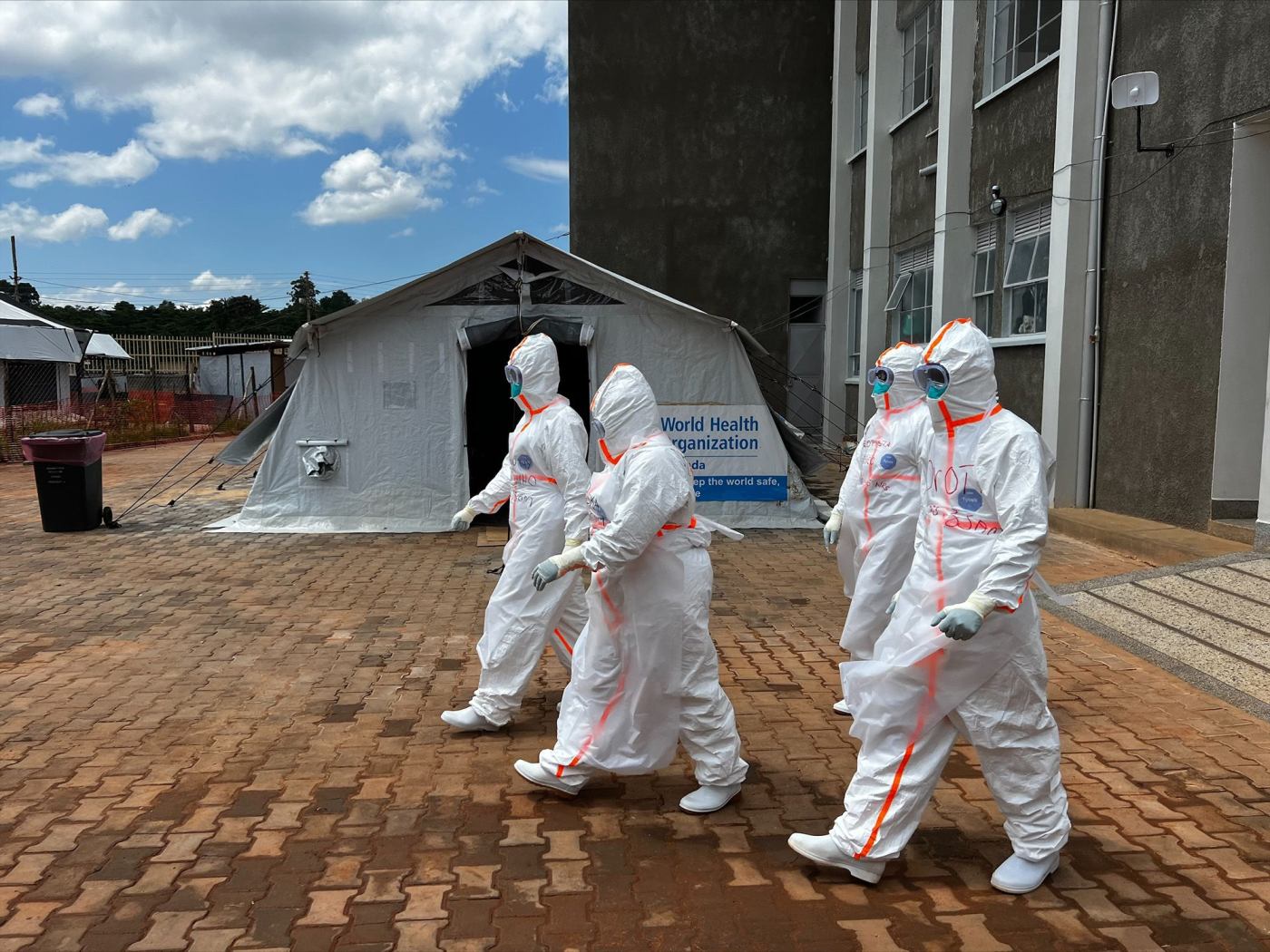
The confirmation of infections among healthcare workers has also raised concerns about the safety of frontline personnel responding to the outbreak.
Africa CDC emphasised the need for adequate protective equipment, staff training and strict infection prevention and control measures in healthcare facilities to reduce the risk of transmission among medical personnel.
The developments have renewed attention on regional preparedness as Ebola outbreaks in the Democratic Republic of the Congo and other parts of the region reinforce the risks posed by cross-border movement and the need for coordinated public health responses.
Africa CDC is engaging member states and partners to strengthen border surveillance, information sharing, early detection and coordinated action to limit the spread of infectious diseases.
The agency urged communities to remain vigilant, follow official health guidance and promptly report symptoms that could indicate an infection.
Ebola virus disease is a severe and often fatal illness transmitted through direct contact with the blood or other bodily fluids of an infected person, or with contaminated materials. Transmission can also occur through contact with the bodies of people who have died from the disease.
Symptoms may include fever, fatigue, muscle pain, headache and sore throat, followed by vomiting, diarrhoea, rash and, in severe cases, internal or external bleeding.
Because early symptoms can resemble those of other illnesses, suspected cases require prompt medical assessment and appropriate infection-control precautions.
Early identification, isolation, supportive treatment and effective contact tracing remain central to containing outbreaks. Healthcare workers and caregivers face particular risks when appropriate protective measures are not consistently applied.
Africa CDC maintained that sustained vigilance, public trust and cooperation between authorities and communities would be essential to controlling the outbreak.
The agency reaffirmed its commitment to supporting Kenya’s response and working with other countries to strengthen preparedness and protect public health.
“Africa CDC stands firmly alongside the Government and people of Kenya, healthcare workers and all those affected by this outbreak,” the agency said, calling for coordinated action to protect lives.
Members of the public were advised to seek information through official government communication channels and contact the Ministry of Health using its toll-free line, 719, for guidance.
Authorities continue to monitor the situation as contact tracing, surveillance and other containment measures remain underway.