
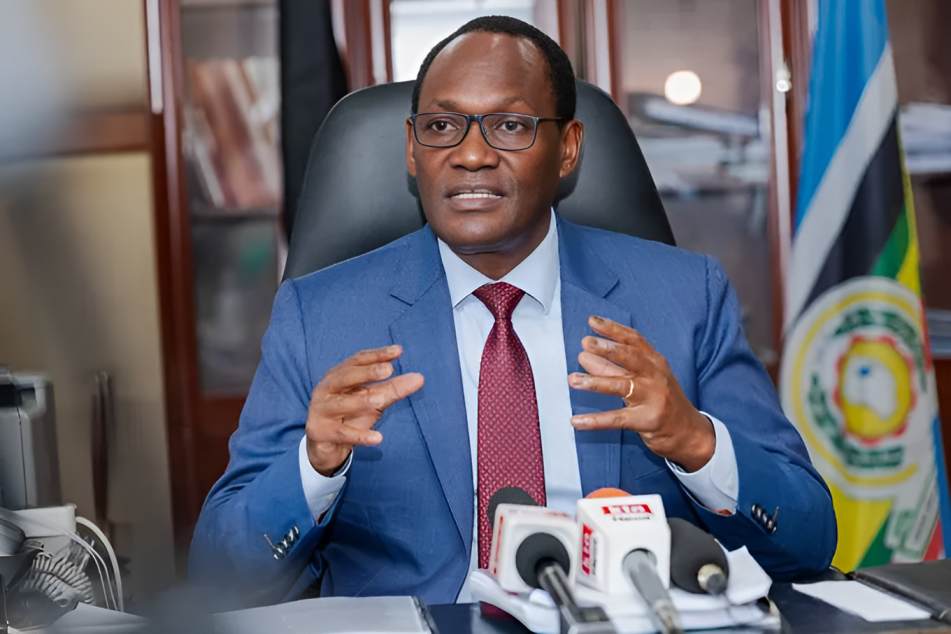
The National Assembly Committee on Finance and National Planning has pressed the National Treasury to explain how it intends to settle Sh475 billion in pending bills, as rising public debt and increased domestic borrowing raise concerns over the government’s fiscal position.
The questions emerged during a review of the Treasury’s 2025/26 budget implementation, where Principal Secretary Chris Kiptoo reported that the department had absorbed 93.3 per cent of its approved budget, spending Sh118.64 billion out of Sh127.14 billion by June 30, 2026.
The committee, chaired by Kuria Kimani, is conducting a four-day engagement with government agencies to assess budget implementation, expenditure performance and the delivery of public programmes.
While the Treasury reported progress in budget absorption and revenue mobilisation, lawmakers focused on outstanding payments to suppliers, the growing debt burden and the need to improve the use of public resources.
“We have pending bills amounting to 475bn. What is the fate of those businesses that supplied goods and services to the government and when are they going to be paid?” Kimani asked.
Butula lawmaker Joseph Oyula questioned the government’s increasing reliance on domestic borrowing, warning that the trend could affect the availability of credit to businesses.
“Domestic financing is rising every year. I thought we should be working to bring this figure down. I understand that it is better to borrow externally, especially if it is concessional. Something should be done to settle these pending bills,” Oyula stated.
Kiptoo told the committee that the government had adopted an accrual accounting system to help prevent the accumulation of new pending bills. He added that the Treasury had instructed government entities to treat pending bills as a first charge on their budgets.
The PS said Sh255 billion in pending bills had been recommended for settlement following verification. Of that amount, Sh80 billion had already been settled through securitisation, with the remaining payments expected to be cleared by the end of the year.
County government obligations also came under scrutiny, with Kesses lawmaker Julius Rutto seeking details on the outstanding bills despite counties continuing to receive government disbursements.
“What is the status of pending Bills in County Governments so that we know what is the status of our pending bill as a country. After all, this is an obligation that we have to meet. If counties are still receiving disbursements on time, why not settle their pending bills?” Rutto asked.
Kiptoo disclosed that counties had accumulated Sh173 billion in pending bills, with Nairobi County accounting for 50 per cent of the total.
The committee’s scrutiny comes against the backdrop of a growing national debt burden. Kiptoo reported that total public and publicly guaranteed debt had risen to Sh13.01 trillion by June 2026, up from Sh11.81 trillion a year earlier.
"Consequently, external debt service obligations required substantial outflows amounting to Sh. 716.1 billion, split between Sh. 504.3 billion in principal repayments and Sh. 211.8 billion in interest payments", he added.
The Treasury reported national government revenue, including Appropriations-in-Aid, of Sh3,198.8 billion against a target of Sh3,259 billion. Ordinary revenue collections stood at Sh2,588.4 billion.
Kiptoo also reported that Kenya’s real gross domestic product growth improved to 5.3 per cent in the first quarter of 2026, compared with 4.9 per cent in the corresponding period in 2025.
However, MPs raised further questions over the 65 per cent absorption rate for subscriptions to international organisations, with Chesumei lawmaker Paul Biego calling for a review of the allocations and recurring under-spending.
The committee also sought assurances that the Treasury had measures to protect economic growth ahead of the 2027 general election.
Kiptoo attributed election-year slowdowns to reduced economic activity and urged Kenyans to maintain peace and support free and fair elections.