
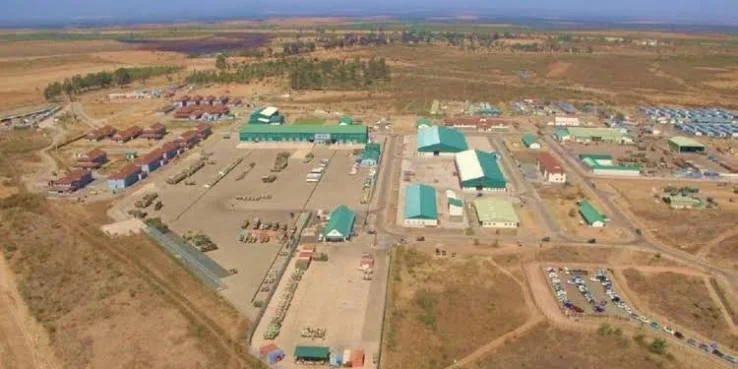
The government must disclose the details behind its planned US-backed Ebola quarantine facility at Laikipia Air Base before proceeding with the project, the High Court has ruled, finding that residents were excluded from key decisions affecting their health and safety.
In a judgment delivered on Thursday, November 26, 2026, Justice Patricia Mande found that the government failed to meet constitutional requirements on public participation and access to information when planning the facility. She directed the Ministry of Health to publish all relevant project documents within 45 days and provide copies to the petitioners and the court.
The ruling also bars the ministry from carrying out further construction or putting the facility into operation until the court is satisfied that the disclosure orders have been fulfilled.
"An order of prohibition is hereby issued barring the second respondent (Ministry of Health) from undertaking further works or operationalising the facility at Laikipia until the terms above are certified by this court to have been satisfactorily complied with," she ruled.
Justice Mande said people living around the air base had a right to understand why the facility was being established, how it would function and what measures would be used to protect them from possible health and safety risks.
She rejected the suggestion that the urgency of dealing with public health emergencies could justify bypassing constitutional duties, maintaining that government actions with far-reaching public consequences must be subjected to scrutiny.
"Emergencies may demand urgency, but they do not suspend constitutional obligations," she observed.
"It would be wholly inconsistent with the constitutional architecture to suggest that actions of significant public consequence may be undertaken in secrecy and shielded from public scrutiny merely because they are undertaken in the name of an emergency," Justice Mande stated.
The judge noted that while the government had acknowledged plans to set up the facility at Laikipia Air Base, it had not demonstrated that the county government or the surrounding community had received adequate information about the project.
She was particularly concerned that the authorities had not revealed the terms of any agreement, memorandum, arrangement or negotiations entered into with the US government regarding the proposed centre.
The missing information also covered public health, environmental, biosafety and security assessments, regulatory approvals and procedures for admitting, handling, isolating and treating people exposed to Ebola.
"Constitutional accountability is not satisfied by asking citizens to trust that all is well," the judge said.
She explained that residents needed reliable information, supported by documented assessments and operational guidelines, to establish whether their concerns had been addressed and adequate safeguards put in place before the project began.
Justice Mande likened the situation to residents standing outside a sealed wooden window, aware that important decisions were being made on the other side but unable to see or understand what was happening.
She said the community had been denied a genuine opportunity to question the plans, obtain explanations or participate in decisions affecting their lives.
"The Constitution does not contemplate governance conducted behind closed doors, particularly where the matter concerns public health, safety, and the welfare of a local community," she stated.
The judge, however, clarified that the case was not intended to challenge Kenya's partnership with the United States or the Health Ministry's mandate to respond to public health threats, including Ebola outbreaks.
Instead, the court was examining whether the government had followed the law and constitutional procedures in developing the facility.
The petitioners, led by Katiba Institute, had argued that the proposed project placed several constitutional rights at risk, including the right to life, healthcare, access to information and fair administrative action.
The court ultimately declared that Articles 10 and 35(3) had been violated, directing the government to disclose the outstanding information and suspending further construction and operations until compliance is confirmed.