
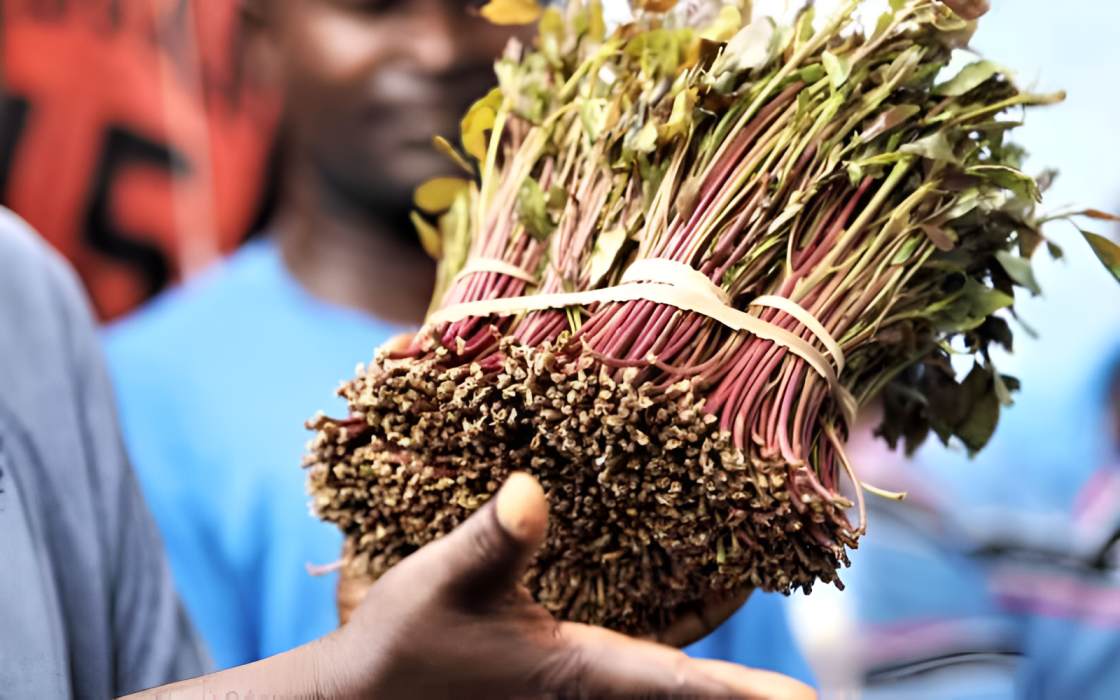
Kenya is losing its hold on the lucrative Somali miraa market, with fresh figures showing Ethiopian suppliers are steadily taking over the country's biggest export destination and pushing down Kenya's earnings.
The latest decline has cost the sector nearly Sh470 million in just three months, raising fresh concerns over the risks of relying almost entirely on a single export market.
Data released by the Agriculture and Food Authority (AFA) shows Kenya exported 692,000 kilogrammes of miraa between January and March, compared to 795,668 kilogrammes during the same period last year. The drop in export volumes reduced earnings to Sh3.09 billion from Sh3.56 billion, representing a loss of about Sh470 million.
The authority says the decline reflects growing competition from Ethiopian exporters, who continue to strengthen their presence in Somalia by taking advantage of their closer location and easier access to the market.
"Kenya’s miraa is consumed locally and exported, with Somalia serving as the primary destination and a key source of foreign exchange. However, Kenyan miraa exports to Somalia face growing competition from Ethiopian imports, largely due to Ethiopia’s closer geographical proximity to the Somali market," AFA said.
The regulator further stated, "During the quarter under review, Kenya exported a total of 692,000 kg of miraa, valued at Sh3.09 billion. This was a drop in volume and value compared to the same quarter in 2025, attributed to competitive pressures in the Somali market, underscoring the need for market diversification and improved trade logistics."
The latest figures continue a downward trend that started after Somalia granted Ethiopian exporters exclusive access to its miraa market for 10 days every month in 2023. The decision sparked protests from Kenyan farmers, who argued that the arrangement denied them a level playing field by guaranteeing Ethiopian traders a fixed trading window.
Ethiopia defended the move, saying Kenyan miraa had controlled the Somali market for years and its farmers required support to build their share of the business. Its geographical advantage has also made competition tougher, allowing exporters to deliver fresher miraa within a shorter time and at lower transport costs. Since the crop is highly perishable, faster delivery gives traders an edge in maintaining quality.
Kenya resumed miraa exports to Somalia in 2022 after President Hassan Sheikh Mohamud lifted a two-year import ban that had followed a diplomatic dispute between the two countries. The reopening brought renewed hope to growers after Somalia restored daily import quotas from 19 tonnes before later increasing them to 50 tonnes.
Although the market initially recovered, Kenya's gains have steadily faded as Ethiopian exports expanded under the favourable trading arrangement.
Somalia remains Kenya's main export destination for miraa, receiving almost all of the country's official overseas shipments. This heavy dependence has left growers and exporters increasingly exposed to policy changes and stronger competition in a single market.
AFA says the future of the sector will depend on reducing that dependence through market expansion and improvements in the movement and handling of the crop.
"To sustain competitiveness, stakeholders are advised to diversify export markets, improve post-harvest handling, enhance trade logistics, and pursue bilateral trade agreements to reduce overreliance on Somalia and stabilize export volumes," the agency said.
Kenya has already stepped up efforts to secure alternative export destinations across the Horn of Africa and the Middle East. Last year, exporters entered the Djibouti market following successful trade negotiations between the two countries.
Despite legal restrictions in some international markets, miraa remains one of Kenya's leading cash crops, supporting thousands of farmers, transporters, traders and exporters, especially in Meru, Embu and Tharaka Nithi counties.
The crop is grown on 55,281 acres across the country, with Meru and Embu accounting for 88.4 per cent of the total acreage. Kirinyaga, Tharaka Nithi and Marsabit are also among the leading miraa-producing counties.