
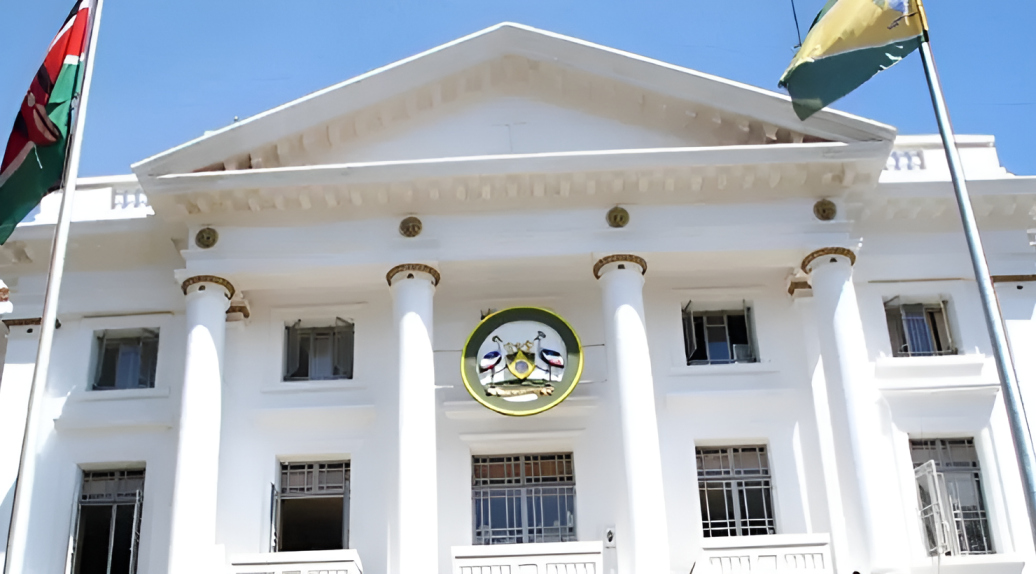
Nairobi County has lost access to Sh5.7 billion in World Bank-backed grants after falling short of the reform targets required to unlock the funding, dealing a blow to its efforts to finance development projects and improve service delivery.
The county was excluded from the latest disbursement under the Second Kenya Devolution Support Programme (KSDP II), with documents from the State Department for Devolution showing it failed to meet several conditions tied to the funding.
Among the areas where Nairobi fell short were clearing pending bills, increasing its own-source revenue collection and improving payroll management.
KSDP II is a four-year Sh25.9 billion ($200 million) programme supported by the World Bank and implemented by the national government to strengthen county governance and improve the delivery of public services.
The programme rewards counties that meet agreed reform targets aimed at improving financial management, planning, accountability and transparency.
The initiative also focuses on improving the quality of financial reporting, compliance with budgeting and procurement rules, strengthening planning and evaluation systems, enhancing county audits and increasing public participation in decision-making.
"Unlike equitable share funding, KSDP II grants are strictly tied to performance. To qualify, counties underwent assessments against specific reform targets. These included reducing pending bills, cleaning up county human resource records to ensure consistency, transforming staff performance management, and increasing own-source revenue," a document prepared by the Office of the Principal Secretary, State Department for Devolution, states.
At the start of the 2025/26 financial year, all 47 counties, including Nairobi, received the first phase of KSDP II funding. However, the second round of allocations depended on how each county performed against the agreed reforms, alongside the Commission on Revenue Allocation's Fourth Basis for Revenue Sharing Formula.
According to the State Department for Devolution, all counties qualified for the Level I capacity-building grants after putting in place the required governance structures. This saw each county receive Sh32.5 million from a total allocation of Sh1.67 billion.
"Counties accessed the smaller Level I capacity-building grants by demonstrating the establishment of basic governance frameworks. Under this grant, all 47 counties received Sh1.67 billion, with each receiving Sh32.5 million. To unlock the much larger Level II development grants, however, counties had to demonstrate tangible results by achieving the reform targets," the document states.
The department said Nairobi failed to qualify for the larger grants partly because it continued processing part of its payroll manually instead of using the Human Resource Information System.
Controller of Budget Margaret Nyakang'o had earlier raised concerns over the county's payroll practices.
"Analysis shows that personnel emoluments totalling Sh13.9 billion were processed through the Human Resource Information System, while Sh312 million was processed through manual payrolls. The justification given for the continued use of manual payrolls was that the affected staff are casual employees engaged on a short-term basis," the Office of the Controller of Budget said in its county expenditure report for the nine months ended March 2026.
The Controller of Budget also criticised the county for failing to clear pending trade payables as planned during the review period.
"The County Executive Committee submitted a general payment plan, while the County Assembly submitted a detailed trade payables payment plan, committing to pay Sh8.8 billion and Sh650.6 million, respectively, in 2025/26. The County Executive cleared only Sh4.9 billion, while the County Assembly did not clear any of its trade payables," the report states.
County Assembly records also show Nairobi had projected to collect Sh19.9 billion in own-source revenue during the 2025/26 financial year but raised only about Sh13.7 billion.
Data from the World Bank shows Kitui, Kwale and Migori received the highest allocations under the Sh5.7 billion programme, with each county receiving Sh184.8 million. Kajiado, Kakamega and Uasin Gishu received the lowest allocations of Sh55.3 million each, while the average allocation per county stood at Sh123.9 million.