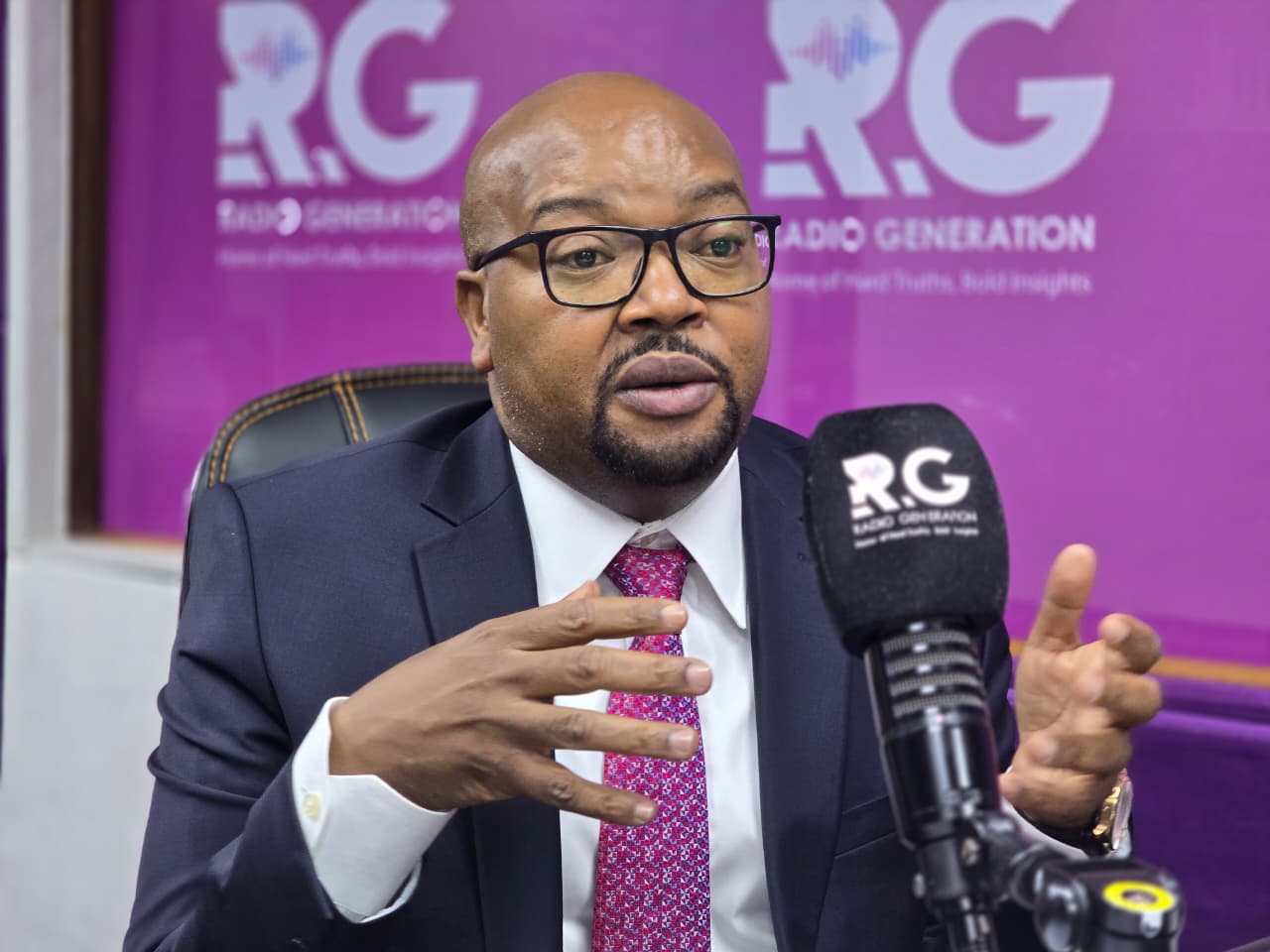
Advisor, Global Health Diplomacy, MFA, Dr. Nicholas Muraguri says Africa has not fully recovered from Covid-19, warning of lasting impacts on economies and health systems.
He urges investment in local vaccine production and supply chains, arguing that the continent must reduce reliance on imports and reposition health as a national security and economic priority in a post-pandemic world.
Speaking during a Radio Generation interview on Friday, Dr Muraguri said the pandemic left deep and lasting disruptions, noting that recovery remains uneven years after the outbreak began.
Latest Stories
- Safina Deputy Leader flags billions in discrepancies in e-Citizen platform audit findings
- Governor Sakaja reshuffles Chief Officers in sector reassignments
- President Ruto pledges Sh2.5bn for 23 markets, Sh900m stadium and Sh200m for Kenneth Matiba Hospital...
- Cancer Researcher Dr. Omar Abdihamid warn late diagnosis driving prostate cancer deaths among men
- Murang’a prepares for Ruto’s two-day tour covering 17 projects
“Not yet. And the reason being that that particular outbreak has had profound impact from health sector to social sector, even security and business,” he said.
He pointed to widespread business closures and reduced economic activity as evidence of the lingering impact, adding that some sectors have struggled to regain pre-pandemic levels.
“Some businesses have never opened. From hotels to clubs, restaurants, facilities closed down completely, and other businesses never recover completely,” he said.
COVID-19 is a respiratory disease caused by the SARS-CoV-2 virus, first identified in December 2019 in Wuhan, China, after clusters of pneumonia cases of unknown origin were reported and later confirmed by Chinese authorities and the WHO .
The virus rapidly spread globally in early 2020, leading the World Health Organization (WHO) to declare it a Public Health Emergency in January 2020 and a pandemic on March 11, 2020.
Countries responded with strict mitigation measures including lockdowns, travel bans, mask mandates, social distancing, mass testing, quarantine, and contact tracing to slow transmission .
The pandemic caused severe global disruption, millions of deaths, overwhelmed health systems, economic recessions, job losses, school closures, and supply chain breakdowns.
A major breakthrough came in late 2020 with the development of COVID-19 vaccines, especially mRNA vaccines like Pfizer-BioNTech and Moderna, alongside AstraZeneca and Johnson & Johnson vaccines, rolled out globally through emergency authorizations.
By 2023, WHO declared the end of the global health emergency, although the virus continues to circulate with evolving variants, and vaccination remains key to reducing severe illness and deaths.
Reflecting on the lessons learned, Dr Muraguri said Africa must take greater control of its health future, particularly in the face of global inequalities exposed during the pandemic.
“One of the core lessons that we learned is around that we must take our destiny,” he said, recalling how African countries were last in line to access vaccines.
“We cannot allow our survival as a person, as a nation, and as a family to be determined by the gurus,” he added.
He said this experience has prompted renewed focus on strengthening supply chains and ensuring access to critical health commodities, including vaccines, medicines, and protective equipment.
“We must address the issue of supply chain, how to ensure that the vaccines we need, the medicines we need, the protective gear we need, we know where they are and how to get them,” he said.
Dr Muraguri emphasised the need to decentralise global production systems, noting that most manufacturing remains concentrated in regions such as Asia, Europe, and the United States.
He described health supply chains as a matter of national security, arguing that African countries must invest in local production capacity.
“We must address the issue of supply for health commodities as a strategic national security issue,” he said.
Despite some progress, he acknowledged that Africa’s manufacturing capacity remains limited, particularly in vaccine production.
“We do, and what we produce is only about 1% of what we need, so 90% of vaccines for childhood diseases are imported,” he said.
He warned that continued reliance on imports undermines economic development, describing the situation as “exporting money, importing poverty.”
The doctor also raised concerns about the continent’s dependence on external research and data, urging greater investment in local scientific capacity.
“We do not even have proper research done by our own scientists here, we are relying heavily on the data that the West has done,” he said.
However, he pointed to existing infrastructure and opportunities, noting that Africa has around 700 manufacturing facilities and a growing market valued at about Sh3.225 trillion.
“The infrastructure is partially there, not good enough, but we can do more,” he said.
He called for reforms across policy, regulation, and taxation to create an enabling environment for manufacturing, alongside efforts to expand trade beyond national borders.
“We need to address from production, make sure you have enabling environment, whether it’s policy, regulatory framework that are supportive of manufacturing,” he said.
He highlighted the importance of viewing Africa’s population as an economic asset rather than a burden, citing projections of significant growth in the coming decades.
“One out of six is an African, by 2050 we are going to be a billion more, one out of four,” he said, adding that this growth presents major opportunities for innovation and investment.
He said the continent must reposition itself strategically in the global health sector, moving from dependence on aid to a model driven by investment and partnership.
“The era of aid is gone, now we need to be thinking about how to start doing your health system away from aid to economic opportunity,” he said.
Dr Muraguri also highlighted the upcoming Africa Forward Summit, co-hosted by Kenya and France, as a platform to reshape global perceptions of the continent.
“It’s time to rethink and recalibrate completely how we see opportunities in the health sector,” he said.
He added that Africa is increasingly asserting itself in global conversations, with growing recognition of its role in addressing global challenges.
“Africa is ready to partner with the world and contribute to solutions,” he concludedxxxx


Comments
Sign in with Google to comment, reply, and like comments.
Continue with Google