
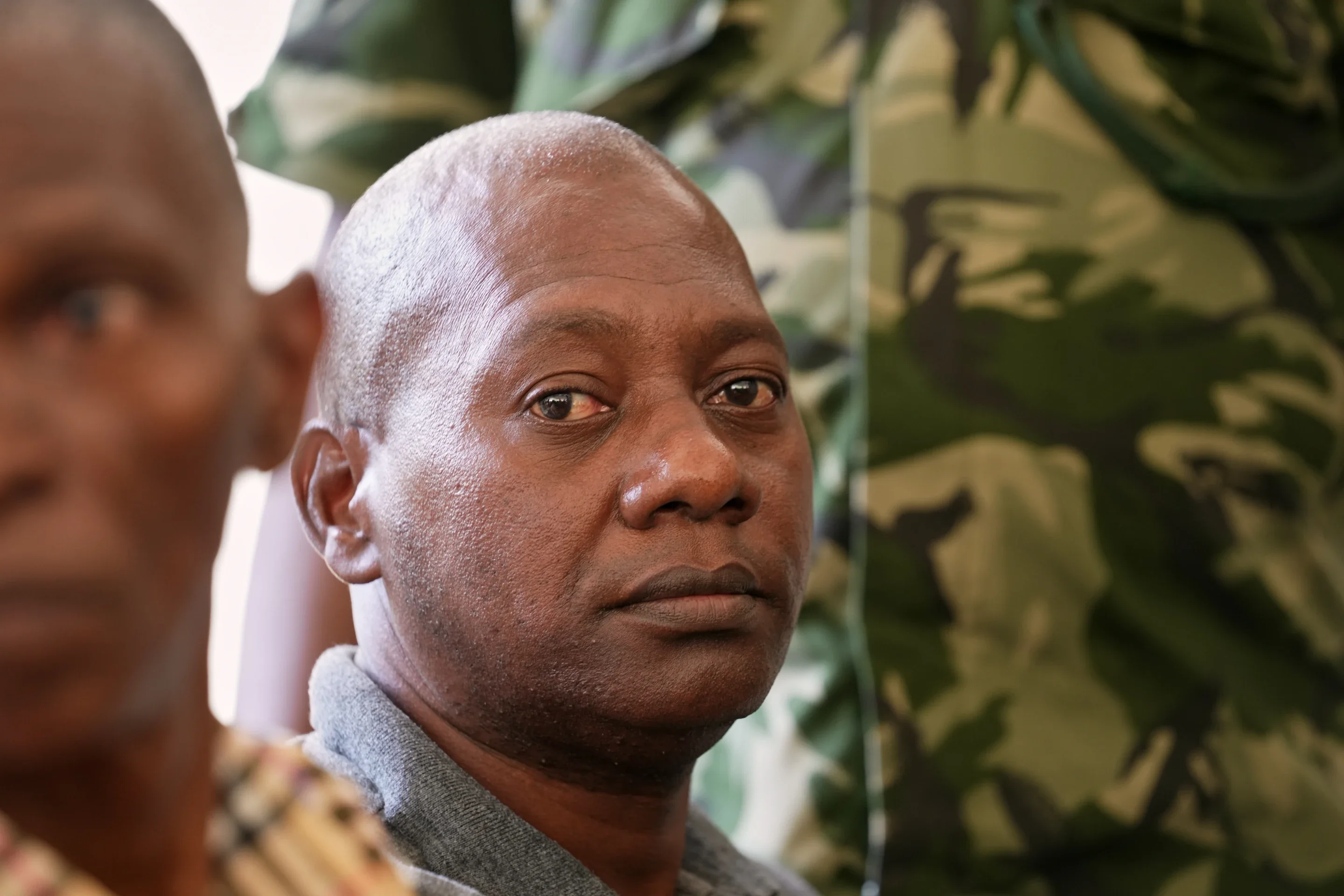
Preacher Paul Nthenge Mackenzie will spend the next 200 years behind bars after the High Court in Mombasa found him responsible for the deaths of 191 people, including 190 children, in the Shakahola massacre.
Justice Diana Kavedza handed down the sentence on Friday, November 6, 2026, after convicting Mackenzie on 191 counts of murder arising from the deaths of victims at Shakahola Forest in Malindi Sub-County, Kilifi County.
The sentence marks a major development in the case linked to one of Kenya's deadliest religious-related tragedies, which saw hundreds of people lose their lives.
Mackenzie's punishment followed an appeal by the Director of Public Prosecutions (DPP), who had asked the court to consider imposing the death penalty, citing the scale of the killings, the brutality involved and the circumstances surrounding the deaths.
The prosecution argued that the seriousness of the crimes called for the toughest punishment available, subject to the court's assessment of Mackenzie's mitigation, remorse and prospects of rehabilitation.
The 191 murder counts relate to victims who died at Shakahola Forest between January 2021 and September 2023.
In her sentencing decision, Justice Kavedza ordered Mackenzie to serve 100 years for each of the 191 starvation-related murder counts, with the sentences running concurrently.
The judge also imposed a separate 100-year prison term for each of the eight counts of murder by direct homicide, involving child victims. Those sentences will also run concurrently.
However, the two groups of sentences will run consecutively, bringing Mackenzie's aggregate prison term to 200 years.
"The first convict, Paul Mackenzie, 100 years' imprisonment for each of the 191 counts of murder by starvation, one count involving an adult victim and 190 counts involving child victims, to run concurrently with one another," Justice Kavedza ruled.
"Again, 100 years' imprisonment for each of the eight counts of murder by direct homicide, involving child victims, to run concurrently with one another. The sentences in subparagraphs A and B shall run consecutively, making an aggregate sentence of 200 years for convict Paul Mackenzie," she added.
In explaining the punishment, the judge said sentencing had to reflect the gravity of the offences and ensure that the consequences of the crimes were felt by the offender.
"The objectives of sentencing, particularly retribution, denunciation, and deterrence, require that punishment be experienced as a tangible loss by the offender," Justice Kavedza stated.
The sentence follows a judgment delivered on October 19, 2026, when the High Court found Mackenzie and 28 co-accused guilty of all 191 murder counts after the prosecution proved its case beyond reasonable doubt.
In the judgment, the court established that Mackenzie, who led Good News International Ministries, directed his followers to undertake extreme fasting as a means of meeting Jesus.
The court found that children were targeted first before the practice spread to young people, women and men.
Justice Kavedza further established that the fasting was not a voluntary religious undertaking but was enforced through an organised system of indoctrination, intimidation and violence.
The findings placed Mackenzie at the centre of the deaths, which occurred at Shakahola Forest over a period spanning more than two years.
The victims included 190 children, making the tragedy particularly significant because of the vulnerability of those targeted.
The case attracted national and international attention following the discovery of mass graves in Shakahola Forest, exposing the scale of the deaths associated with the activities of Mackenzie's religious organisation.
The 200-year sentence represents a significant milestone in the prosecution of those implicated in the massacre.
The DPP had pushed for the death penalty, arguing that the magnitude of the killings and the suffering inflicted on victims and their families warranted the harshest possible punishment.
However, the court settled on a combined 200-year prison term, structured around the separate categories of murder established during the trial.
The sentencing brings a major phase of the proceedings against Mackenzie to a close, although the case involving his 28 co-accused remains part of the wider judicial process arising from the Shakahola deaths.
The tragedy remains one of the most devastating cases involving religious extremism and mass deaths in Kenya's history.