
Pope Leo XIV has returned to the international stage with an ambitious 12-day visit to three Latin American countries, barely three weeks after undergoing surgery to remove a cancerous tumour from his right lung, as the Vatican seeks to demonstrate that his recovery has not disrupted his papal duties.
The 71-year-old pontiff is scheduled to visit Uruguay, Argentina and Peru, with an itinerary featuring meetings with political leaders, religious celebrations and engagements with survivors of clerical sexual abuse. The journey will involve several flights across thousands of miles, taking him through the Amazon region and the Andes.
His decision to proceed with the trip comes after he disclosed that doctors had detected a tumour during a routine medical examination last month. The growth was removed alongside the lower lobe of his right lung, with medical officials subsequently confirming that the cancer had not spread.
Despite the recent operation, the Vatican has maintained that the Pope is fit to undertake the journey and does not require exceptional medical arrangements.
Officials described him as a "71-year-old who has undergone an operation" rather than someone with a "permanent medical condition".
A Vatican spokeswoman said the pontiff remained enthusiastic about the engagements and had personally approved the entire programme without requesting adjustments.
She described him as having "fantastic stamina" and being "extremely enthusiastic" about the visit, adding that the schedule had been personally confirmed by the Pope "with no changes".
The Vatican's confidence comes as Leo has gradually resumed his public responsibilities, attending audiences, delivering speeches and presiding over religious ceremonies since his operation.
Professor Massimo Faggioli of Villanova University said the visit was intended to show that the pontiff had moved beyond the immediate health setback and was ready to continue his work.
"The Vatican's message with this trip is, 'that was a short episode and now we're back on track'," he told the BBC.
Faggioli observed that Leo had already demonstrated his ability to return to a busy working routine.
"We have seen him in these last few days making speeches, audiences and so on. He seems in great shape. That was important."
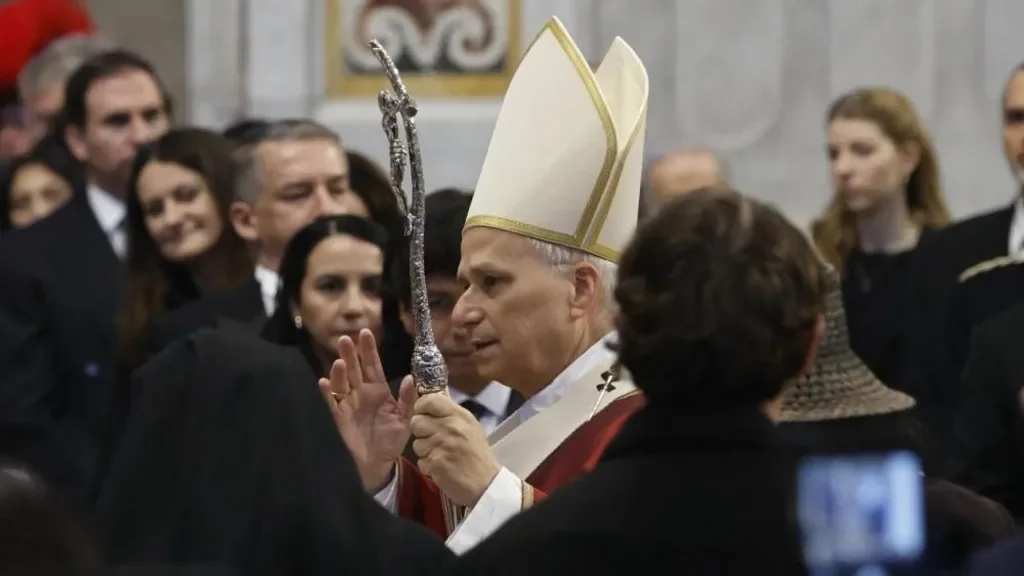
On Thursday, November 5, the Pope led the annual memorial Mass at St Peter's Basilica in Vatican City in honour of cardinals and bishops who died during the year.
Argentina visit expected to attract millions
The first destination on the itinerary is Uruguay, which has experienced a considerable decline in the number of Catholics in recent years. The visit will be the country's first papal trip in four decades.
Leo will subsequently travel to Argentina, where his predecessor, Pope Francis, was born but never visited while serving as head of the Catholic Church.
Father Fernando Laguna, rector of Santa Maria Addolorata, Argentina's national church in Rome, said Leo's arrival would also honour the late Francis, whose absence from his homeland during his papacy had been a disappointment to many Argentinians.
"This visit is also a homage to Francis, who didn't make it to Argentina [as pope]," he said.
Laguna said the announcement of the visit had generated excitement among members of the Argentine Catholic community.
"When this visit by Pope Leo was announced, it filled all of our hearts with joy," he told the BBC.
He added that he had never doubted the pontiff would make the journey despite his recent medical challenges.
"I always thought he would go, despite his illness. I don't think he ever thought of calling it off!"
The church is preparing to host screenings of the Pope's major engagements, with a large screen being installed to enable Argentinians in Rome to follow the proceedings.
Posters welcoming Leo have also been put up around the building, reflecting the excitement ahead of his arrival.
His engagements in Argentina could, however, attract political attention because of the differences that emerged between the Catholic Church and President Javier Milei during Francis' leadership.
Milei previously launched strong attacks against Francis, describing him as "evil on earth" and a "communist" over the late pontiff's support for social justice and policies aimed at assisting poor communities.
Argentina's bishops also took issue with Milei's austerity programme, particularly its extensive reductions in public expenditure and social support.
The relationship between the presidency and the Church could take a different direction during Leo's visit, with Milei already expressing his excitement about receiving the new Pope.
In a message posted on X, the president said Argentina was waiting for him "with immense joy".
Millions of people are expected to turn out during the visit to welcome the pontiff.
Peru visit marks return to former home
The final destination, Peru, is expected to carry the greatest personal significance for Leo because of his long association with the country.
The Vatican has described the visit as a homecoming, pointing to the years he spent working in the country before his appointment to senior positions in the Church.
Born in the United States as Robert Prevost, Leo spent almost 20 years in Peru, serving in different religious roles. He also became a Peruvian citizen, making his return particularly meaningful to communities where he previously worked.
His time in the country is considered an important part of his journey to becoming Pope.
One of the major stops will be the diocese of Chiclayo, where he was ordained bishop in 2014 and served until Pope Francis transferred him to the Vatican nearly a decade later.
Residents and worshippers in the area celebrated when their former bishop was elected Pope in 2025.
Leo is also scheduled to visit Cusco, the historic capital of the Inca Empire, where he will celebrate Mass at an altitude exceeding 3,000 metres above sea level.
His programme will then take him to Pucallpa in the Amazon region.
In addition to religious ceremonies and engagements with government officials, the Pope will meet survivors of clerical sexual abuse in Uruguay, Argentina and Peru.
The meetings come as the Catholic Church continues to face scrutiny over its handling of sexual abuse cases involving members of the clergy.
The issue also affected Pope Francis' 2018 visit to Chile and Peru, making the planned engagements an important part of Leo's regional tour.
Faggioli said the journey would help rebuild and strengthen the Catholic Church's relationship with Latin America following Francis' time as Pope, which included difficult moments during some of his visits to the region.
He also argued that Leo could use the opportunity to address wider political and social concerns affecting countries across the Americas.
"Democracies are in trouble there, so there are so many things he can address," he said.
Beyond Latin America, attention is also turning to whether Leo will eventually travel to his country of birth, the United States.
Faggioli noted that the pontiff has expressed a desire to visit, although the timing could raise political considerations, particularly while President Donald Trump remains in office.
"The big question then is the United States. There's no question he wants to go. So will he travel when [President Donald] Trump is still in office? I'm sure they're thinking about this."