
The Senate has launched a detailed investigation into the deaths of five babies born prematurely at Thika Level 5 Hospital, with senators seeking to establish whether the newborns received the care and emergency support needed before and during their transfer to Kenyatta National Hospital (KNH).
The four girls and one boy were born on September 13 to a 28-year-old mother from Juja after a pregnancy of about 25 weeks. Their birth weights ranged from 630 to 800 grammes.
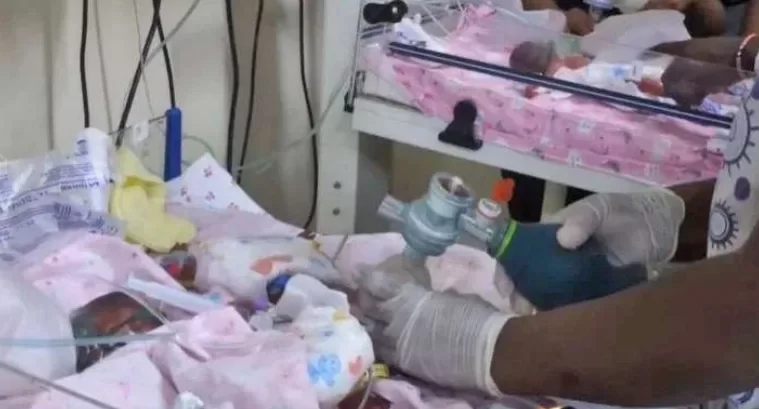
Because of their extremely premature condition, the quintuplets were transferred from Thika Level 5 Hospital to KNH for specialised neonatal care. All five later died.
The Senate Health Committee, led by Uasin Gishu Senator Jackson Mandago, is now seeking a detailed account of the events surrounding the delivery and the treatment the babies received before reaching KNH.
The committee began the inquiry on its own motion after taking note of reports concerning the delivery, referral and deaths of the five newborns.
A major part of the investigation will be to determine how the pregnancy was managed before delivery and whether preparations were made for the risks associated with carrying five babies.
Senators also want to establish whether the mother should have been taken to a tertiary facility before delivery if her doctors had determined that specialist care was required.
The committee has, however, cautioned that no conclusion should be reached before the relevant records and expert evidence are examined.
“The inquiry should not prejudge negligence or individual responsibility,” the committee said.
It said questions about responsibility should only be addressed after reviewing “contemporaneous records and expert evidence”.
The committee noted that the babies' extreme prematurity and very low birth weights were important clinical factors in their deaths.
At the same time, it said there was not yet a full, independently verified account of the mother's antenatal care, the delivery, the steps taken to stabilise the babies, the decision to refer them and their eventual transfer to KNH.
The senators are now seeking to fill those gaps by obtaining a complete clinical timeline.
They want the account to start with the mother's admission to Thika Level 5 Hospital and run through the delivery, treatment of each baby and their formal handover at KNH.
The committee wants to know when doctors first became aware that the mother was carrying quintuplets, what preparations were made for the delivery and whether specialists were involved in planning for the birth.
It is also examining the level of readiness at Thika Level 5 Hospital on the day the babies were delivered.
The hospital has been asked to provide information on the medical teams that were working at the time, including obstetricians, anaesthetists, paediatricians, neonatal specialists, midwives, nurses and theatre staff.
Senators want to establish whether there were enough health workers to care for five extremely premature newborns at the same time.
The committee is also demanding separate details for each baby, including their weight at birth, Apgar scores, resuscitation efforts, treatment given and condition before the transfer to KNH.
The hospital must also account for the equipment and supplies available when the babies were born.
Among the items under scrutiny are incubators or warmers, oxygen, respiratory-support equipment, resuscitation equipment, medicines and other essential supplies.
The referral process is another key part of the inquiry.
The committee wants records showing when KNH was contacted, when it agreed to receive the babies, when the ambulance departed from Thika and the time it arrived at KNH.
The senators also want to know what happened to each baby during the journey and how they were formally handed over to the KNH team.
The suitability of the ambulance used in the transfer will also be examined.
The committee wants to establish whether the vehicle had adequate oxygen, temperature-control equipment and other necessary supplies for the transport of five extremely premature babies.
It is also seeking details of the personnel who accompanied the newborns and whether they had the training required for such a high-risk transfer.
The safety, suitability and timing of the referral and ambulance transfer are among the specific issues the committee has identified for investigation.
Kiambu Governor Kimani Wamatangi and the management of Thika Level 5 Hospital were summoned to appear before the committee on Thursday and explain how the mother and her babies were managed.
They did not appear before the committee.
The senators are also seeking an account from the Kiambu County Government on what happened after the five babies died.
The inquiry will therefore examine the events from the mother's admission and preparation for delivery through the newborns' treatment, referral, ambulance journey and eventual handover at KNH.