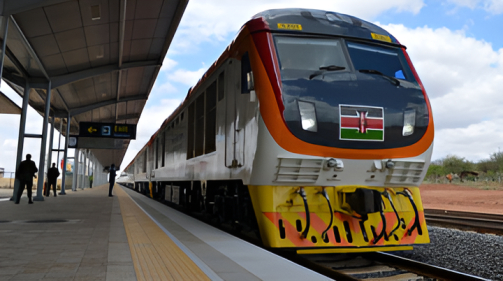
After years of operating below expectations, the standard gauge railway has finally reached a financial milestone by earning enough revenue to meet its operating costs. The achievement marks the first time the railway has posted an operating surplus since it was launched in 2017, but the breakthrough was overshadowed by another year of heavy losses at Kenya Railways Corporation, whose net loss climbed to Sh28.16 billion.
Fresh financial disclosures show the State-owned corporation's net loss increased by Sh477 million from Sh27.68 billion recorded a year earlier. The latest results extend KRC's long wait for a return to profitability, with the corporation yet to record a profit in more than 10 years.
The SGR remained the corporation's strongest-performing business during the year under review. Revenue from the railway rose to Sh18.5 billion from Sh16.8 billion in the previous financial year, while operating costs increased only slightly by Sh290 million to Sh18.3 billion.
The stronger earnings enabled the railway to register an operating surplus of Sh181.7 million, a sharp turnaround from the Sh1.18 billion operating loss reported the previous year. The improved performance was driven by higher freight volumes and stronger earnings from cargo and passenger transport.
“This performance was buoyed by increased volumes in freight, enhanced earnings from freight and passenger services and efficient utilisation of assets and rolling stock,” KRC said in a disclosure.
While the SGR recorded improved results, the metre gauge railway continued to struggle as passenger numbers on both commuter and long-distance services declined.
Revenue generated by the MGR fell to Sh2.2 billion from Sh2.3 billion a year earlier. Operating costs also dropped slightly to Sh4.33 billion from Sh4.36 billion, leaving the railway with a loss of about Sh2.1 billion.
Beyond rail operations, the Railways Training Institute generated Sh252.6 million in revenue, while income from landed assets reached Sh2.09 billion, adding to the corporation's earnings during the year.
Overall revenue increased to Sh30.3 billion from Sh23.7 billion, supported by improved business performance and a rise in grants from the National Treasury. Funding from the exchequer grew to Sh7.7 billion from Sh2.9 billion recorded in the previous year.
Operating expenses edged up by Sh659 million to Sh46.5 billion, mainly due to depreciation charges on property, plant and equipment. Staff costs also rose from Sh3.7 billion to Sh4.2 billion.
The corporation's final loss was eased by deferred income tax, which fell to Sh13 billion from Sh23.3 billion during the review period.
KRC is now looking to sustained growth in SGR revenue and stronger returns from its landed assets as the two business units continue to provide the corporation's best opportunity to restore profitability.
The SGR has continued to attract more passengers and freight traffic, strengthening expectations of further growth as the government begins work on extending the railway line to Malaba.
During the year ended June 2025, the SGR carried 2.55 million passengers, surpassing the metre gauge railway for the first time. Passenger numbers on the MGR fell from three million to 2.51 million over the same period.
To build on the growing demand, KRC plans to extend the SGR from the Syokimau terminus into Nairobi's central business district, a project aimed at improving access for passengers and supporting future growth.