News
Weatherman forecasts continued rains from May 26 to June 1
Counties expected to experience showers and thunderstorms include Nandi, Kakamega, Kisumu, Narok, Nyeri, Kiambu, Nairobi, Meru and Embu, among others.

Hard truths. Bold Insights. Real talk.
Counties expected to experience showers and thunderstorms include Nandi, Kakamega, Kisumu, Narok, Nyeri, Kiambu, Nairobi, Meru and Embu, among others.
In its Weekly forecast covering May 19 to May 25, the department said areas expected to receive more than 50 millimetres of rainfall face heightened risks from stagnant water, flooding and disease outbreaks.

Kenya Meteorological Department’s May 2, 2026 malaria early warning bulletin projects a 30% outbreak risk for Nandi County in May–June 2026, above the 20% threshold. Kakamega risk is 22.7% and Kisii 0%.

The advisory focuses on several counties expected to be most affected, including Kwale, Mombasa, Kilifi, Lamu, Garissa, Tana River, Wajir, Mandera, Taita-Taveta, Kitui, and Makueni.
Daytime maximum temperatures of above 30°C are expected in the Coast, Southeastern Lowlands, Northeastern and Northwestern regions, while some highland areas may experience significantly cooler nights.

In the north-western counties of Turkana and Samburu, the forecast points to generally sunny conditions during the day, with partly cloudy skies at night. However, northern parts of Turkana may still experience occasional showers in the morning and at night.

According to the department, “slight to moderate sea conditions with wave heights of 0.2–2.25m (0.6–6.75ft) is expected over the Somalia, Kenya, and Tanzania waters throughout the forecast period.”

The department also warned of showers and thunderstorms in several regions, including Nairobi and the Lake Victoria Basin, mainly in the afternoon and evening.

Authorities confirmed two additional fatalities in the Western and Nyanza regions as emergency response efforts intensify.

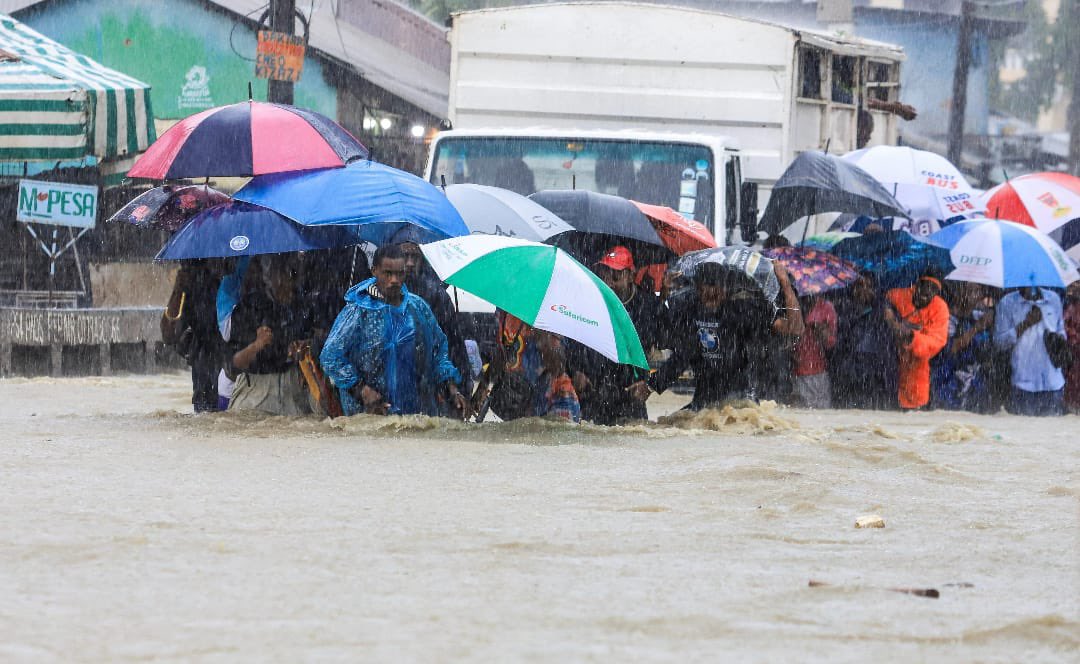
The advisory comes as the country continues to experience floods as a results of heavy rainfall, with the flood fatalities now standing at 71 after Interior ministry confirmed three more fatalities recorded in Nairobi, one in Eastern and one in the Coast region.

In a statement on Sunday, he expressed his sympathy for communities impacted by the adverse weather, saying, “My thoughts are with the families and communities that have already been affected during this difficult period.”

In its advisory, the Kenya Meteorological Department noted that wind direction during the forecast period will mainly shift from northerly to south-south-easterly across the region.

Meteorologists attribute the early-season rains to favorable atmospheric conditions, including enhanced convective activity linked to the Madden-Julian Oscillation (MJO), which is expected to temporarily boost moisture and rainfall amounts in parts of the country during late February and early March.
According to Kenya Met, a heat wave is defined as a period of three or more consecutive days of extremely high daytime temperatures that exceed locally determined thresholds and are linked to increased health risks.

According to the government, the October to December short rains significantly underperformed, deepening food insecurity in drought-prone regions.
In its weekly bulletin released on December 9, the department noted that only a few areas in the Highlands East and West of the Rift Valley, parts of the Rift Valley itself, the Coast, North-eastern Kenya and the South-eastern lowlands are likely to experience occasional showers.
However, the weather pattern is not uniform across the country. KMD forecasts near to below-average or depressed rainfall in the Highlands East of the Rift Valley (including Nairobi), Southeastern lowlands, Coastal areas, and most parts of the Northeast, where communities could face water shortages and poor crop performance.

In its latest advisory, the weatherman noted that the rain is likely to be accompanied by isolated storms, especially during the afternoon, evening, and early morning hours. The public has been urged to remain cautious and take safety measures to avoid accidents and property damage.
Daytime temperatures could exceed 30°C along the Coast and in the North-eastern and North-western regions.