

The Kenya Wildlife Service (KWS) has revealed that discarded fishing nets and excessive consumption of maize stalks contributed to the deaths of two hippopotamuses at Lake Naivasha in Nakuru County.
In a statement issued on Thursday, KWS said veterinary investigations and postmortem examinations established different causes of death for the two animals, highlighting the dangers wildlife face from human activities around the lake.
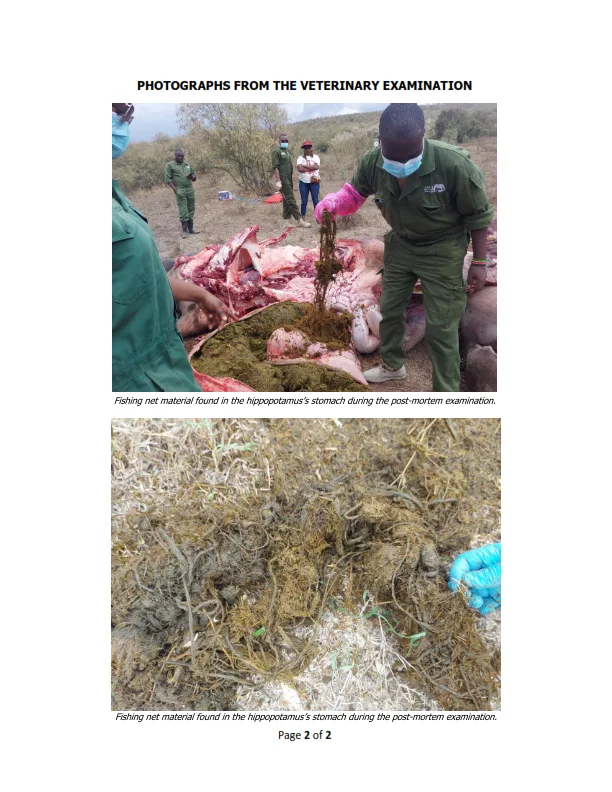
The investigations found that a sub-adult female hippopotamus died after consuming discarded synthetic fishing nets, which caused a complete blockage in its digestive system.
According to KWS, the postmortem examination revealed a compacted mass of fishing nets at the junction between the animal's stomach and small intestine.
The obstruction prevented the normal passage of digestive contents, resulting in severe complications that ultimately led to the animal's death.
"The tentative cause of death was cardiopulmonary failure, hypovolemic shock and endotoxemia secondary to complete foreign body obstruction at the gastroduodenal junction," KWS stated.
The second case involved an adult female hippopotamus whose death was linked to acute gastrointestinal bloating, with excessive consumption of maize stalks identified as a possible contributing factor.
Veterinary examinations established that the animal had suffered massive gas distension in its multi-chambered stomach, causing significant pressure on its internal organs.
The swelling pushed the diaphragm forward into the chest cavity, severely compressing the lungs and interfering with the animal's ability to breathe normally.
KWS said the condition caused respiratory distress and eventually resulted in cardiopulmonary failure.
"Maize stalks were observed among the stomach contents and may have contributed to dietary overload and excessive fermentation, resulting in gas accumulation and bloating," the wildlife agency explained.
The findings point to the potential consequences of inappropriate waste disposal and feeding practices around Lake Naivasha, where fishing activities and interactions between communities and wildlife create opportunities for harmful exposure.
Discarded fishing equipment, particularly synthetic nets, can pose serious risks to aquatic and semi-aquatic animals when left in the environment or improperly disposed of.
In the case of the sub-adult hippo, the ingested fishing nets formed a physical obstruction that disrupted the digestive process, leading to life-threatening complications.
Similarly, the presence of maize stalks in the second animal's stomach raised concerns about wildlife accessing food materials that may not suit their natural diets.
Following the investigations, KWS appealed to fishermen, local communities, beach management units and other stakeholders to adopt responsible environmental practices to prevent similar incidents.
The agency specifically urged those operating around the lake to exercise caution when handling and disposing of fishing nets, gear and other equipment.
It also called for measures to prevent wildlife from being exposed to inappropriate food materials.
KWS emphasised that protecting wildlife requires collective responsibility, urging Kenyans to recognise the connection between environmental conservation and the survival of animals.
"Protecting our wildlife is a shared responsibility by all Kenyans. Every action that safeguards the environment helps secure a future where people and nature thrive together," the agency stated.