
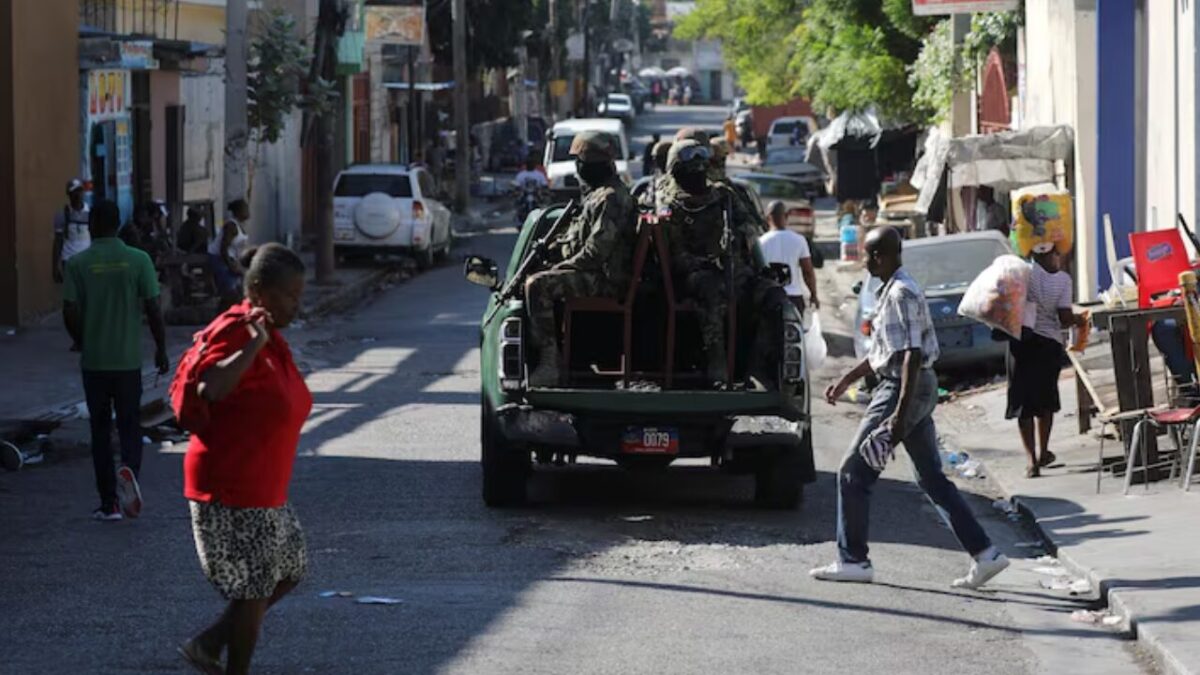
Haiti’s fight against powerful armed gangs is showing mixed results, with violence easing in some parts of the capital while deadly attacks spread into communities that had previously seen less fighting, the United Nations has warned.
The latest sign of the changing threat came in Kenscoff, a farming community in the hills overlooking Port-au-Prince, where at least 47 people were killed and 22 others wounded after armed men reportedly attacked residents and set houses on fire.
Survivors were left looking for missing relatives as bodies were discovered in the streets, according to a UN update issued on Thursday.
The attack came as the UN Integrated Office in Haiti (BINUH) reported a shift in the pattern of violence across the country, with gang activity increasingly reaching areas outside the main conflict zones.
Between April and June 2026, at least 1,408 people were killed and another 656 injured in violence involving gangs, security operations, self-defence groups and vigilantes. The 2,064 combined casualties represented a 14 per cent drop compared with the first three months of the year.
Despite the decline, the UN said the improvement has not been felt equally across Haiti.
Gangs were responsible for 55 per cent of the recorded casualties, while 40 per cent occurred during security operations targeting armed groups. Self-defence groups and vigilantes accounted for the remaining five per cent.
“These figures show that the population continues to bear an unacceptable toll from violence,” BINUH head Carlos Ruiz Massieu said.
Security operations have limited gang activity in some parts of the Port-au-Prince metropolitan area, including Delmas and Tabarre.
However, the UN said the pressure has also pushed some armed groups into other areas, where they have continued fighting for territory and control of illegal income.
In Plaine du Cul-de-Sac and Cité Soleil, rival gangs battled over territory and illicit revenue during the quarter.
The fighting left 463 people dead and 256 injured, while more than 18,000 residents were forced to flee their homes.
Health and education services in the affected areas were also suspended as the clashes intensified.
According to BINUH, security operations in other parts of the capital contributed to the movement of gang members towards Plaine du Cul-de-Sac.
The area is strategically important because two major roads linking Port-au-Prince’s container port and the Varreux oil terminal to northern Haiti pass through it.
The violence has also moved deeper into the countryside.
In the Artibonite department, armed groups attacked communities, killing people inside their homes as well as farmers working in their fields. The UN recorded 73 deaths and 77 injuries during gang incursions in the region.
In the south, the Village de Dieu gang carried out four attacks around Séguin between April and June. At least 15 people were killed and one person was injured.
BINUH said the attacks may point to efforts by gangs to widen their control and create new ways of making money, including taking control of roads leading towards the port of Marigot.
Kenscoff has also faced a growing threat. The UN said the hillside community has suffered 12 gang attacks since last year, highlighting how violence has reached areas that were previously less exposed.
Women and girls have also continued to face serious abuse amid the insecurity.
BINUH documented at least 796 victims of gang-related rape during the second quarter. In 87 per cent of the reported cases, survivors said multiple attackers were involved.
The UN warned that the true number is likely higher because many victims do not report attacks. Fear of retaliation, stigma and a lack of trust in the police and courts discourage many survivors from coming forward.
The quarter also saw at least 81 people abducted for ransom.
Security operations aimed at defeating the gangs have themselves resulted in a high number of casualties. The UN recorded 584 deaths and 223 injuries linked to security-force operations, bringing the combined toll from those operations to 807.
The operations increasingly include explosive drones used by a government task force made up of Haitian police officers and members of a foreign private military company.
At least 95 people killed or injured in those operations were civilians who were not linked to gangs. BINUH said nine civilians, including six children, were killed or wounded during explosive-drone operations.
The UN said it had received no information showing that authorities had launched investigations into casualties caused during security operations, including incidents involving the private military company.
Haiti’s UN-backed Gang Suppression Force, which was created to strengthen the Haitian police in the fight against armed groups, has also not yet been fully deployed.
Meanwhile, the wider humanitarian crisis continues to worsen. By May, almost 1.47 million people had been displaced within Haiti, with children making up more than half of those forced from their homes.
The latest figures show the difficult position Haiti faces as it tries to contain armed gangs. While security operations have reduced violence in some parts of Port-au-Prince, the fighting is spreading into other communities, leaving civilians caught between gang attacks and the campaign to push the armed groups back.