
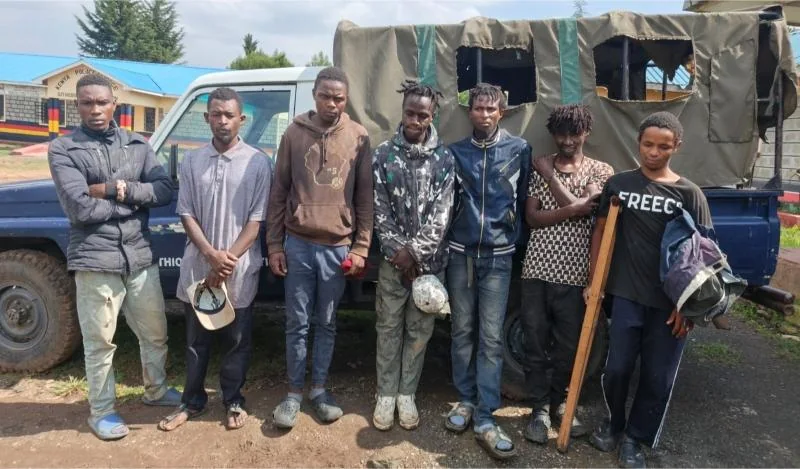
Criminal gangs are increasingly becoming a concern within Kenya's school-age population, prompting the National Council on the Administration of Justice (NCAJ) to develop a coordinated five-year plan to contain goonism and prevent more young people from being drawn into organised crime.
The council has warned that the spread of youth gangs, radicalisation and intimidation of witnesses are putting pressure on the justice system, while raising questions about the role of parents and communities in preventing children from joining criminal groups.
In its 2025-26 annual report, NCAJ identifies the emergence of criminal gangs among school-age children as one of the growing challenges facing the sector. It attributes the trend partly to inadequate parental responsibility and the intimidation of witnesses.
The council has also proposed preventive measures targeting child marriage and youth gang radicalisation, with community participation expected to support efforts to address the underlying causes.
The concerns have informed the council's Strategic Plan for 2026-2030, which identifies goonism as an emerging criminal threat that requires a unified response from institutions responsible for security, investigations, prosecution and rehabilitation.
Under the plan's objective of strengthening the response to emerging crimes, NCAJ intends to develop and implement a coordinated approach to dealing with goonism.
A major part of the initiative will involve establishing the extent of gang activity, identifying the areas most affected and examining the circumstances that encourage the formation and expansion of criminal groups.
The National Crime Research Centre will coordinate the exercise alongside NCAJ, the Office of the Director of Public Prosecutions, the Directorate of Criminal Investigations, Probation and Aftercare Services and the Kenya Prisons Service.
The agencies are expected to deliver five research and mapping reports within the plan's implementation period, starting in the 2026-27 financial year.
The investigations will examine the changing nature of goonism, identify areas where gangs are most active and establish the factors behind their operations. Authorities also intend to track new developments and patterns to help shape more effective interventions.
POLICE TO LEAD NEW GUIDELINES
NCAJ is also seeking to standardise the handling of goonism-related offences through the preparation of guidelines and standard operating procedures.
The National Police Service will take the lead in developing the proposed framework, which is expected to guide how agencies respond to cases involving criminal gangs.
The plan further provides for 10 public education campaigns focusing on the dangers and consequences of goonism and violence.
Another 20 forums targeting young people are planned in areas considered vulnerable to gang activity. These engagements will focus on mentorship, youth participation and diversion programmes aimed at offering alternatives to criminal involvement.
The strategy builds on findings from a 2025 study by the National Crime Research Centre, which documented 309 criminal gangs across 11 counties.
Mombasa accounted for the largest share, with 73 gangs identified, while Nairobi recorded 56 and Kilifi 47.
The research also revealed the extent of public concern, with 82.3 per cent of respondents saying criminal gangs had become more widespread in their communities.
However, the findings presented a different picture regarding the actual number of gangs, as 53.2 per cent of respondents reported a decline in their numbers over the previous three years.
This distinction points to a situation in which gangs may continue to exert influence and remain visible in communities even as their overall numbers decline.
Political involvement also emerged as a major concern in the study, with the researchers identifying political patronage as one of the forces keeping criminal groups in operation.
The report found that some politicians use and bankroll gangs for “personal, electoral and business gain”.
It consequently recommended “identifying, prosecuting and deterrently penalising political leaders who use, finance and protect gang members for political reasons”.
Through the new strategy, the justice sector intends to address the problem through investigations, stronger coordination among enforcement agencies, public education and programmes targeting vulnerable young people.