
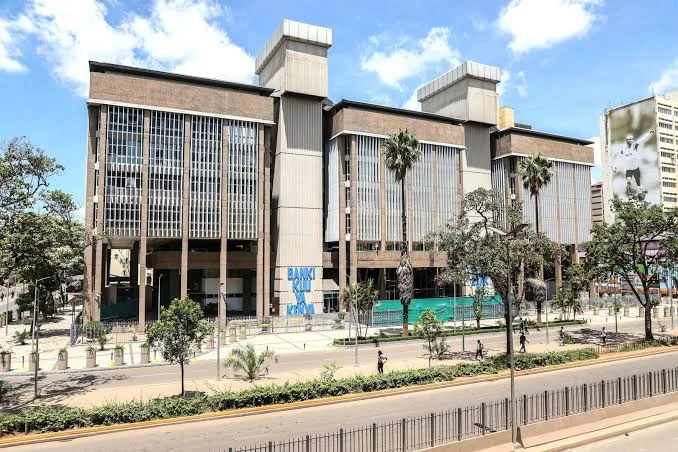
The Central Bank of Kenya (CBK) has retained the Central Bank Rate (CBR) at 8.75%, maintaining its current monetary policy stance as inflationary pressures persist and global economic uncertainties weigh on the outlook.
The decision was made by the Monetary Policy Committee (MPC) at its meeting on October 7, 2026, with the regulator saying the current rate remains appropriate to keep inflation expectations anchored and support exchange rate stability.
The decision comes as Kenya’s annual inflation rose to 6.8% in September 2026, up from 6.6 percent in August, according to data cited by CBK. The rate remained within the inflation target range, although underlying price pressures increased during the month.
Core inflation, which excludes more volatile items, increased to 4.0% in September from 3.4% in August. The CBK attributed the rise mainly to higher prices of processed food products, particularly milk, wheat products and edible oils.
Non-core inflation, however, declined from 14.7% in August to 14.0% in September, largely reflecting lower inflation in vegetable and energy prices.
The CBK said government measures, including subsidies and the temporary reduction of Value Added Tax on fuel, had continued to cushion consumers and businesses against some inflationary pressures.
“Overall inflation is expected to remain within the target range in the near term. This will be supported by appropriate monetary policy actions, government interventions, and a stable exchange rate,” the MPC said.
The rate decision also comes against an improving domestic growth outlook. The CBK revised its 2026 economic growth projection upwards to 5.0 percent from 4.9 percent, citing stronger performance in the industrial and services sectors.
The new forecast represents an improvement from the 4.6% growth recorded in 2025. The central bank expects the economy to expand by 5.3% in 2027.
However, the CBK warned that the outlook remains vulnerable to external and domestic shocks, including prolonged geopolitical tensions, uncertainty over global trade policies, and the potential effects of the El Niño weather phenomenon.
Global economic conditions have also become more challenging. The CBK expects global growth to moderate in 2026, partly due to higher energy prices associated with the conflict in the Middle East. Higher energy and food prices are also expected to push global inflation higher.
According to the September Market Perceptions Survey and Agriculture Sector Survey, respondents expected moderate upward pressure on domestic inflation, particularly from higher fuel prices linked to the conflict.
Despite these concerns, respondents expected inflation to remain within the target range in the near term, supported by exchange rate stability and the prospect of lower food prices following forecasts of above-average rainfall between October and December.
Business confidence has also remained relatively strong. The CBK’s September CEOs Survey and Market Perceptions Survey showed sustained optimism about business activity and economic growth over the next 12 months.
The optimism was attributed to continued macroeconomic stability, increased government infrastructure spending, digital innovation and improved access to private-sector credit as bank lending rates have declined.
Commercial banks’ lending to the private sector grew by 10.6% in September, compared with 10.3 percent in August and a contraction of 2.9% in January 2025. Average commercial bank lending rates stood at 14.4% in September, slightly higher than 14.3% in August but significantly below the 17.2% recorded in November 2024.
The banking sector has also shown signs of improved asset quality. The ratio of gross non-performing loans to gross loans fell to 13.9% in September from 14.8% in June and 17.6% in August 2025.
CBK said the improvement was recorded across several sectors, including financial services, agriculture, trade, and energy and water.
Meanwhile, Kenya’s foreign exchange reserves stood at $14.702 billion, equivalent to 5.9 months of import cover. The reserves provide a buffer against short-term domestic and external shocks and continue to support stability in the foreign exchange market.
The country’s current account deficit was estimated at 3.1% of GDP in the 12 months to August 2026, compared with 2.1 percent during a similar period in 2025. The widening deficit was attributed to a higher trade deficit and lower secondary income transfers.
Goods exports increased by 11.8%, supported mainly by horticulture, tea, machinery and transport equipment, while goods imports rose by 15.8%, driven by food, mineral fuels and intermediate and capital goods.
CBK projects the current account deficit at 3.2 % of GDP in 2026, up from 2.1% in 2025, mainly due to increased mineral fuel imports following higher international oil prices and lower remittances.
MPC said the deficit is expected to be more than fully financed by financial and capital inflows, resulting in a projected overall balance of payments surplus of $2.426 billion in 2026.
The committee also noted the ongoing implementation of the 2026/27 government budget and the planned fiscal consolidation strategy aimed at reducing debt vulnerabilities over the medium term.
The financial regulator maintained that holding the CBR at 8.75% was necessary to balance inflation control with economic growth while preserving stability in the foreign exchange market.