
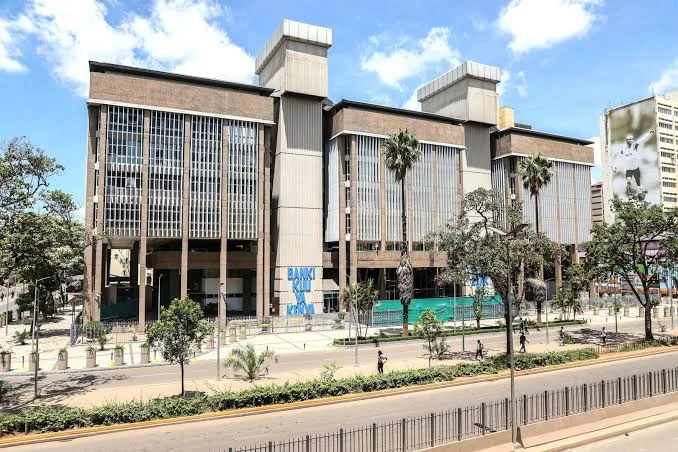
The Central Bank of Kenya (CBK) has invited investors to bid for Sh50 billion worth of reopened 30-year fixed-coupon Treasury bonds, with the proceeds set to support the government's budgetary needs.
The offer comprises two bonds, SDB1/2011/030 and FXD1/2026/030, with maturity periods of 14.4 years and 29.6 years, respectively.
The SDB1/2011/030 bond carries a coupon rate of 12%, while the FXD1/2026/030 has a coupon rate of 12.5%. Both securities are subject to a 10% withholding tax.
The bonds will be sold from October 6 to October 16, 2026, with investors required to submit their bids by 10:00 am on October 14.
The auction will be conducted on October 19, followed by settlement on the same day.
The CBK is offering the securities through a multi-price bid auction, allowing investors to submit competitive bids based on their preferred yields.
For non-competitive bids, investors can apply for a minimum of Sh50,000 and a maximum of Sh50 million.
Competitive bids require a minimum investment of Sh2 million per Central Securities Depository account for each tenor.
The offer is open to investors with active DhowCSD accounts, with the CBK directing successful bidders to obtain their payment keys and amounts payable through the DhowCSD Investor Portal or App.
The payment information will be available under the transactions tab on Friday, October 16.
The CBK warned that investors who fail to make payments could face restrictions on future participation in government securities auctions.
"The Central Bank reserves the right to accept applications in full or part thereof or reject them in total without giving any reason," the prospectus stated.
The SDB1/2011/030 bond will mature on January 21, 2041, while FXD1/2026/030 will mature on March 13, 2056.
Investors in the SDB1/2011/030 security will receive coupon payments twice a year until maturity. The FXD1/2026/030 bond will similarly make semi-annual coupon payments over its 30-year term.
The CBK's pricing tables show that the SDB1/2011/030 bond has a clean price of Sh99.9587 per Sh100 at a quoted yield of 12%, while the FXD1/2026/030 bond has a clean price of Sh100 at a yield of 12.5%.
The SDB1/2011/030 bond carries accrued interest of KSh2.3077 per KSh100. At a quoted yield of 12%, its dirty price, which includes accrued interest, is Sh102.2664.
The FXD1/2026/030 bond has no accrued interest at the time of the offer. At a yield of 12.5%, its clean and dirty price is therefore Sh100 per Sh100.
The securities will begin secondary trading on 19 October, with transactions conducted in multiples of KSh50,000.
The bonds will also be listed on the Nairobi Securities Exchange, giving investors an avenue to trade them after issuance.
They qualify for statutory liquidity ratio requirements for commercial banks and non-bank financial institutions under the Banking Act.
Investors can also pledge the government securities as collateral when seeking loans from regulated financial institutions.
The CBK will retain the option of reopening the bonds again in the future.
For investors seeking to exit before maturity, the CBK will rediscount the bonds as a last resort at 3% above the prevailing market yield or coupon rate, whichever is higher.
The latest offer comes as the government continues to use domestic borrowing as one of its sources of financing its budgetary requirements, with Treasury securities providing a key avenue for mobilising funds from local investors.
The 30-year tenor also gives investors an opportunity to lock in fixed coupon income over an extended period, although the market value of the bonds can fluctuate before maturity depending on prevailing interest rates and market yields.