
The Central Bank of Kenya (CBK) has urged Parliament to close legal gaps in the proposed Microfinance Bill, warning that the regulator could be left without clear powers to crack down on money laundering and terrorism financing if the law is passed in its current form.
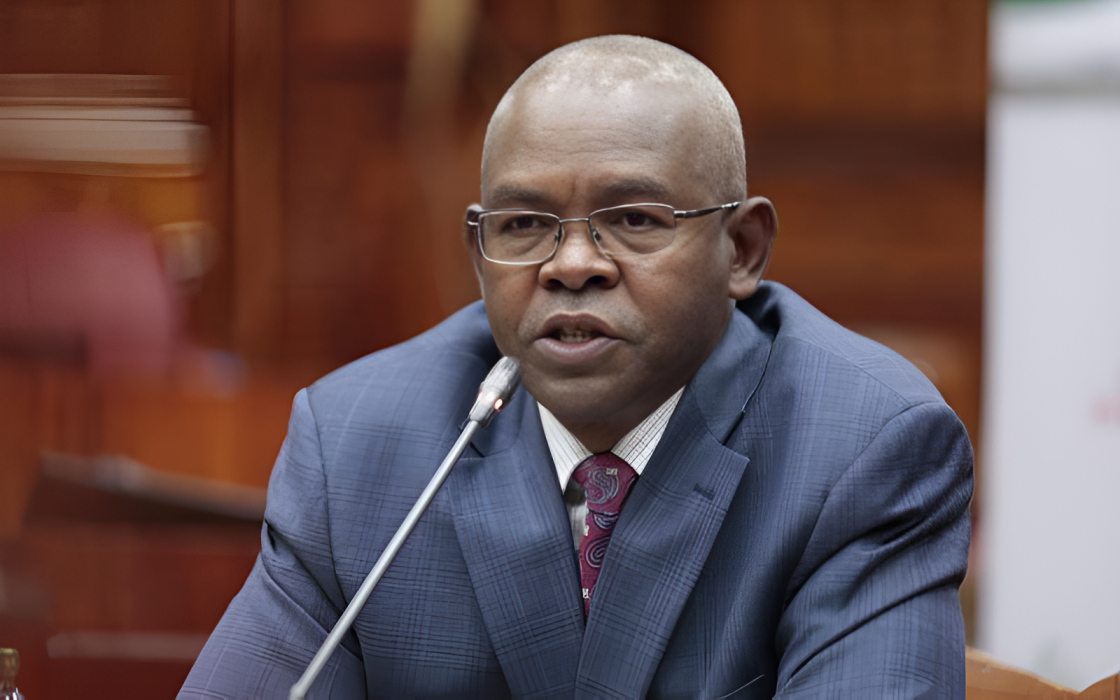
In submissions to the National Assembly's Finance and Planning Committee, CBK Governor Kamau Thugge said the Bill supports reforms in the microfinance sector but fails to provide the Central Bank with authority to regulate, supervise and enforce compliance with anti-money laundering, counter-terrorism financing and counter-proliferation financing requirements.
"The CBK has reviewed the Microfinance Bill No.9 of 2026 and is supportive of it. Nonetheless, the Bill does not contain provisions on powers of the Central Bank to regulate, supervise and enforce compliance for anti-money laundering, combating the financing of terrorism, and countering proliferation financing," he said in a submission to the National Assembly’s Finance and Planning Committee.
The regulator also wants the proposed law to retain penalties for institutions that breach anti-money laundering requirements, saying those provisions already exist in the current law but have been left out of the new Bill.
"Penalties for violation of money laundering and terrorism financing are also not included in the Bill.
These provisions are contained in the current Microfinance Act 2006 at Section 36B and 36C following AML (Anti-Money Laundering)/ CFT (Countering the Financing of Terrorism) /CPF (Countering Proliferation Financing) deficiencies captured in Kenya’s Mutual Evaluation report of 2022. In this regard, the provisions of Section 36B and 36C of the Microfinance Act 2006 should be lifted verbatim to the Microfinance Bill 2026," Dr Thugge said.
The concerns come as Kenya continues implementing reforms aimed at strengthening its financial system after the Financial Action Task Force (FATF) placed the country on its grey list in February 2024 over weaknesses in tackling money laundering and terrorism financing.
Being on the watch list has exposed Kenya to tighter checks by international financial institutions, delays in some cross-border transactions and increased scrutiny by investors assessing the country's financial risks.
In response, the country enacted the Anti-Money Laundering and Combating Terrorism Financing (Amendment) Act, 2025, which widened the legal framework by sealing loopholes in sectors identified as vulnerable to illicit financial flows, including real estate, betting companies and Saccos.
The Microfinance Bill No.9 of 2026, which was introduced in the National Assembly on May 29, seeks to repeal and replace the Microfinance Act, 2006, to reflect changes in the banking industry and improve regulation of institutions providing microfinance banking services.
The proposed law also raises the minimum core capital requirement for microfinance banks from Sh60 million to Sh250 million. If approved, affected institutions will have five years to meet the new capital threshold.
"The objective of this bill is to repeal and replace the Microfinance Act, 2006, to address the evolving business of banking as well as the institutions offering microfinance banking services," reads the memorandum accompanying the Microfinance Bill of 2026.
"The Bill therefore seeks to provide a safe and sound environment for the Microfinance Banks to meet the evolving needs of the consumers they serve."