
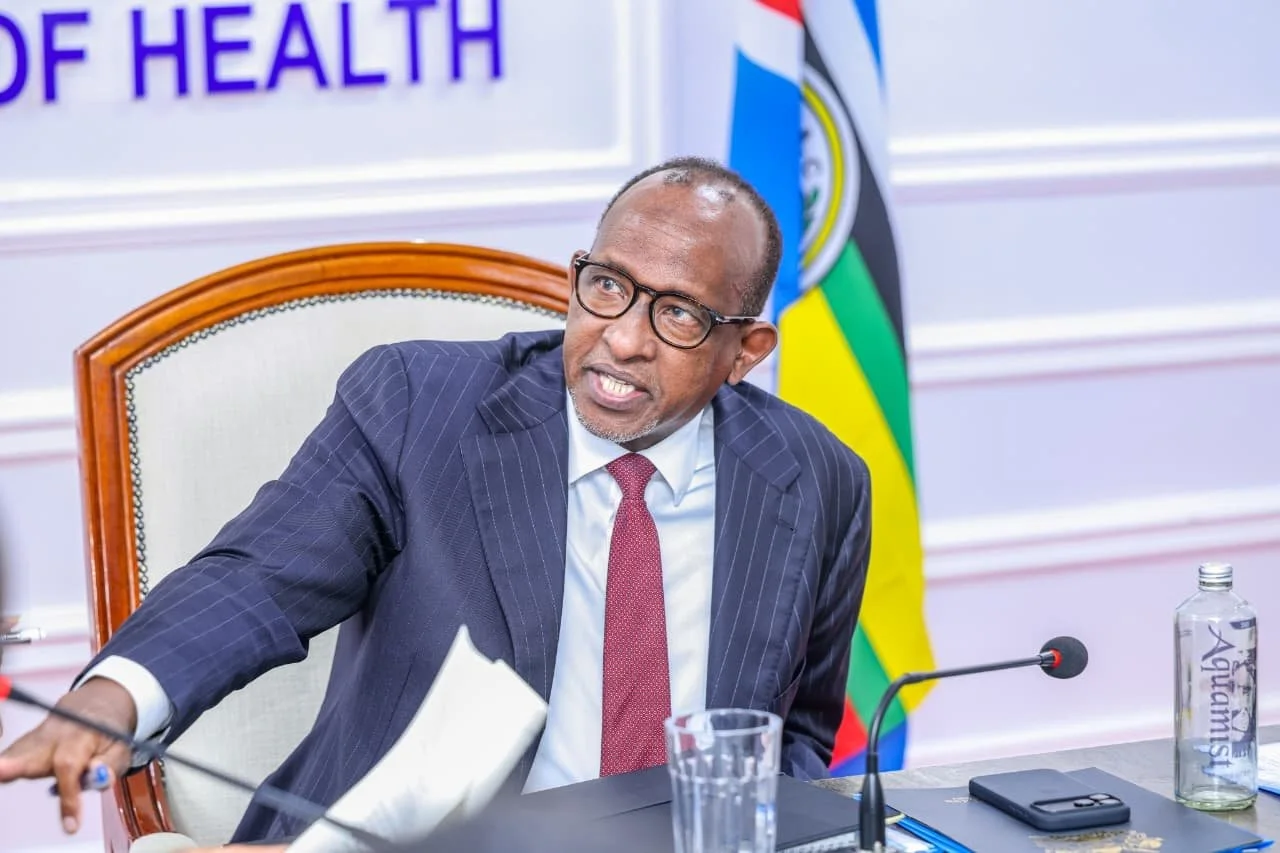
Kenya has widened the search for people exposed to its first imported Ebola patient, with health officials now using flight manifests and CCTV footage to track possible contacts at Jomo Kenyatta International Airport and Nairobi Hospital.
Health Cabinet Secretary Aden Duale said Wednesday on NTV that investigators were looking beyond the patient’s immediate contacts to identify airline crew, passengers and airport workers who may have interacted with him before he was isolated.
The expanded search includes immigration and customs officials, cleaners, baggage handlers and security personnel, as authorities seek to establish the full chain of possible exposure.
“We have the manifest list now,” Duale said. “The matter is, with the help of the airline chasing, and that's why I think two of them are out of town. Nairobi Hospital has given us the list of all the 23 who attended and were on duty and came into contact with this patient.”
Officials are also reviewing surveillance footage at JKIA and Nairobi Hospital to identify people who may not appear on the initial contact list.
“Now this morning we are also trying to use KAA and the CCTV to make sure we get the other players, those who clean that aircraft,” he said.
Duale said the number of contacts is likely to rise as the investigation moves from people who had direct exposure to those whose contact with the patient was less direct.
“Contact tracing is not something that can be done once, so it keeps on. You widen,” he said.
So far, 11 members of the patient’s family have been quarantined, while 23 Nairobi Hospital healthcare workers who attended to him have been identified and placed under monitoring.
Duale said not everyone identified as a contact would necessarily be quarantined, with health officials assessing the level of exposure before deciding whether an individual should be isolated or monitored.
Those identified will be followed for 21 days, the maximum incubation period cited by health authorities.
The latest tracing effort follows confirmation of Kenya’s first imported case of Ebola Bundibugyo virus disease.
The patient, a Kenyan who had lived in the Democratic Republic of Congo for seven years, travelled back to Kenya by road through Uganda before boarding a Jumbo Jet flight to Nairobi on October 3.
He developed fever, chills, fatigue, weakness, muscle pain, a sore throat and bleeding at an injection site before being taken directly to Nairobi Hospital by relatives.
Laboratory tests by the National Virology Reference Laboratory and the Kenya Medical Research Institute confirmed the infection. The patient died at about 11.30pm on October 5 while receiving supportive treatment.
On Tuesday, Duale said the ministry had identified 28 contacts linked to the patient and was pursuing 23 passengers and four crew members who travelled on the same flight.
The Health Ministry says it has screened 652,584 travellers since May and tested 267 suspected samples through five laboratories as part of measures to detect and contain the disease.
A total of 4,971 healthcare workers have also been trained on Ebola prevention and management.
Duale urged the public to remain calm as contact tracing and surveillance continue.
“I wish to assure the public not to panic, as all systems are in place to mitigate the spread of the disease,” Duale said.