Ethnic staffing imbalance, stalled projects dominate audit of Kaimosi Friends University
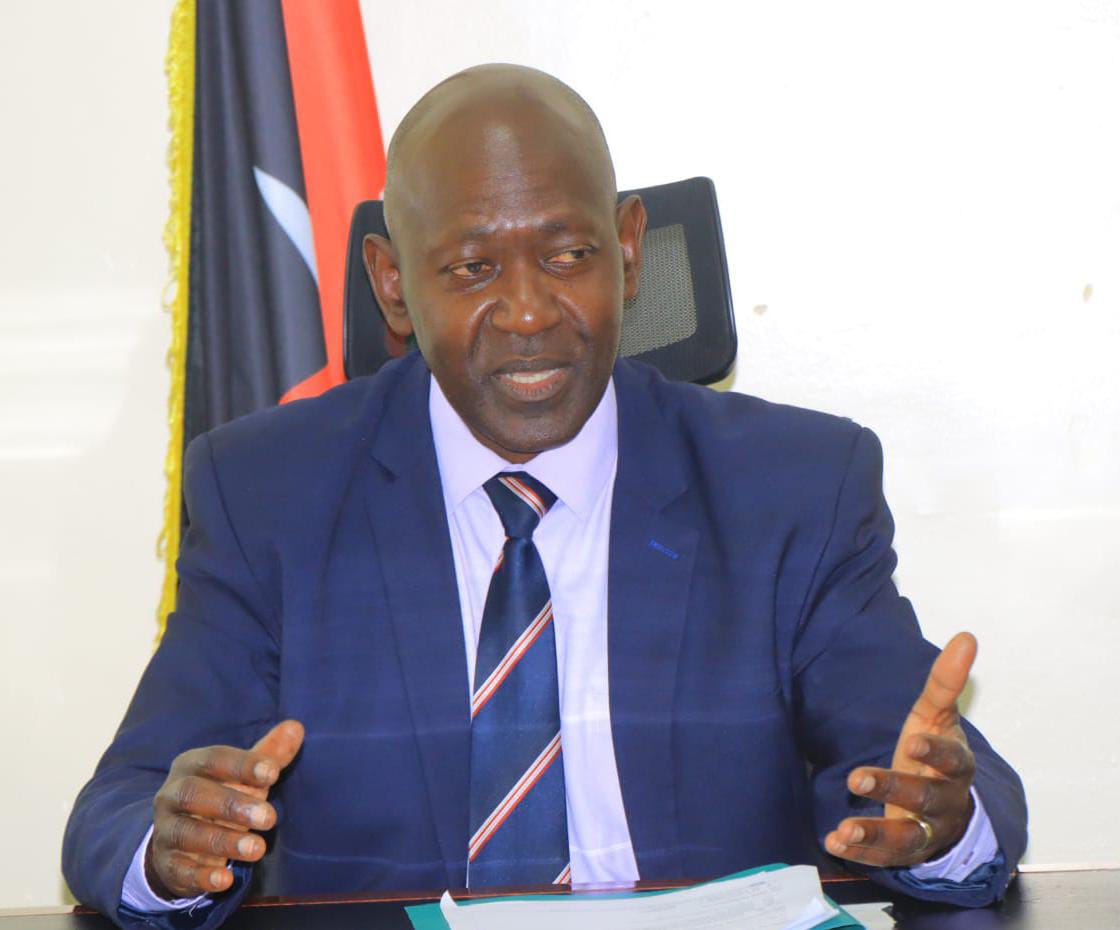
Vice-Chancellor Peter Mwita, appearing before the committee, confirmed that the university received an unmodified opinion from the Auditor General but acknowledged that several critical issues remain unresolved.
Kaimosi Friends University (KAFU) is under the spotlight after the latest Auditor General’s report for the 2024/2025 financial year highlighted ongoing governance, financial management, and project implementation challenges.
The findings were discussed before the National Assembly Public Investments Committee on Governance and Education on Wednesday, chaired by MP Wamboka Wanami, revealing persistent operational gaps despite previous oversight.
Vice-Chancellor Peter Mwita, appearing before the committee, confirmed that the university received an unmodified opinion from the Auditor General but acknowledged that several critical issues remain unresolved.
The report flagged discrepancies in budget performance, noting, “The statement of comparison of budget and actual amounts reflects capital expenditure budget and actual on comparable basis of Sh.186,481,769 and Sh.156,580,123 resulting in an under-expenditure of Sh.29,901,646 or 16 percent of the budget.”
The Auditor General warned that this under-spending, “affected the planned activities and may have impacted negatively on service delivery to the public.”
The committee was further informed that KAFU has not fully complied with ethnic diversity requirements under the National Cohesion and Integration Act, 2008.
“Review of the payroll bio data provided for audit revealed that out of 220 members employed by the university either on permanent or contract terms, a total of 148 representing 69.27 percent of all staff come from the dominant ethnic community contrary to Section 7(1) and (2) of the National Cohesion and Integration Act, 2008 which states that no public establishment shall have more than one third of its staff from the same ethnic community,” the report stated.
MP Wamboka pressed for clarity on why a single ethnic group dominates the workforce. Mwita explained, ‘’In 2014 the University started as a College of Masinde Muliro University with a total of 105 staff from one ethnic community (Luhya) who expressed interest to work in their home county.’’
He added, ‘’The University is striving to comply with the provisions of the National Cohesion and Integration by ensuring that during subsequent recruitment ethnic balancing is adhered to as at 30th June 2025, the staff ethnicity balance is at 67.8 percent, which is a drop from the previous financial year at 69.52 percent.’’
Concerns were also raised over delays in infrastructure development. Kimilili MP Kakau Bisau highlighted slow progress in key projects, including an ultra-modern library.
The Auditor General reported that the library, initially expected to be completed by January 2024 and later revised to August 2025, remained unfinished during a physical verification in September 2025.
“In the circumstances, the intended benefits of the project have not been realized and value for money may not be achieved for the expenditure incurred,” the report noted.
Other projects, including the perimeter wall, gates, gatehouse, and tuition block, have also lagged. Only 2.9 kilometres of the planned 8-kilometre perimeter wall had been completed, and construction of the tuition block had not started as of September 2025.
Mwita said, ‘’The project is currently at a completion rate of 23.5 percent and the amount certified to date is Sh.90,033,208, which accounts for 15 percent of the contract sum and the extension of project time was granted to 14th August 2026 as per the approved document.’’
He attributed the slow progress to delays in capital fund disbursements, noting that in FY 2023/2024, FY 2024/2025, and FY 2025/2026, no allocations were made towards the project.
The Auditor General also flagged weak debt management, with receivables from exchange transactions standing at Sh.190,555,226, contrary to the university’s own policy.
Mwita said, “an amount of Sh.18,421,221 had been outstanding for more than 1 year, contrary to the university fee policy and guidelines of June, 2024 on fee payments which requires that 100 percent clearance of fees shall be made by the 10th week from the official opening date of each semester.” He added that the university continues to follow up with HELB and the University Funding Board (UFB) to recover unremitted debts.
The committee is expected to review these issues further as it pushes for improved compliance, timely project completion, and better financial oversight at KAFU.


Comments
Sign in with Google to comment, reply, and like comments.
Continue with Google