
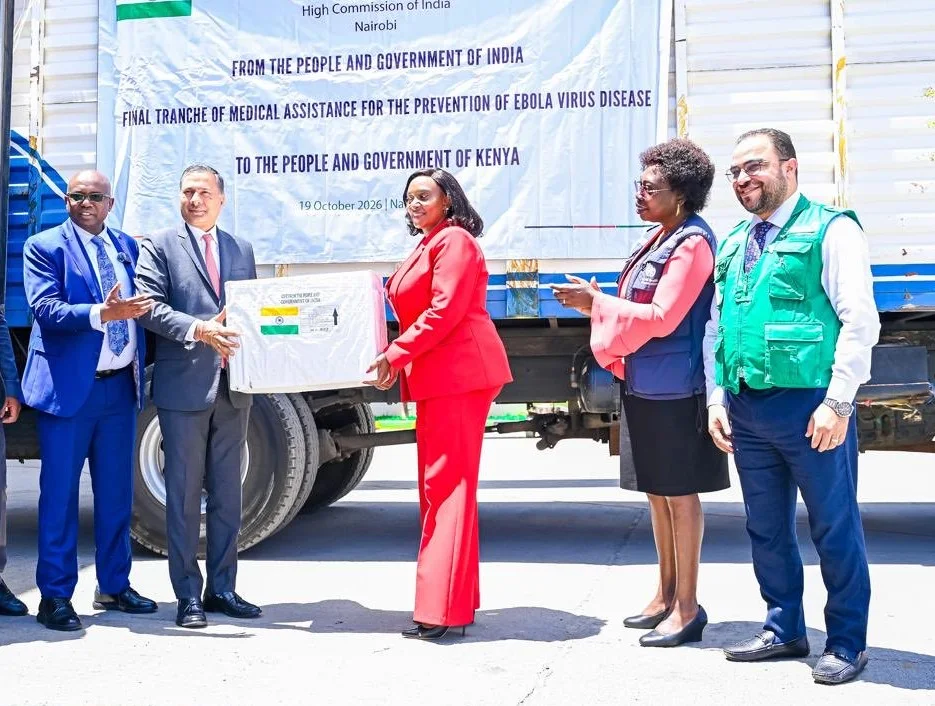
Kenya has received Ebola response supplies worth Sh83.39 million from the Government of India to strengthen efforts to contain the Bundibugyo virus disease outbreak, the Ministry of Health has announced.
The donation includes 6,000 personal protective equipment (PPE) kits, 60 powered air-purifying respirators, 30,000 N95 masks and more than 86,000 sample transport kits, alongside medical gowns, gloves, face shields, protective boots and infrared thermometers.
The supplies were handed over at the Kenya Medical Supplies Authority (KEMSA) facility in Embakasi, Nairobi, on Monday, with Principal Secretary for Public Health and Professional Standards Mary Muthoni receiving the commodities from India’s High Commissioner to Kenya, Dr Adarsh Swaika.
The Ministry said the equipment would support health workers, treatment and isolation centres, rapid response teams and screening activities at points of entry and health facilities.
The donation comes as Kenya strengthens its preparedness and response to the Bundibugyo strain of Ebola, a viral disease that can cause severe illness and death. The supplies are intended to improve the protection of frontline workers and support the safe handling and transportation of samples for testing.
The Ministry of Health said the donated equipment would help improve infection prevention and control measures, particularly among personnel who may come into contact with suspected cases.
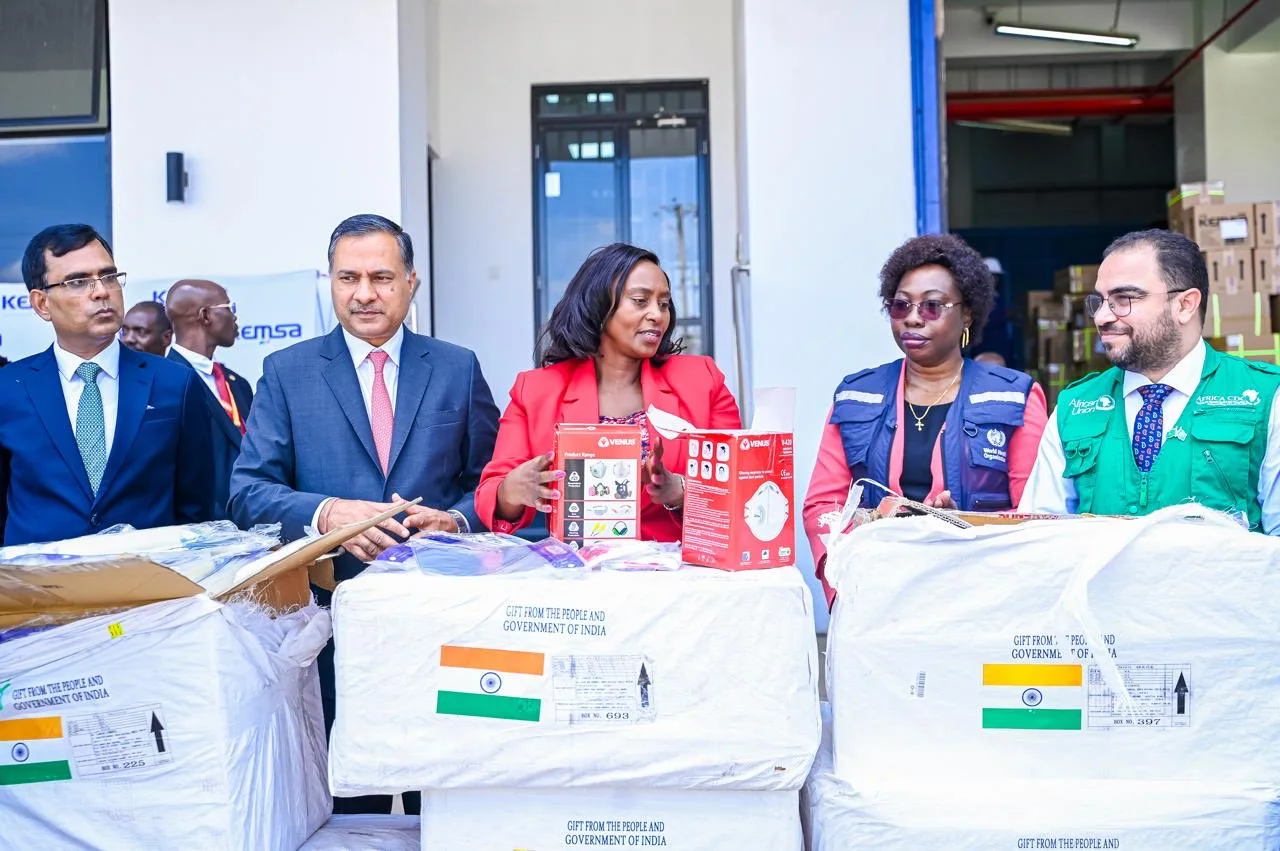
Powered air-purifying respirators provide respiratory protection for healthcare workers, while N95 masks and full-body protective equipment help reduce exposure to infectious materials when used correctly.
The sample transport kits are also important in ensuring specimens collected from suspected cases can be safely moved to laboratories for testing, helping health authorities establish diagnoses and guide treatment and containment measures.
The Ministry said the supplies would be distributed to support health workers and response teams involved in identifying, isolating and managing suspected cases.
It reaffirmed its commitment to containing the outbreak through early detection, isolation and strengthened infection prevention and control measures.
The government also urged Kenyans to remain calm and vigilant as health authorities continue surveillance and response activities.
Ebola is a severe viral disease that can spread through direct contact with the blood or bodily fluids of an infected person, or with contaminated materials. Early recognition of suspected cases, prompt isolation, laboratory confirmation and appropriate protective equipment are central to preventing further transmission.
Kenya’s preparedness measures are particularly important because the country serves as a regional transport hub, with international airports, road crossings and other points of entry connecting it to neighbouring countries.
Screening and surveillance at these entry points can help identify travellers who may require further assessment, although screening alone cannot detect every infection, particularly before symptoms develop.
Health workers also face risks when caring for suspected or confirmed patients without adequate protective equipment or when infection prevention protocols are not followed.
The donation from India adds to the supplies available to Kenya’s response teams as the Ministry seeks to strengthen readiness across health facilities and isolation centres.
The Ministry has emphasised early detection, isolation and infection prevention as key elements of its response, while calling on the public to remain alert and follow official health guidance.
The value of the donation, at Sh83.39 million, highlights the importance of international cooperation in supporting emergency health responses. However, the effectiveness of the supplies will also depend on timely distribution, adequate training, proper use and continued surveillance.