
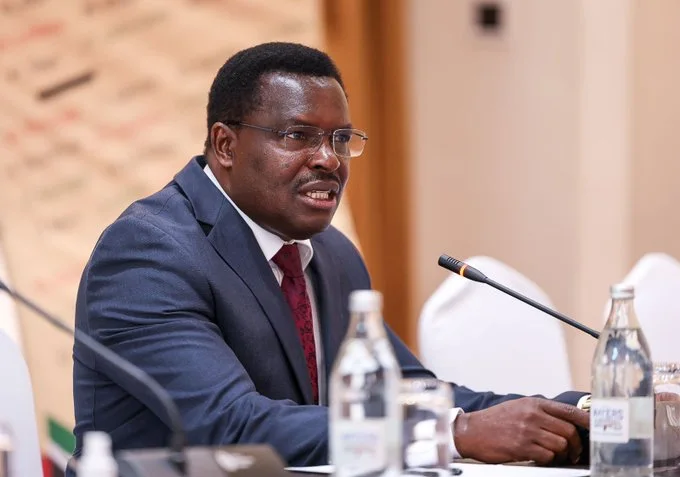
A debate over regional representation and the future direction of county leadership shaped the election of Tharaka-Nithi Governor Muthomi Njuki as the new chairperson of the Council of Governors (CoG), following a contest that pitted calls for continuity against demands for a wider regional spread of leadership.
Njuki, who served as deputy chairperson under outgoing chairman Ahmed Abdullahi of Wajir, emerged ahead of Bungoma Governor Kenneth Lusaka after governors weighed competing views on who should lead the council as political activity intensifies ahead of the 2027 General Election.
While Njuki’s supporters wanted an experienced member of the outgoing leadership to take over, Lusaka’s backers argued that the chairmanship should move to another region, citing the number of leaders from the Mount Kenya region who had previously occupied the position.
Former Meru Governor Peter Munya, former Embu Governor Martin Wambora and current Kirinyaga Governor Anne Waiguru are among the leaders from the region who have served as CoG chairpersons.
Other former leaders of the council include former Kakamega Governor Wycliffe Oparanya, former Turkana Governor Josephat Nanok and former Bomet Governor Isaac Ruto.
The succession question first came up during a governors’ meeting in Kwale, where Njuki and Lusaka emerged as possible contenders to replace Abdullahi after he completed his two terms.
Njuki’s camp pointed to his experience in the council’s leadership as a reason to maintain the existing direction, while Lusaka’s supporters pressed for a change that would give another region a chance to lead.
The differences came into focus during yesterday’s election meeting in Nairobi, attended by at least 31 governors who gathered to choose the council’s next leadership.
Both Njuki and Lusaka presented their manifestos before their colleagues considered who should take over the chairmanship. The process sought to resolve the competition while avoiding divisions that could weaken the council’s ability to speak with one voice on issues affecting county governments.
Njuki won the chairperson’s position, while Lusaka secured the deputy chairperson’s seat, bringing both contenders into the new leadership structure.
The arrangement placed Njuki, who had worked alongside Abdullahi, at the head of the council while giving Lusaka a senior role in the team. It also offered a way to accommodate competing interests following the debate over regional representation.
Baringo Governor Benjamin Cheboi retained his position as the council’s whip.
Njuki moves to address governors’ concerns
The leadership changes came alongside discussions on the issues governors expect the new team to prioritise, including the timely disbursement of funds to counties, pension arrangements for governors and greater public visibility for the council’s work.
County chiefs also want the council to strengthen its engagement with the national government, particularly on matters that affect the running of county administrations and the delivery of services under devolution.
In his first address as chairperson, Njuki sought to assure governors that his relationship with the national administration would not prevent him from defending the interests of all 47 counties.
“I would like to allay the fears of some of my colleagues who thought that by being close to the government, I would be compromised. That wouldn’t be the case,” Njuki said.
He promised to push for the timely release of funds to county governments, noting that President William Ruto and Deputy President Kithure Kindiki supported the devolved system of government.
Njuki also recognised that his tenure would begin as political campaigning gathers pace ahead of the 2027 elections. However, he said the political environment would not divert him from the responsibilities of leading the council.
The assurance comes as county governments continue to rely on cooperation with the national administration to address funding concerns and secure the full transfer of functions assigned to them under devolution.
Five areas set to guide the new team
The incoming leadership has outlined five areas it intends to pursue, ranging from capacity building to healthcare monitoring and the implementation of devolved functions.
One of the priorities is the establishment of a devolution training institute, which is expected to form part of the council’s efforts to strengthen the capacity of county governments.
The team also plans to improve inter-county Maternal and Perinatal Death Surveillance and Response, a system used to monitor maternal and perinatal deaths and support efforts to address the factors contributing to them.
Another target is the full automation of the council’s data, alongside efforts to ensure that governors’ pension arrangements become fully operational.
The fifth priority is to press for the complete transfer of devolved functions to county governments, an issue that remains central to the relationship between the two levels of government.
Together, the five areas will form the basis of the new team’s work as it seeks to address administrative gaps and advance the interests of counties.
Lusaka said his decision to take up the vice-chairperson position was driven by the need to keep the council united.
His acceptance of the role means the two candidates who contested the top position will serve together in the new leadership, as the council seeks to move beyond the disagreements that marked the succession debate.
Governors take up sectoral leadership roles
The election meeting also produced a new line-up of governors to head the council’s sectoral committees, which cover key areas of county administration and service delivery.
Nairobi Governor Johnson Sakaja was elected to lead the transport and energy committee, while Waiguru will head the agriculture committee.
Kakamega Governor Fernandes Barasa secured the chairmanship of the finance and planning committee, with Mombasa Governor Abdulswamad Nassir elected to lead the health committee.
Nakuru Governor Susan Kihika will oversee the land and housing committee, while Nyeri Governor Mutahi Kahiga will head human resources and labour.
Narok Governor Patrick Ole Ntutu was elected to lead tourism and wildlife, while Kericho Governor Erick Mutai will take charge of the education committee.
The appointments distribute leadership responsibilities across several sectors, with the committees expected to coordinate the council’s work in their respective areas.
Njuki’s immediate challenge will be to bring the governors together around their shared priorities while responding to concerns about county financing, pensions and the transfer of devolved functions.
His election followed a contest in which regional representation and continuity emerged as the central issues. With Lusaka taking the deputy chairperson’s position and other governors assuming sectoral roles, the new team will be expected to maintain unity while strengthening the council’s influence in matters affecting all 47 counties.