
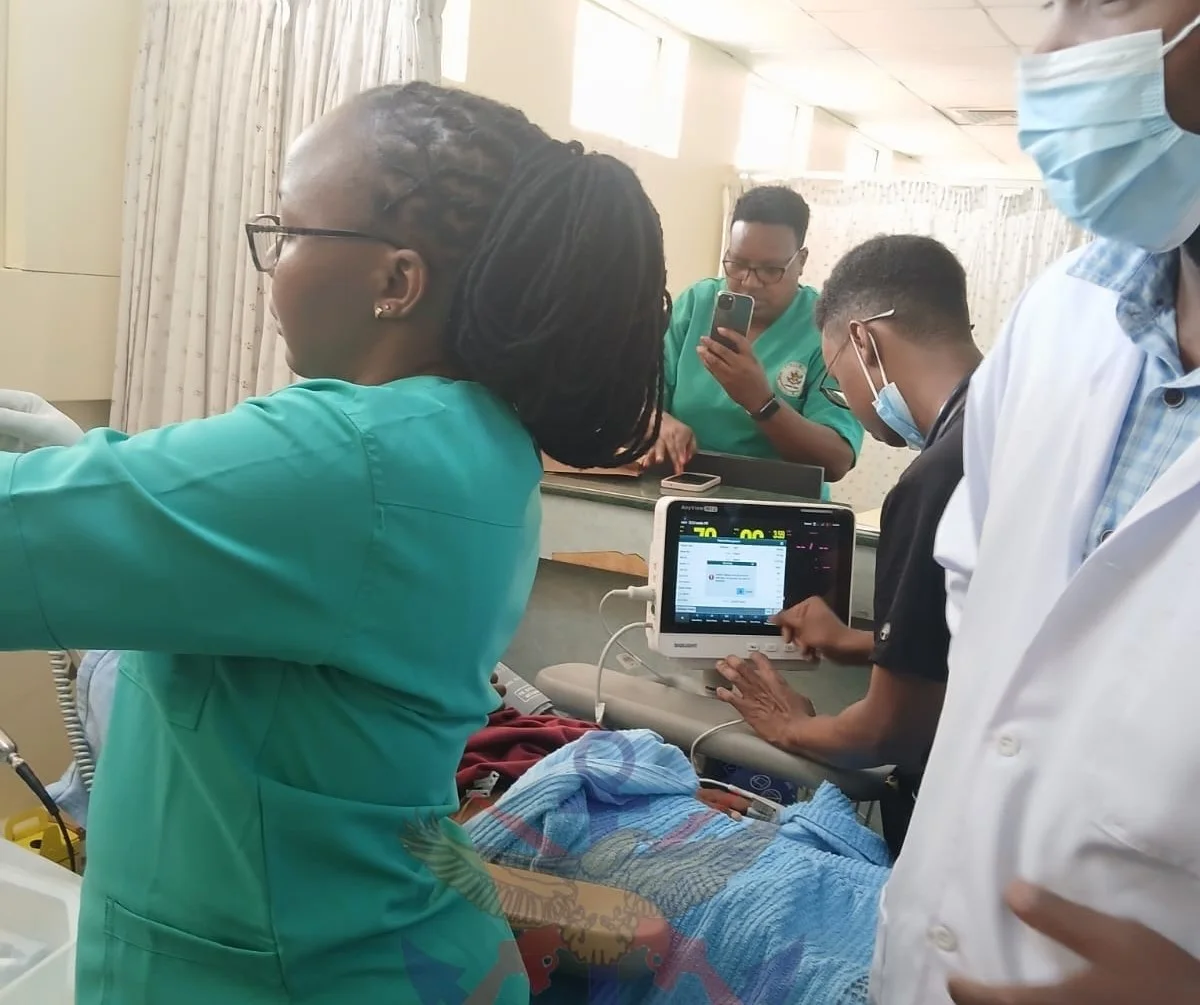
The Defence Forces Memorial Hospital has successfully performed its first red blood cell exchange procedure, marking a major step in expanding specialised medical care within the Kenya Defence Forces health system.
The procedure was carried out on October 2, 2026, at the hospital’s Renal Unit using the newly acquired Spectra Optia apheresis system. It involved a 15-year-old girl living with sickle cell disease.
Red blood cell exchange is a specialised treatment mainly used for patients with sickle cell disease, where red blood cells can change from their normal round shape into a crescent or sickle shape.
These abnormal cells can block small blood vessels, causing complications such as severe pain, blood clots and anaemia.
During the procedure, a blood cell separator removes the patient’s abnormal red blood cells and replaces them with compatible donor red blood cells. Other components of the blood, including plasma and white blood cells, are returned to the patient.
The treatment does not cure sickle cell disease because it does not stop the body from producing abnormal red blood cells. Instead, it forms part of the wider management of the condition and can help reduce the proportion of sickled cells in the bloodstream.
Red cell exchange can also be used in managing other conditions affecting red blood cells, including severe malaria and polycythaemia, a condition in which the body produces too many red blood cells.
At DFMH, the procedure was made possible through the acquisition of the Spectra Optia apheresis system, which allows clinicians to separate and process specific blood components.
The hospital says the new capability will allow eligible patients to receive specialised treatment at the facility, reducing the need for referrals to external healthcare centres.
“This milestone demonstrates our commitment to strengthening specialised healthcare through modern technology and skilled medical professionals,” the hospital said.
The procedure involves drawing blood from the patient through a vein, passing it through the blood cell separator and returning the remaining blood components together with replacement red blood cells through another vein.
The hospital says only a small amount of blood is outside the body at any given time during the procedure, making a steady flow through the machine important.
The new technology also provides a platform for DFMH to expand other therapeutic apheresis procedures and advanced transfusion services.
The development is expected to benefit KDF personnel, their families and other eligible patients by improving access to specialised treatment within the military health system.
DFMH says the achievement further strengthens its role as a specialised referral facility and will support the continued development of complex haematological care.