
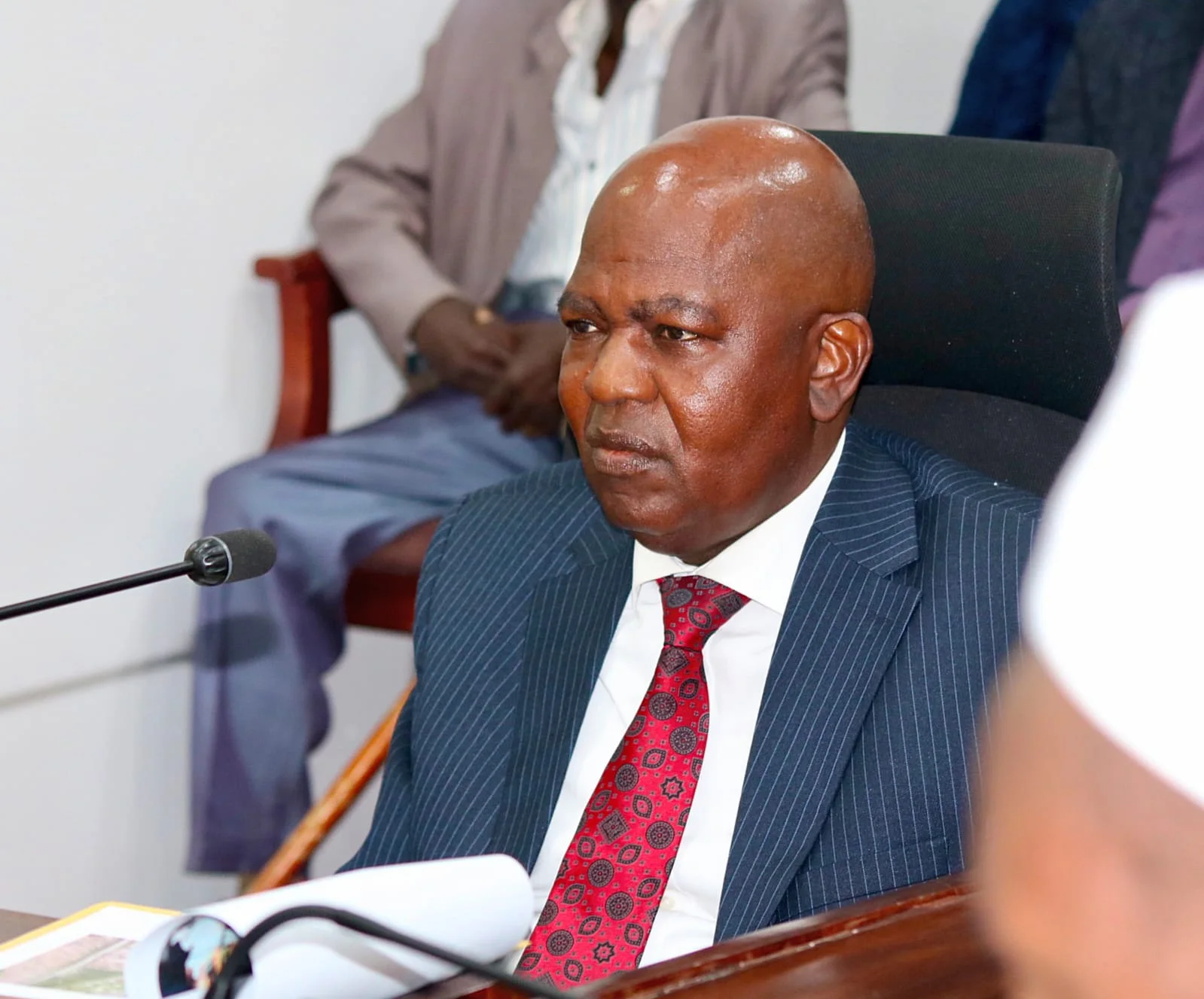
Kenya Railways Corporation is seeking government support to complete stalled relocation housing for residents displaced by railway projects in Kibera, years after funding challenges left thousands of planned homes and business premises unfinished.
Managing Director Philip Mainga told the Senate Committee on Roads, Transportation and Housing on Wednesday, October 14, that the corporation was in talks with the State Department for Housing and Urban Development to deliver additional units under the government’s Social Housing Development Programme.
The committee is examining a petition by Victor Wamae Mungai and 13 other residents of Laini Saba and Woodley wards in Kibra Constituency, who have raised concerns over the relocation of people affected by railway projects.
In its submission, Kenya Railways said encroachment on the railway reserve had compromised safety and disrupted train operations.
“Extensive encroachment in sections of the 60-metre railway reserve poses a major safety risk and has been a hindrance to effective railway traffic operation,” the corporation said.
The resettlement programme was launched in 2013 under the World Bank-funded East Africa Trade and Transportation Facilitation Project to clear the railway corridor while providing alternative accommodation and business spaces for affected residents.
The initial plan provided for 4,380 residential units and 3,445 business units in Kibera and Mukuru, alongside sanitation facilities, footbridges, underpasses, schools and garages.
However, the project's credit period expired on September 30, 2015, with implementation at about 85 per cent. The government subsequently advised that the programme be closed in 2020 after insufficient budget allocations hampered completion of the remaining works.
By that time, 3,037 residential units and 1,990 business units had been completed, leaving thousands of planned facilities undelivered.
Kenya Railways said 6,789 project-affected persons had been vetted, including 6,570 residential and business cases and 219 institutional cases. The corporation estimated that 7,108 units were needed, among them 438 for institutions and 100 for three special schools.
Of the available units, 607 were still under construction, while 1,030 remained unoccupied. The corporation cited illegal occupation, separate allocations under the Kenya Slum Upgrading Programme and incomplete sewer works among the factors affecting relocation. Court disputes involving a contractor had also disrupted construction in Laini Saba.
Under the proposed partnership, the agencies are considering 3,713 social housing units in Makongeni, Kisumu Ndogo, Gatwekera, the AIC area and Kibera Station. The developments would incorporate social amenities, early childhood development centres and commercial facilities.
Plans also include footbridges and pedestrian underpasses to improve movement around the railway corridor.
Although architectural designs have been completed and submitted for review, Kenya Railways has not provided a completion timeline or disclosed the additional funding required to finish the outstanding works.