
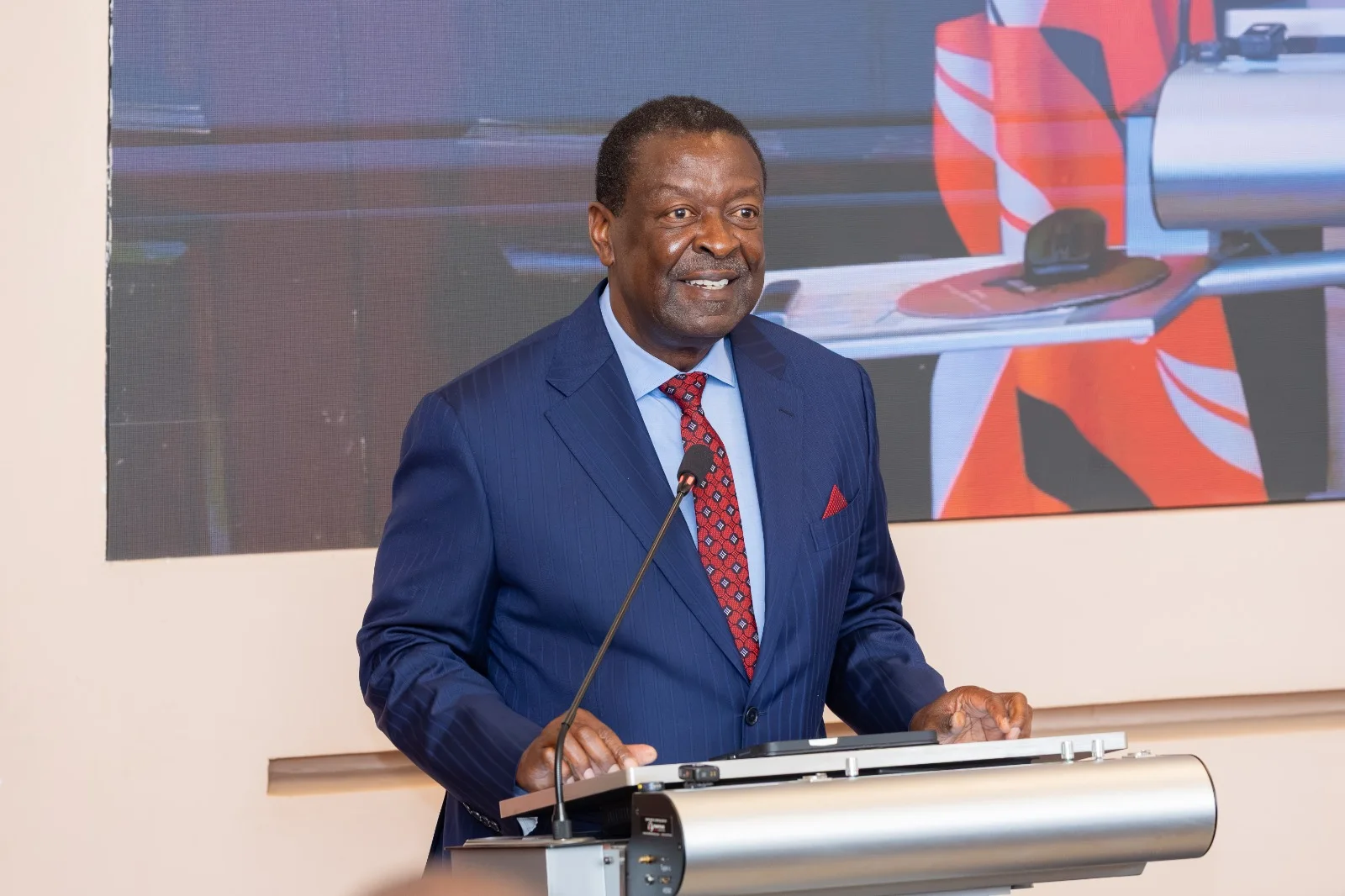
Prime Cabinet Secretary Musalia Mudavadi has warned that competition among global powers for influence in Africa could worsen political and economic tensions, potentially triggering conflicts within and between countries.
Mudavadi said Africa's natural resources, mineral wealth and rapidly growing youthful population have increased its strategic importance to traditional and emerging powers seeking to expand their influence through infrastructure financing, security cooperation and strategic partnerships.
Speaking on Wednesday during a lecture at the National Defence College in Karen, Nairobi, Mudavadi called for transparent, inclusive and locally driven approaches to international partnerships to prevent external interests from aggravating existing tensions.
“The resulting competition among external actors can, and already has, exacerbated existing political and economic tensions. If not managed through transparent, inclusive, and locally driven approaches, these tensions can spark both intra and inter-state conflicts,” Mudavadi said.
The lecture, titled “The Role of Kenya’s Foreign Policy in Regional Peace and Security and the Contemporary Strategic Environment,” was delivered at the invitation of National Defence College Commandant Lieutenant General Juma Shee Mwinyikai.
Mudavadi said Africa continued to make progress in economic growth, democratic governance, and regional integration, but remained vulnerable to persistent insecurity, weak governance, and socio-economic inequalities.
“Protracted conflicts, intensified activities of non-state armed groups and transnational organised crime continue to undermine state authority and hinder development in several regions,” he said.
He identified Eastern Africa as one of the continent's most strategically sensitive regions, citing cross-border tensions, conflicts within and between states, and threats from violent extremist groups such as Al-Shabaab.
The ongoing conflict in Sudan, political tensions in South Sudan, insecurity in Somalia and instability in eastern Democratic Republic of Congo were among the challenges he said continued to affect regional peace and security.
Mudavadi said addressing the threats required coordinated approaches combining diplomacy, security, development and governance rather than relying on isolated interventions.
“Strengthening regional cooperation, enhancing international cooperation, and fostering inclusive political settlements are crucial for navigating the complexities of the evolving strategic landscape,” he said.
He reaffirmed Kenya's commitment, under President William Ruto, to supporting regional institutions, including the East African Community (EAC), the International Conference on the Great Lakes Region (ICGLR), and the Intergovernmental Authority on Development (IGAD).
However, he noted that the institutions faced limitations arising from inadequate financial resources and political differences among member states.
Mudavadi also expressed concern that prolonged conflicts had exposed weaknesses in international diplomacy, undermined confidence in global governance institutions, and diverted attention and resources from other priorities.
Addressing senior military officers, civil servants, private sector representatives and participants from neighbouring countries attending Course No. 29 of the 2026/2027 academic year, he outlined Kenya's revised Foreign Policy 2024, anchored in Sessional Paper No. 1 of 2025.
The framework identifies eight strategic areas: peace and security diplomacy, economic and commercial diplomacy, socio-cultural diplomacy, diaspora diplomacy, digital diplomacy, environmental and climate diplomacy, global health diplomacy, and global governance and multilateral diplomacy.
Mudavadi said the priorities were intended to protect Kenya's sovereignty, advance its national interests, promote economic prosperity and strengthen its international influence.
He stressed that lasting peace required more than military preparedness or diplomatic engagement alone.
“For Kenya, foreign policy is not simply an instrument for managing relations between states. It is a means of protecting our sovereignty, creating opportunities for our people, safeguarding our development ambitions and contributing to a more peaceful and secure world,” he said.
He urged Kenya to keep investing in strategic partnerships, regional institutions, and national capabilities to anticipate threats, prevent conflicts, and support peaceful political settlements.
Mudavadi also called for a fairer, more representative global governance system that can respond effectively to emerging security challenges.