
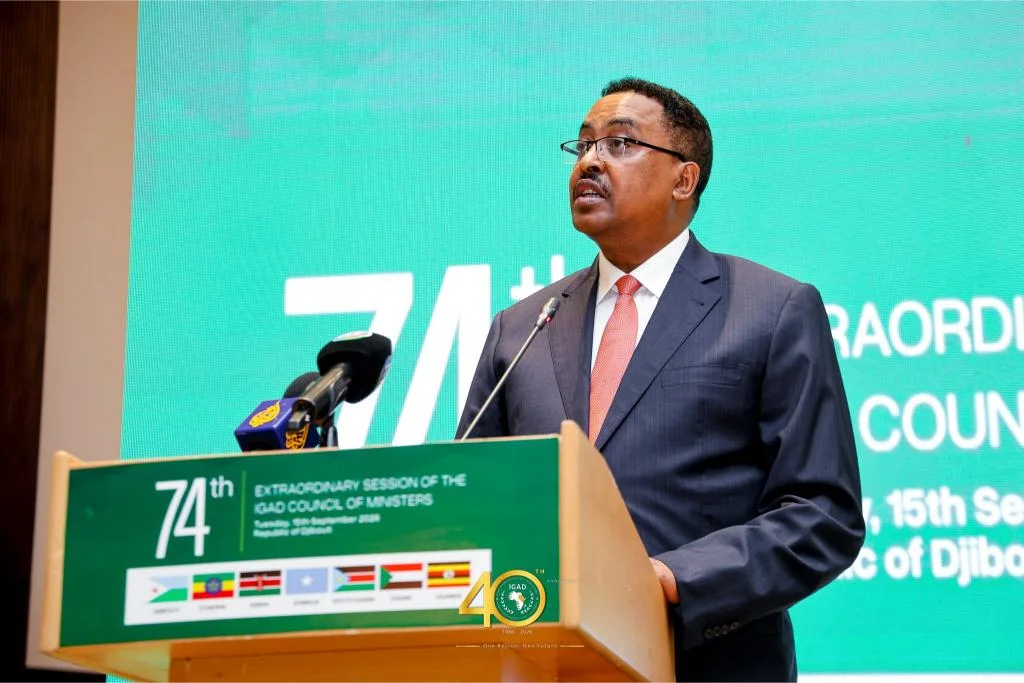
Four decades after countries in the Greater Horn of Africa came together to fight drought and desertification, the regional bloc is embarking on a new chapter following the enforcement of a treaty designed to strengthen its legal standing and broaden cooperation among member states.
Kenya and Somalia have welcomed the implementation of the 2023 Treaty Establishing the Intergovernmental Authority on Development (IGAD), saying the agreement will provide a stronger foundation for addressing regional challenges and advancing shared development goals.
The treaty became operational on November 16, 2026, after Somalia completed its ratification in January, meeting the final requirement needed for its entry into force.
In separate statements released on Wednesday, November 18, the two governments congratulated IGAD member states and the organisation's Secretariat, describing the development as an important step in strengthening the bloc's institutional capacity.
Somalia, a founding member of the organisation, said the development was particularly meaningful as IGAD marks 40 years since its establishment in 1986 as the Intergovernmental Authority on Drought and Development (IGADD).
“The Ministry of Foreign Affairs and International Cooperation of the Federal Republic of Somalia welcomes the entry into force of the 2023 Treaty Establishing the Intergovernmental Authority on Development (IGAD) on 16 November 2026, and congratulates IGAD Member States and the IGAD Secretariat on this milestone,” read the notice in part.
Somalia's Ministry of Foreign Affairs and International Cooperation said the agreement gives IGAD a stronger legal and institutional structure to pursue its regional objectives.
The ministry noted that the treaty reinforces the commitment of member states to maintaining peace and security, promoting economic integration and supporting sustainable development across the region.
Mogadishu also reaffirmed its position on the importance of respecting the sovereignty and territorial integrity of member countries, alongside mutual respect and regional solidarity.
The government pledged to cooperate with other IGAD members to ensure the treaty is fully implemented and its objectives translated into stronger regional partnerships.
It also recognised the contribution of the organisation's Secretariat, under Executive Secretary Dr Workneh Gebeyehu, in steering its work and advancing its mandate.
Somalia said it remained committed to efforts aimed at building a more united and effective IGAD that responds to the interests of people throughout the Greater Horn of Africa.
Kenya's Ministry of Foreign and Diaspora Affairs separately welcomed the treaty, pointing out that it takes over from the 1996 Agreement Establishing IGAD.
Nairobi observed that the organisation had grown beyond its original responsibility of coordinating regional efforts against drought and desertification, taking on a wider range of development priorities.
These include expanding trade and the free movement of people, improving infrastructure, encouraging innovation, strengthening climate resilience and promoting peace and security.
However, Kenya noted that the treaty comes into force against a backdrop of persistent difficulties in the Greater Horn of Africa, including political instability, security concerns, economic pressures and climate-related threats.
The ministry pointed out that these challenges exist alongside the region's considerable natural resources, skilled population and strategic geographical location.
It expressed confidence that the new agreement would help establish a rules-based regional institution better equipped to promote prosperity and respond to longstanding problems affecting member countries.
Kenya also commended IGAD member states for sustaining their commitment to the organisation, while recognising the efforts of the Secretariat and its employees under Gebeyehu's leadership.
IGAD's transformation over 40 years
The treaty's implementation coincides with the organisation's 40th anniversary, marking four decades since its creation in 1986.
IGAD began as IGADD, an initiative established to bring countries together in responding to drought and desertification, which were major concerns across the region.
Its transformation in 1996 saw the organisation adopt a wider development agenda, incorporating economic cooperation, regional integration and security matters.
The 2023 agreement is intended to provide a firmer legal basis for coordinating these responsibilities and improving collaboration among its member states.
Kenya and Somalia have both reiterated their support for using IGAD as a platform to advance regional peace, security and economic integration.
Their endorsements come as the Greater Horn of Africa continues to grapple with political, economic and environmental pressures, placing renewed attention on the need for stronger cooperation among neighbouring countries.