
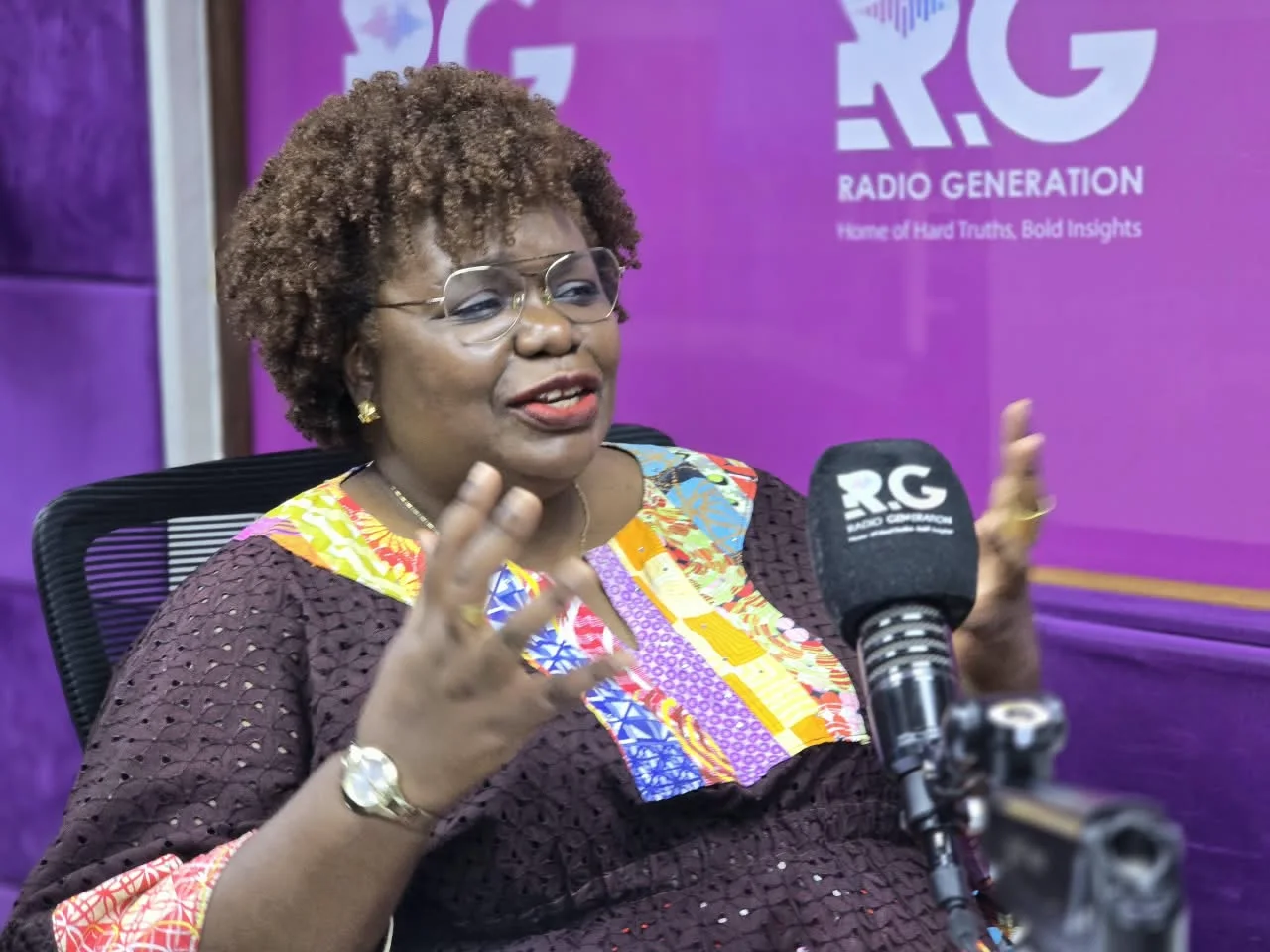
Executive coach and leadership facilitator Uduak Amimo has warned that Kenya’s Competency-Based Curriculum (CBE) could widen socioeconomic inequalities if learners from low-income households lack the resources needed to benefit from its practical learning approach.
Speaking on Radio Generation on Wednesday, Amimo said the curriculum’s emphasis on experiential learning and school projects could disadvantage children in under-resourced schools, whose families may struggle to afford materials and other requirements.
She argued that although the curriculum’s objectives were worthwhile, unequal access to resources risked deepening the divide between learners in affluent private schools and those attending public institutions with limited facilities.
“Project-based learning and experiments may be manageable for middle-class families, but they can place a significant financial burden on low-income households, widening the educational gap between children from different socioeconomic backgrounds.”
She warned that these inequalities could affect educational attainment and limit social mobility for children from disadvantaged backgrounds.
Kenya began rolling out the CBC (now CBE) in 2017 to shift learning away from a predominantly examination-oriented approach towards developing learners’ competencies, practical skills and ability to apply knowledge.
However, questions about resources, teacher preparedness and infrastructure have remained central to the debate surrounding implementation.
A 2025 study by the Brookings Institution’s Center for Universal Education, examining CBE implementation across three Kenyan counties, found that gaps in teacher preparation, learning materials, digital tools and infrastructure constrained the equitable development of learners’ competencies.
It also identified differences in parental engagement as a factor affecting implementation.
Amimo maintained that her concerns about educational inequality grew from her experience organising career days for learners in underserved schools in Kenya and other countries.
She recalled that private schools often approached her to speak to their students about careers in journalism and the media, prompting her to question whether children from low-income families had access to similar opportunities.
“I decided to organise a career day at a school served by Nairobi Chapel, and I was assigned Kawangware Primary School. The event was very successful,” Amimo said.
The experience encouraged her to organise similar activities in underserved schools, exposing her to the differences in opportunities available to learners from different economic backgrounds.
Amimo also questioned whether schools had been adequately equipped to implement the curriculum, arguing that practical learning requires sufficient teaching staff, equipment and appropriate facilities.
Government figures published in January 2025 by the Ministry of Education highlighted infrastructure gaps in preparation for the transition to senior school. The report listed shortages of 1,223 classrooms, 2,804 science laboratories, 7,801 ICT laboratories, 27,181 sanitation facilities and 1,750 workshops.
The figures underline the challenge of ensuring that learners across different schools have comparable opportunities to undertake practical activities.
Amimo clarified that teacher shortages could also leave learners without a proper foundation in particular subjects, affecting their ability to understand more advanced concepts as they progressed through the education system.
She further criticised the treatment of teachers, arguing that educators working in marginalised areas often lack the facilities needed to support effective learning.
The government has allocated substantial resources to CBE implementation.
In January 2025, Education Cabinet Secretary Julius Ogamba reported that approximately Sh85.5 billion had been spent on CBE in primary schools between the 2016/17 and 2024/25 financial years, while Sh61.66 billion had been invested in junior schools during the 2023/24 and 2024/25 financial years.
Amimo, however, questioned whether reforms had been introduced with sufficient preparation and resources to ensure equitable outcomes across schools.
She argued that the previous education system could have been strengthened by incorporating relevant practical skills instead of implementing sweeping changes before addressing existing capacity gaps.
“The intention is good, but the execution is still flawed, and that's what you're seeing when we see these reports and surveys that say that literacy and numeracy skills are still lagging.”
Amimo called for better planning, adequate funding and a fairer distribution of resources, arguing that family income and school facilities should not determine the quality of education a child receives.