
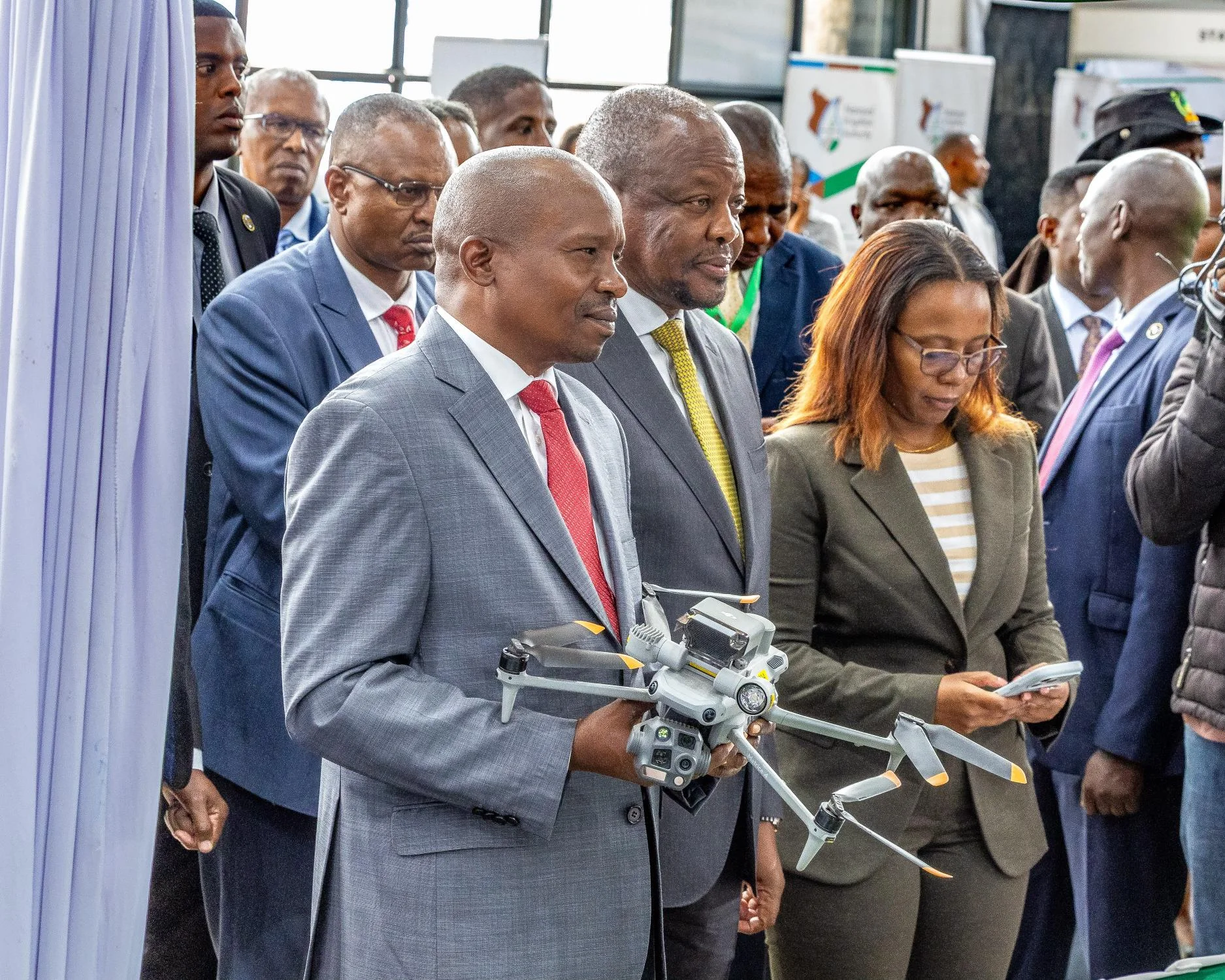
The Government is shifting its focus in agriculture from simply increasing food production to making farming more profitable, with reforms targeting lower input costs, higher yields, better prices for farmers and more value from Kenyan agricultural products.
Deputy President Kithure Kindiki said the approach was at the heart of the Bottom-Up Economic Transformation Agenda (BETA), with agriculture expected to help strengthen food security, create jobs, raise household incomes and grow Kenya’s exports.
Kindiki said the Government was working to change the economics of farming by tackling the costs and challenges that affect farmers from the time they acquire inputs to when they sell their produce.
He spoke on Wednesday during the official opening of the Agriculture and Food Security Transformation Summit at the Jamhuri Park ASK Showgrounds in Nairobi.
He said agriculture remained a key part of Kenya’s economy because it supports food production, provides employment, generates export earnings and contributes to household incomes.
“Four years ago, the Government made a deliberate decision to place agriculture at the centre of our economic transformation, because we understood a simple truth: when agriculture works, Kenya works,” Kindiki stated.
The Deputy President said the Government’s agricultural programme was no longer focused only on producing more food, but also on reducing the cost of farming.
He said farmers continue to face expenses related to seeds, animal feeds, farm machinery, veterinary services, transport and access to finance, while climate-related risks add further pressure to their businesses.
Among the measures highlighted by Kindiki is the reduction in fertiliser prices, with the cost of a 50-kilogramme bag falling from more than Sh7,000 in 2022 to Sh2,500 in 2025 and Sh2,000 by September 2026.
More than 34.5 million bags of subsidised fertiliser have been distributed since the programme began, with the Government estimating that the intervention has saved farmers more than Sh100 billion.
The Government has also increased the use of digital platforms in the delivery of agricultural services.
Registration on the Kenya Integrated Agricultural Management Information System (KIAMIS) has grown from about 300,000 farmers in 2022 to more than eight million.
Kindiki, however, said the number of farmers registered on the system was not the main measure of whether the reforms were working.
“The ultimate measure is not the number of farmers registered, but how much is harvested from an acre, how much milk a cow produces, how much livestock fetches in the market, the price received at the farm gate and, most importantly, the income that remains in the household.”
The dairy industry has also recorded growth, with milk production increasing from about 4.6 billion litres to 5.2 billion litres.
At the same time, the guaranteed minimum price for milk has risen from Sh37 to Sh50 per litre, giving farmers better returns for their produce.
The Government is also seeking to address food shortages by moving two million farmers from producing below their household needs to generating a surplus.
Kindiki said this would help increase local food supplies while reducing the country’s dependence on imports.
He said production had increased in several key agricultural value chains, including maize, rice, sorghum, potatoes and avocado, while maize imports had fallen substantially.

The Government is also looking beyond production by seeking to earn more from agricultural goods through processing and value addition.
Tea earnings have increased from about Sh138 billion to Sh181.7 billion, while dairy export earnings have risen from Sh4.9 billion to Sh9.4 billion.
Meat export earnings have also grown from Sh8.9 billion to Sh12.9 billion.
To support more processing closer to farming areas, the Government is equipping 17 County Aggregation and Industrial Parks.
The facilities are expected to support the storage, processing and value addition of agricultural products, allowing farmers and businesses to handle more of their produce within the counties.
Kindiki said the next stage of the agriculture programme would focus on creating a connected system that links farmers to markets and industries.
He described the approach as moving “from seed to farm, from farm to factory and from factory to market”, with the Government taking a greater role in creating an environment that allows private investors and innovators to drive growth.
The Deputy President said the transformation of agriculture must eventually be felt by ordinary households through increased incomes, affordable food, employment opportunities and stronger local industries.
“Progress is not the destination. Our ultimate test is whether a farmer earns more, whether a Kenyan family has enough affordable food, whether our young people find jobs and enterprises in agriculture, whether our industries receive locally produced raw materials, and whether Kenya earns more from what it produces,” Kindiki concluded.