
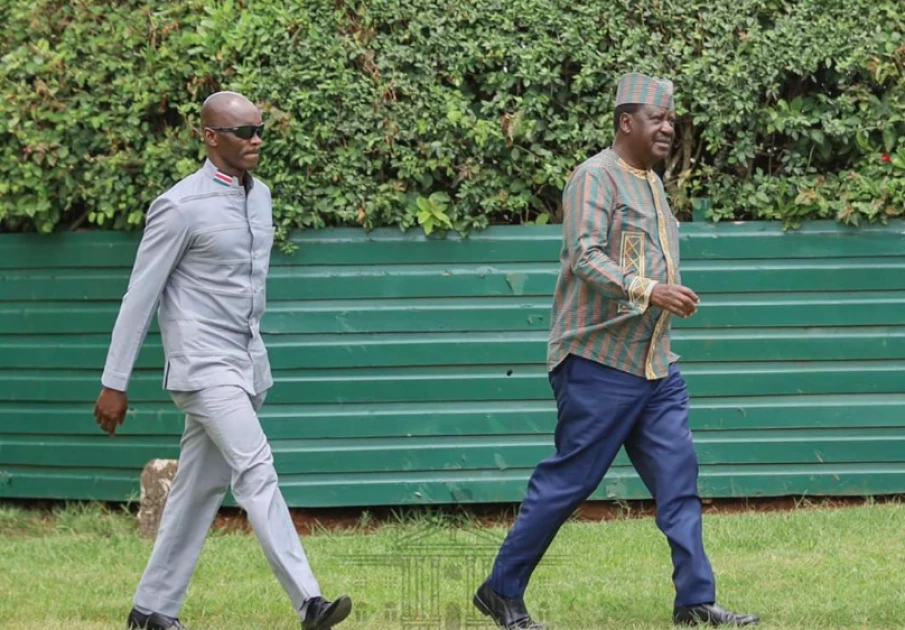
Maurice Ogeta, the longtime bodyguard of the late former Prime Minister Raila Odinga, has recounted how an unexpected encounter at Nairobi Safari Club in 1997 marked the beginning of a relationship that lasted nearly three decades.
Ogeta, who worked as a health club and fitness manager at the hotel, said his first meeting with Raila unfolded during a tense security incident that required quick thinking, a change of clothes and an escape through an emergency exit.
In an interview with NTV on Sunday, Ogeta said he was working at the hotel when Raila, then a Lang’ata Member of Parliament, visited the health club for his regular workout.
Ogeta recalled that the incident began when a group of six men dressed in suits arrived at the health club and asked to see Raila.
The receptionist alerted him, prompting Ogeta to establish whether his employer was expecting visitors. He said Raila’s reaction raised concerns about the unexpected arrival.
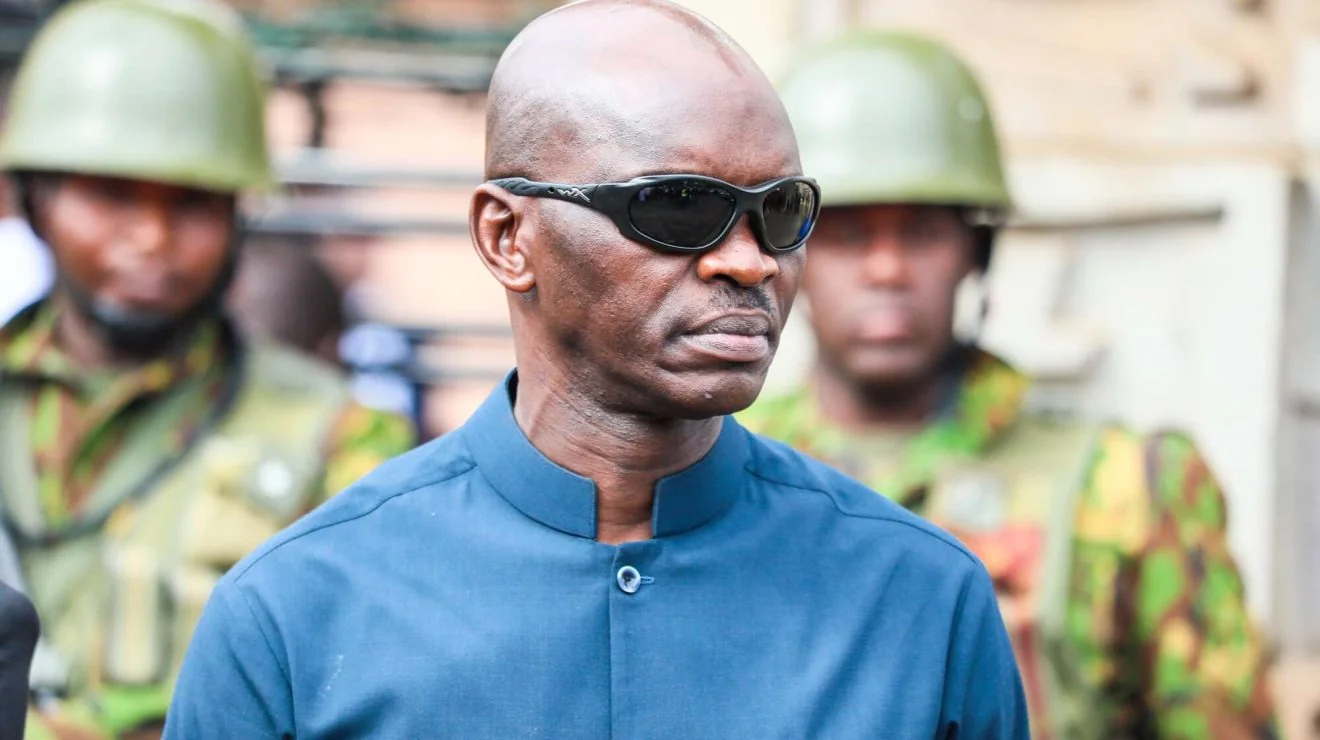
“I walked out to the reception. I found six tall, huge black men. Everyone was in a suit. Then I went back and asked my boss whether he was expecting anybody. I had not even finished the statement when he panicked,” Ogeta recalled.
He stated he rushed back to find Raila in a corner of the sauna, apparently concerned about the visitors.
Ogeta then helped him prepare to leave the facility, providing him with a tracksuit and a cap before they headed towards an exit.
Despite the tension, Ogeta remembered a humorous moment as they passed through the hotel kitchen, where fruit platters were being prepared for guests.
“He had panicked, but strangely enough, when we were passing the kitchen, he did something so funny. This is a production area, so there were some fruit platters being arranged for the guests. He just picked a fruit from there and started eating it as we were going down,” Ogeta recalled.
Raila's long-time bodyguard described how he diverted the visitors by directing them to Room 1607, which he said did not exist at the hotel.
The men reportedly went looking for the fictitious room, allowing Ogeta to escort Raila through an emergency exit reserved for hotel staff.
He then placed Raila in a taxi and arranged for him to return to Parliament, later informing the politician’s driver about the incident.
The encounter became the beginning of a close working relationship, with Ogeta accompanying Raila through decades of political campaigns, public rallies and other defining moments in Kenya’s political history.
Raila later served as prime minister between 2008 and 2013 under a power-sharing arrangement with former President Mwai Kibaki following the disputed 2007 presidential election. He also contested the presidency in 2013, 2017 and 2022, having first run in 1997.
The politician died in India on October 15, 2025, aged 80, while receiving medical treatment.
His death ended a political career spanning several decades and left behind a legacy shaped by the struggle for multiparty democracy, constitutional reform and opposition politics.
Nearly a year later, Ogeta says he continues to struggle with the absence of the man he served for 29 years.
In an interview, he described how familiar telephone calls and everyday routines sometimes leave him momentarily expecting Raila to contact him.
“Strangely enough, I think it has not yet registered. It is still bothering me a bit because, as late as last week on a Thursday, it still happens. At times I rush to my phone thinking that he has called, maybe I have missed the call,” Ogeta said.
He added that he sometimes begins preparing to go to work before remembering that the routine he shared with Raila has ended.
“I wake up, I am going to work. Then I ask myself, ‘Oh, where was I going to work?’ So it is there, in and out,” he added.
Ogeta also recalled that political songs and familiar ringtones continue to take him back to October 15, the day Raila died.
His recollections offer a glimpse into the personal relationship behind one of Kenya’s most recognisable political figures, showing how an unexpected encounter at a Nairobi hotel developed into a bond that endured for almost three decades.