
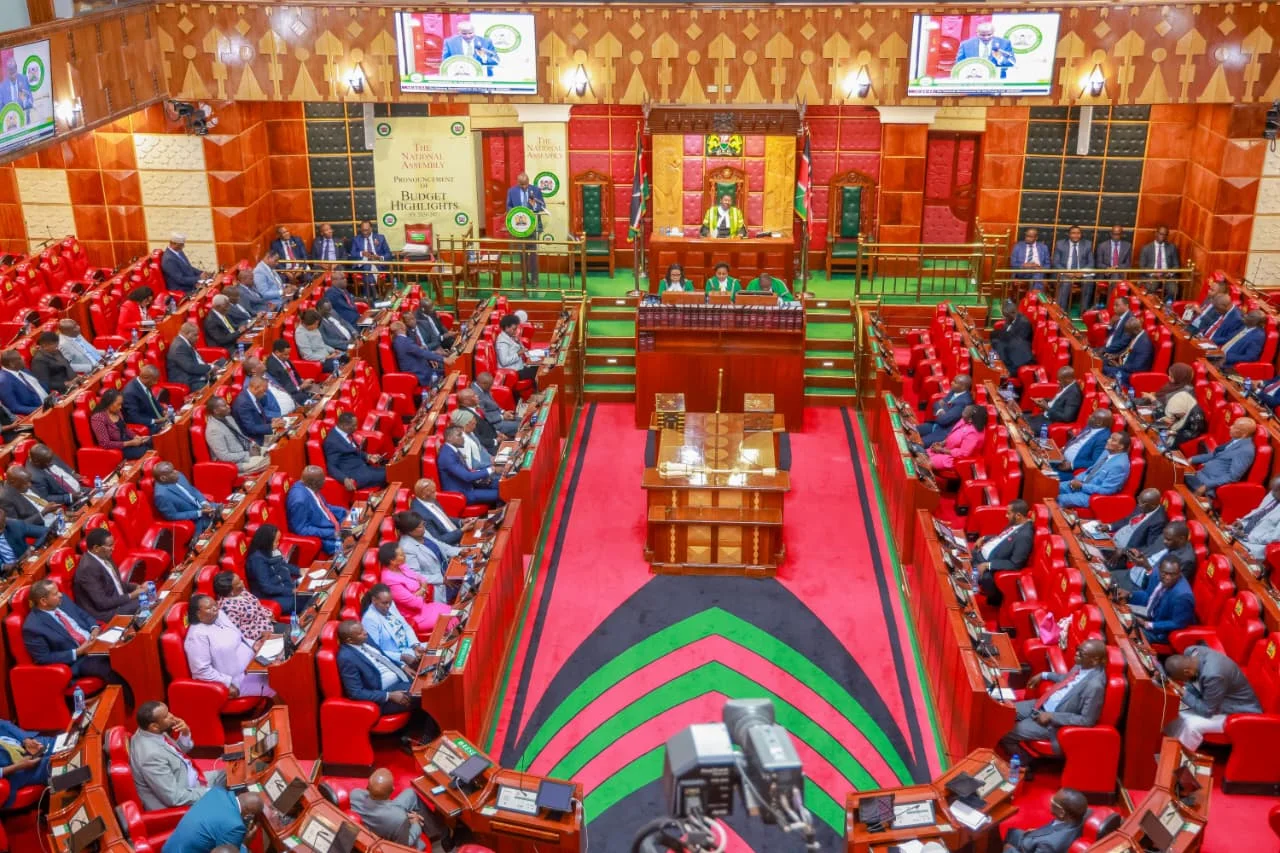
The British Army Training Unit Kenya (Batuk) has been granted a 12-month window to address concerns raised by Kenyan lawmakers, with Parliament warning that its training operations in Laikipia could come to an end if key legal and operational demands remain unmet.
The extension requires the Ministry of Defence to account to the National Assembly every three months on steps taken to settle disagreements surrounding the 2021 Kenya-UK Defence Cooperation Agreement (DCA), which is yet to be ratified.
In a progress report, the National Assembly’s Defence, Intelligence and Foreign Relations Committee outlined the conditions governing Batuk’s continued operations, including changes to the defence pact, regular updates on negotiations with the British government and compliance with designated training zones.
The committee said the additional year should be used to resolve the outstanding matters, cautioning that Batuk’s licence would no longer be valid once the period lapses if the required progress has not been made.
Among the key demands is the amendment of Articles 6(5) and 23 to address gaps in the agreement concerning criminal jurisdiction and the unit’s responsibility towards communities affected by its activities.
Lawmakers want murder expressly included among the offences that Kenyan courts can handle, alongside the introduction of a corporate social responsibility component in Batuk’s operations.
Under the existing provisions, certain serious crimes are excluded from the definition of conduct performed in the course of official duty, allowing Kenya to exercise primary jurisdiction over those offences. Murder, however, is not covered by the same exclusion, leaving room for the UK to claim jurisdiction in such cases.
The proposed changes are intended to close that gap and address concerns about accountability for alleged offences involving British soldiers stationed in Kenya.
Committee vice-chairman Major (Rtd) Bashir Abdullahi, who represents Mandera North, said the extension would allow military cooperation between the two countries to continue as efforts to resolve the disagreements proceed.
He said the committee had consulted government departments and British officials in pursuit of a solution to the issues that have delayed the agreement’s ratification.
"We had three important engagements with different stakeholders that included the Ministry of Defence, the Ministry of Foreign Affairs and the Attorney General. Later we met with the UK minister of State of Defence on the outstanding issues and we covered good grounds," he said.
National Assembly Majority Leader Kimani Ichung'wah also stressed that the decision to extend Batuk’s licence should not be interpreted as Parliament abandoning concerns over alleged crimes against residents of Laikipia.
The committee further insisted that the proposed amendments to Articles 6(5) and 23, which appeared in the 2015 DCA, were non-negotiable. It warned that the provisions could be dropped when the 2021 agreement takes effect if the necessary changes are not secured.
Lawmakers have also set a deadline for addressing all reservations contained in a committee report adopted in December 2024, directing that the outstanding concerns be resolved within the additional year.
Batuk must meanwhile restrict its training activities to designated areas throughout the extension period. The committee warned that any violation of this requirement would jeopardise the possibility of another extension.
It also ruled that the unit should not receive any further licence renewal unless Parliament’s resolutions have been implemented and the unresolved issues settled.
Batuk’s operations in Kenya are currently governed by a defence cooperation agreement ratified in 2016. A replacement pact was presented to Parliament in September 2021, but the 12th Parliament’s term ended before the document could be approved.
The agreement was brought back before lawmakers in November 2022. Its ratification was subsequently recommended on condition that Articles 6(5) and 23 were revised to address Parliament’s concerns.
The prolonged dispute has been accompanied by complaints from Laikipia County about the alleged effects of Batuk’s activities on local residents and the environment.
One of the incidents cited was a fire at Lolldaiga Hills Conservancy that destroyed approximately 12,000 acres of forest. The county has also raised concerns over the killing of Agnes Wanjiru, whose body was discovered in a septic tank.
Wanjiru’s death has remained a key issue in wider calls for accountability and changes to the legal framework governing British military personnel in Kenya.
In May 2024, Parliament opened an inquiry into allegations of misconduct by Batuk personnel, possible human rights violations and concerns over the safety of the unit’s operations.
A report tabled last year found UK soldiers responsible for sexual abuse, abuse of power, unethical conduct and human rights violations. It also cited cases of disregard for court orders.
The latest decision gives Kenya and the UK more time to continue their defence partnership while working through the concerns raised by Parliament. However, the committee has made clear that the extension is conditional rather than an unconditional approval for Batuk to continue operating.
The Defence Ministry is expected to demonstrate progress through its quarterly reports, while the proposed legal amendments, implementation of parliamentary resolutions and observance of approved training boundaries will determine whether the unit can continue operating in Laikipia beyond the one-year period.