
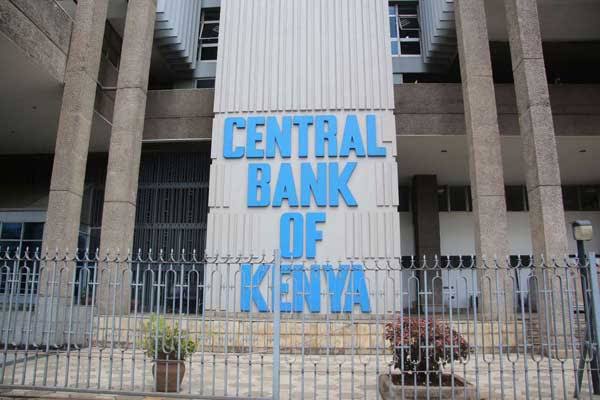
The recovery in borrowing is gathering pace, with households and businesses taking up more credit as continue to lower the cost of loans. Data from the Central Bank of Kenya (CBK) shows private sector lending growth reached 10.6 percent in June 2026 before easing slightly to 10.2 percent in July, marking the strongest performance in 28 months.
The latest figures point to a major improvement in credit activity compared with the contraction recorded early last year. In January 2025, lending to the private sector had declined by 2.9 percent, but demand has since picked up as interest rates have come down.
"Growth in commercial banks' lending to the private sector remained strong at 10.2 percent in July 2026 and 10.6 percent in June 2026 compared to a contraction of 2.9 percent in January 2025" the CBK said in a statement.
The central bank attributed the increase partly to stronger borrowing across important areas of the economy. Trade, agriculture, building and construction and consumer durables were among the sectors that recorded strong demand for loans.
"Growth in credit to key sectors of the economy, particularly trade, building and construction, agriculture and consumer durables, remained strong, reflecting improved demand for credit in line with the decline in lending interest rates."
The rise in lending has come alongside a steady fall in the rates charged by commercial banks. The average lending rate dropped to 14.3 percent in July from 14.4 percent a month earlier and 17.2 percent in November 2024.
The lower rates have followed a series of reductions in the CBK's key policy rate since August 2024. The regulator has used the cuts to make credit more affordable and encourage banks to increase lending to the private sector.
However, the CBK has now paused the rate cuts, leaving the Central Bank Rate at 8.75 percent for the third MPC meeting in a row. The benchmark was last reduced in February 2026, when it was brought down from a previous high of 13 percent.
The decision to maintain the rate comes at a time when the central bank is closely watching developments in the Middle East and their possible effect on commodity prices. The uncertainty surrounding the US-Israel war against Iran has raised concerns over the direction of prices, particularly as higher fuel costs continue to affect the domestic economy.
Inflation increased marginally in July, reaching 6.5 percent compared with 6.4 percent in June. The CBK linked the increase mainly to higher transport costs.
Despite the rise, inflation remains within the regulator's target range of 2.5 percent to 7.5 percent. The CBK expects price growth to remain within the band if the Middle East conflict eases in the near term.
The conflict has already pushed up domestic petroleum prices, adding pressure on consumers and businesses while increasing the cost of imports. The higher fuel bill has contributed to a widening current account deficit, while a decline in diaspora remittances has also added pressure.
The shilling, however, has continued to remain stable, helped by adequate official foreign exchange reserves. At the same time, business expectations remain positive, with surveys among chief executives and financial markets pointing to continued optimism about economic activity over the coming 12 months.
Businesses have nevertheless continued to point to global uncertainty as a concern even as they maintain positive expectations for growth.
The banking sector has also recorded an improvement in the performance of its loan book. Non-performing loans as a share of gross loans fell to 14.6 percent in July, compared with 15.4 percent in April and 17.6 percent in August last year.
The decline in bad loans comes as banks increase lending to households and companies, giving lenders a stronger base as demand for credit improves.
The CBK said the current policy position remains suitable for supporting economic activity while keeping inflation and exchange rate expectations under control.
"Having considered these developments, the Committee concluded that the current monetary policy stance, with the Central Bank Rate unchanged at 8.75 percent, remains appropriate to ensure that inflation expectations remain anchored within the target range, and the exchange rate remains stable, CBK added.
The decision to retain the benchmark rate was largely expected after commercial banks indicated last week that they saw little reason for another adjustment. Inflation remains above the five percent midpoint of the target but is still below the upper limit of 7.5 percent.
With commercial lending rates continuing to fall, the latest figures suggest that households and businesses are responding to cheaper credit, helping private sector borrowing regain momentum after the sharp slowdown seen last year.