
Kenya could soon turn its leather industry into a major source of locally made footwear, with President William Ruto saying the country should be ready to stop importing shoes within the next two to three years.
Ruto on Thursday said the government was pushing for more Kenyan leather to be processed and turned into finished products locally, rather than relying on imports for goods that can be manufactured in the country.
"I want to assure you that in a very short time — I don't want to give you a time frame — but in the next two to three years, we will not be importing shoes from anywhere. We will be making shoes, and all these leather products," Ruto said.
He said eight companies were already using Kenyan leather to manufacture products, describing the development as part of efforts to expand local production and increase the value gained from the country's raw materials.
However, Ruto said local manufacturers still needed to address the quality of their products before they could fully compete with imported footwear.
"I'm just waiting for the manufacturers to improve on their quality," he said.
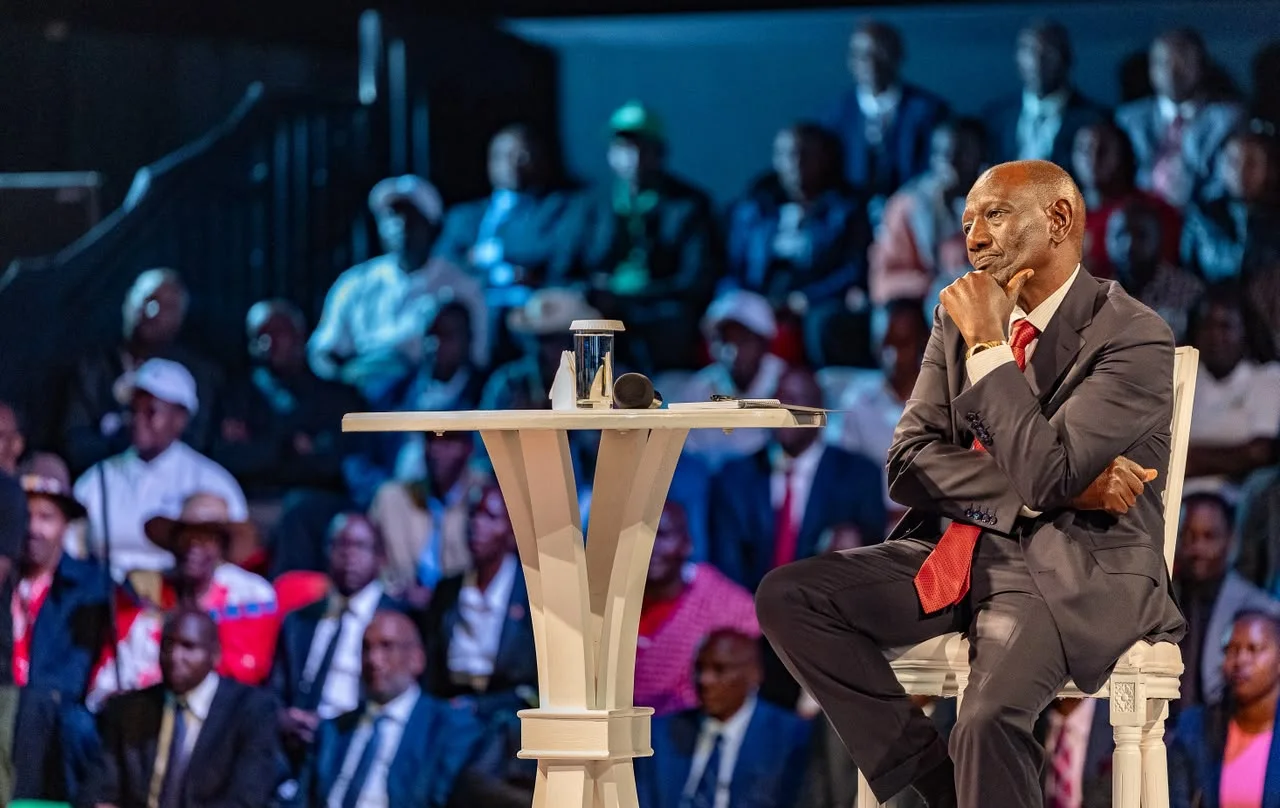
The President made the remarks on Thursday during the Agriculture and Food Security town hall at Jamhuri Park in Nairobi, where he discussed the government's plans to expand value addition and strengthen the connection between agriculture and manufacturing.
He said Kenya needed to move beyond exporting raw materials and instead develop industries capable of processing them into finished goods within the country.
The leather industry, he said, offers an opportunity to achieve this by creating a market for locally produced hides and skins while supporting manufacturing and employment.
Ruto also pointed to the footwear supplied to uniformed officers as an area where Kenya could rely more heavily on local manufacturers.
"For all our uniformed officers, all the boots that we are importing from China, and I don't know where, we want to make them here," Ruto said.
He said increasing domestic production would allow Kenyan businesses to benefit from the country's raw materials while keeping more economic value within the country.
The President linked the planned expansion of leather manufacturing to the wider government programme on agricultural value addition, which seeks to encourage more processing before Kenyan products reach local and international markets.
He cited the tea industry as another area where the government wants to see more processing carried out locally. According to Ruto, Kenya has for a long time exported tea without enough value being added to the product before it leaves the country.
He said the government was now encouraging companies to invest in local tea processing as part of efforts to change how Kenya handles its agricultural products.
The same approach, he said, should apply to leather, with locally available raw materials feeding domestic industries instead of being shipped out with limited processing.
Ruto said a stronger manufacturing sector would also benefit farmers by creating demand for agricultural products and providing more opportunities across the production chain.
His comments form part of a broader government push to use agriculture as a foundation for industrial growth, with local industries expected to process more of the raw materials produced by Kenyan farmers.
The President said greater value addition would help Kenya develop industries around its own resources while creating jobs and expanding opportunities for local manufacturers.
The planned shift in footwear production is therefore tied to a wider effort to reduce dependence on imported finished goods and build stronger local industries capable of turning Kenyan raw materials into products for the domestic market.