
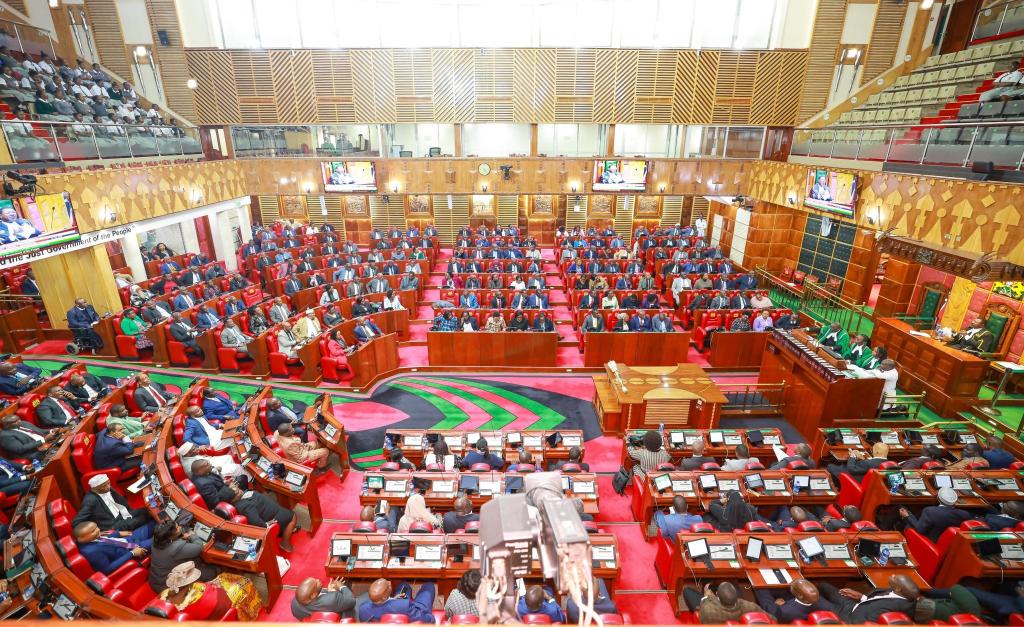
The push to retain university degrees as a prerequisite for candidates seeking parliamentary and county assembly seats has put the National Assembly and Senate on a collision course, with senators seeking to overturn a decision by MPs despite the provision having already been enacted into law in the past.
The dispute is unfolding as Parliament considers the Elections (Amendment) Bill 2024, which is expected to address several electoral issues ahead of the August 10, 2027 General Election.
While the National Assembly voted to retain the degree qualification for those seeking MP and MCA positions, the Senate's Justice, Legal Affairs and Human Rights Committee wants the provision scrapped.
In a report tabled on November 11, the committee, chaired by Bomet Senator Hillary Sigei, urged the Senate to reject the National Assembly's amendment, arguing that the requirement had previously been declared unconstitutional by the courts.
The committee cited judicial decisions which found that imposing university qualifications on candidates seeking elective positions violated constitutional guarantees on political participation and equality.
“The committee took note of key judicial decisions that declared the degree requirement for various elective positions as unconstitutional for unjustifiably limiting the political rights of all citizens and equality guarantees under Articles 38 and 27 of the constitution,” the report states.
The senators argued that requiring candidates to hold university degrees would unfairly shut out Kenyans who lack the financial resources to pursue higher education, limiting access to political leadership.
“While parliament may impose academic qualifications for candidates for elective office, the same must not extend beyond what the State is mandated by the constitution to provide to every child,” the committee stated.
“The committee therefore resolved to recommend that the Senate rejects the National Assembly amendment to the Bill,” it added.
The disagreement could send the Bill into mediation between the two Houses, potentially delaying the enactment of electoral changes as the country prepares for the 2027 elections. The delay could also complicate preparations by the Independent Electoral and Boundaries Commission (IEBC), which will need clarity on the legal framework governing the polls.
Under Article 112(1) of the Constitution, if the House that originated a Bill accepts amendments made by the other House, the Speaker is required to forward the legislation to the President for assent within seven days. If the amendments are rejected, the Bill is referred to a mediation committee, which is required to produce a negotiated version within 30 days for consideration by both Houses.
The Senate committee also relied on Article 53(1)(b) of the Constitution, which guarantees every child free and compulsory basic education, covering primary and secondary schooling, arguing that mandatory university qualifications go beyond the level of education guaranteed to all citizens.
Section 22(1)(b) of the Elections Act provides for a university degree as a requirement for candidates seeking election as MPs or MCAs.
The provision was first approved by the 10th Parliament but was rejected by the late President Mwai Kibaki when it was presented for assent. Parliament later revived the requirement during the 11th Parliament, passed it and secured presidential approval, with its implementation deferred to 2022 to give those without degrees time to acquire them.
The law was subsequently challenged in court, with judges finding the requirement unconstitutional in separate cases involving candidates seeking parliamentary and county assembly positions.
In a 2021 petition filed by the County Assembly Forum, the High Court ruled that the degree requirement for MCA candidates “prejudiced the rights and fundamental freedoms of those who were not able to directly acquire or afford university degrees.”
In a separate case filed in 2022 by Paul Macharia Wambui, the court declared the requirement for a university degree as a precondition for nomination to contest for an MP seat unconstitutional.
Another ruling faulted the provision for treating academic qualifications for elective positions uniformly despite the differences in responsibilities, remuneration and benefits between MCAs and county governors, finding that the approach violated several constitutional provisions.
The Elections (Amendment) Bill, which emerged from the National Dialogue Committee process, had proposed deleting the provision to align the law with the court rulings. However, the National Assembly retained the requirement in its amendments, prompting the Senate's latest push to remove it.