
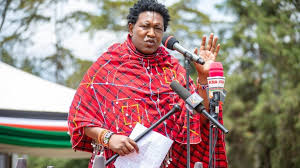
Narok Senator Ledama Olekina has called for sweeping changes to Kenya’s election campaigns, proposing a two-month limit on political activities, a ban on public rallies and fundraising, and a complete blackout on political media coverage to push leaders to focus on development.
Olekina argued that the culture of continuous political mobilisation has taken root at the expense of governance, with politicians spending too much time addressing rallies and pursuing political interests instead of delivering services to the public.
In a statement shared on his X account on Tuesday, the senator criticised leaders for repeatedly organising political gatherings outside formal campaign periods, accusing them of taking advantage of gaps in existing regulations.
He also faulted the institutions responsible for overseeing electoral activities, including the Independent Electoral and Boundaries Commission (IEBC) and the courts, for what he described as their failure to stop the practice.
“Let’s stop being hypocrites: the endless political rallies we stage are nothing but a theater of lies forced upon Kenyans. We shamelessly exploit every legal loophole while the IEBC and courts toothlessly look the other way,” Olekina stated.
The senator said Kenya needed a firm approach to end what he considers excessive campaigning, proposing measures that would restrict the time available for political mobilisation and limit the platforms leaders use to reach voters.
“We need someone with the balls to completely outlaw this perpetual campaigning. My proposal: •Limit campaigns to a maximum of 2 months •Ban all public rallies and fundraising •Enforce a total political media blackout,” he said.
Under his proposal, candidates would be allowed no more than two months to campaign before an election. Public political rallies and fundraising activities would also be prohibited, alongside a complete blackout on political media coverage.
However, Olekina did not explain how the proposed restrictions would be enforced or whether he planned to introduce a Bill in Parliament or formally present the proposals to the IEBC.
If adopted, the measures would bring major changes to Kenya’s campaign environment, where political gatherings and media appearances are widely used by candidates to promote their agendas, criticise rivals and build support among voters.
Political rallies remain a common feature of the country’s political landscape, providing leaders with opportunities to engage supporters, strengthen grassroots networks, announce political positions and demonstrate their influence. They also allow politicians to build alliances and raise their profiles ahead of elections.
However, the frequency of such gatherings has drawn criticism from those who believe political mobilisation consumes time and resources that could otherwise be directed towards public service and development projects.
Olekina maintained that restricting campaigns would help redirect the attention of both leaders and citizens towards everyday concerns rather than the repeated political arguments that often dominate public debate.
“It will be boring, but it forces Kenyans to focus on real life and forces politicians to actually do their jobs. Right now, we are trading development for empty rhetoric,” he maintained.
His proposal comes as political leaders across the country increasingly use public meetings to mobilise supporters, promote their positions and establish alliances ahead of the 2027 General Election.
The senator’s remarks have brought renewed attention to the tension between prolonged political campaigning and the responsibility of elected leaders to deliver on their mandates. His suggestions also raise questions about how restrictions on political rallies and media coverage would affect the public’s access to political information and the right of leaders to express themselves.
Although Olekina did not outline a formal plan for implementing the proposed changes, his comments point to his dissatisfaction with the current political culture and the time devoted to election-related activities.
He ended his statement with a sharp criticism of what he described as dishonesty among political leaders, linking the conduct of politicians to the wider challenges facing the country.
“If there is a heaven, the day we stop lying is the day God finally listens. Until then, make no mistake, hell awaits us all.”