
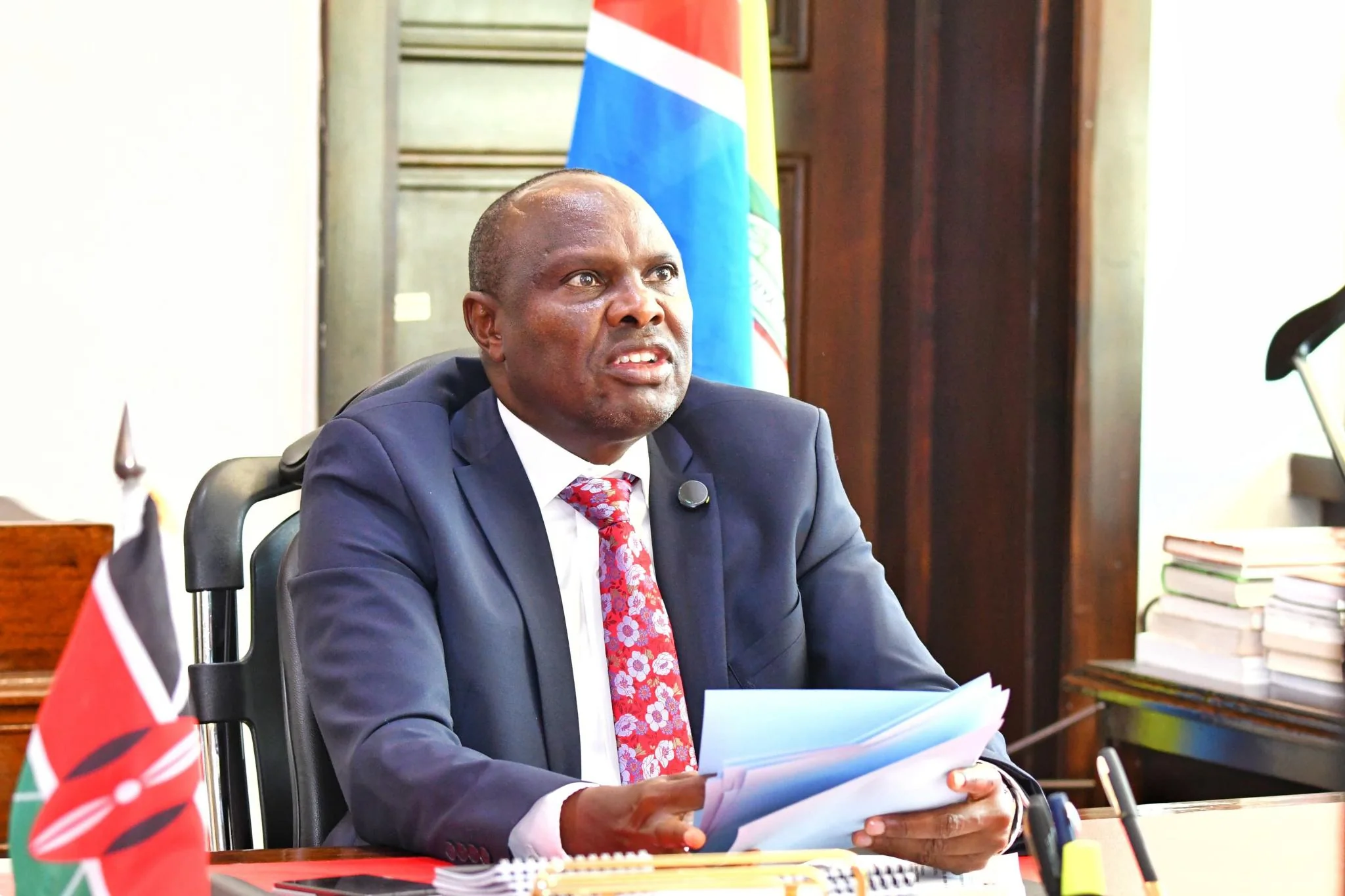
The government has given state agencies just 30 days to come up with a coordinated plan to fight corruption at the Port of Mombasa, as it seeks to eliminate bribery, tighten controls on cargo handling and make trade procedures faster and more transparent.
Chief of Staff and Head of Public Service Felix Koskei announced the deadline on Tuesday during a meeting in Mombasa convened to address corruption threats, including embezzlement and money laundering, within the port's operations.
The agencies are expected to propose practical measures to simplify customs procedures, improve coordination among border authorities and ensure officers are held responsible for decisions made while performing their duties.
Koskei said the action plan should turn recommendations from a September 2025 workshop in Arusha into specific reforms, with each agency assigned clear duties, expected outcomes and timelines for implementation.
He said the proposed changes should make it easier for traders to access legitimate services without being subjected to bribery, while reducing unnecessary delays in the movement of goods through the port.
“The plan will also address standards for clearing agents and rules governing cargo consolidation and transhipment, alongside efforts to improve oversight and strengthen accountability within customs operations,” he said.
The government will also require the participating agencies to submit a progress report after six months to establish whether the measures are producing results.
The review will focus on the time taken to clear cargo, complaints resolved, the effectiveness of controls against identified risks and the steps taken to implement audit recommendations.
Koskei said the importance of cleaning up port operations extends beyond the facility itself, given its role in linking Kenya and the wider region to international markets.
He noted that the efficiency of the Port of Mombasa has a direct bearing on farmers, traders, manufacturers and consumers, particularly through the timely delivery of goods, access to markets and the cost of doing business.
He added that safeguarding the port against corruption would contribute to Kenya's development goals under Vision 2030 and support economic growth beyond the programme.
To achieve these objectives, Koskei called for improvements to digital trade and customs systems, saying the processes should enable quicker cargo clearance, reduce unnecessary administrative steps and make official decisions easier to track.
He urged agencies to eliminate duplicate documentation requests, coordinate inspections and ensure that officers can explain and account for their decisions.
Koskei warned that bribery and delays affect people's livelihoods, while the evasion of duties deprives the government of money needed to provide essential services.
He also pointed to the Zero Fault Audit Campaign as a tool for strengthening accountability across government institutions, urging agencies to identify weaknesses, prevent irregularities and implement recommendations arising from audits.
The campaign is expected to encourage public institutions to address problems before they escalate and improve compliance with established procedures.
Koskei reiterated that traders must be able to obtain services they are legally entitled to without paying bribes, stressing the need to improve integrity throughout the port's operations.
He further called for closer collaboration between customs officials and law enforcement agencies to identify illegal financial transactions, trace those benefiting from illicit activities and recover assets when supported by evidence.
“Closer cooperation between customs and law enforcement agencies must help detect illicit transactions, trace beneficiaries and recover assets where evidence warrants, in line with the United Nations Convention against Corruption,” he said.
The consultation brought together government representatives, anti-corruption agencies, development partners and private sector players to examine weaknesses in port operations and discuss ways to address corruption risks associated with bribery, embezzlement and money laundering.
The three-day meeting, running from October 12 to 14, 2026, was convened by the United Nations Office on Drugs and Crime (UNODC) and the Kenya Revenue Authority (KRA), with support from the Government of the Kingdom of Norway.
The discussions are aimed at developing a coordinated approach to improving service delivery, strengthening oversight and protecting the integrity of one of the country's key trade gateways.
The agencies' proposed actions will form the basis for the six-month review, which is expected to assess progress in reducing cargo clearance delays, resolving complaints and strengthening controls over customs operations.