
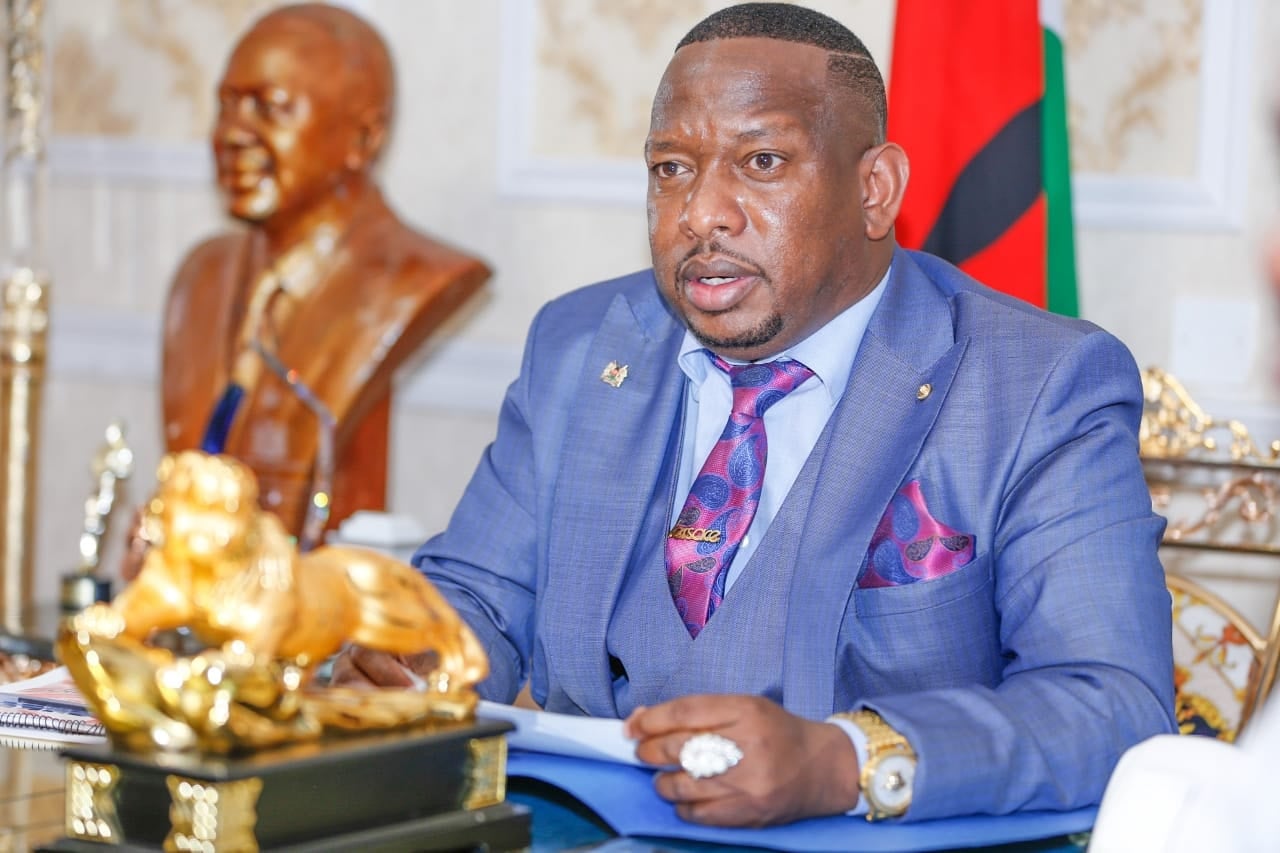
Former Nairobi Governor Mike Sonko has mounted a fresh challenge against the Supreme Court, questioning why it is now seeking guidance on whether impeached State officers can vie for elective seats while their appeals are still pending, despite having already settled the issue in his own case.
The former governor says the latest developments, together with what he describes as new evidence surrounding the handling of his appeal, have prompted him to prepare a bid to have the court revisit its decision.
In a detailed statement , Sonko accused the apex court of sending conflicting signals by seeking an advisory opinion from Attorney General Dorcas Oduor on an issue he believes was conclusively determined when the court upheld his impeachment.
“My question to the Supreme Court, and specifically to the Chief Justice, is this: why seek an advisory opinion from Attorney General Dorcas Oduor on whether impeached State officers can contest elections while their legal challenges are still pending, when the Supreme Court had already made a determination on my impeachment? More importantly, why seek such an advisory when the Chief Justice had already publicly stated, days before ruling on my appeal, that once a governor is impeached, they remain impeached?” Sonko said.
The former governor also revisited events before the Supreme Court delivered its July 2022 judgment, saying remarks made by then Chief Justice Martha Koome while the case was still pending raised concerns about whether the matter had already been decided.
According to Sonko, the Chief Justice stated during an interview on Spice FM that once a governor is impeached, they remain impeached. He said those comments led him to formally request that she step aside from hearing his appeal because they created the appearance of bias, but the application was rejected.
“While my appeal was still actively before the Supreme Court, the Chief Justice publicly stated in an interview on Spice FM that once a governor is impeached, they remain impeached. Since the matter was still pending before the court, I believed those remarks created the perception that the outcome had already been determined. I therefore wrote requesting that she recuse herself from the case, but she declined and went on to participate in the judgment. That raises a fundamental question for me: was the verdict on my appeal already predetermined?” he said.
Sonko also questioned how his appeal was handled in the days leading up to the judgment.
He recalled that on July 13, 2022, the High Court in Mombasa ruled that because his appeal before the Supreme Court had not been concluded, he had not exhausted all legal remedies and could therefore be cleared by the Independent Electoral and Boundaries Commission to contest the Mombasa gubernatorial seat.
He said that while he was still attending the High Court proceedings that day, the Supreme Court directed him to file submissions in his impeachment appeal by the following day. According to Sonko, his legal team informed the court that they were engaged in another case and sought the period normally allowed under court procedures, but the matter still proceeded after the court acknowledged an error in the timelines.
“What I find most troubling is what happened on July 13. While I was before the High Court in Mombasa throughout the day, the Supreme Court issued directions requiring me to file submissions in my impeachment appeal by July 14. My legal team explained that we were engaged in another court proceeding and requested the time ordinarily provided under court procedure. Although the court acknowledged there had been an error in the timelines, it nonetheless proceeded with the matter,” Sonko said.
The former governor further maintained that his impeachment was politically influenced. He claimed some of the leaders who moved and seconded the impeachment motion have since publicly distanced themselves from the process, saying they acted under pressure, which he argues casts doubt on the credibility of the proceedings.
He also referred to a judgment by the East African Court of Justice, saying it identified procedural flaws in the handling of his case. According to Sonko, the regional court found that parts of the judicial process violated his constitutional right to a fair hearing and fell short of the principles of good governance, accountability and the rule of law under the East African Community Treaty.
Sonko said the issues he is raising go beyond his impeachment and touch on public confidence in the justice system and the independence of the courts.
“My questions to the Supreme Court remain simple: Why were public comments made on a matter that was still pending before the court? Why was my request for recusal declined? Why was I given only hours to file submissions instead of the time ordinarily provided? Why was there such urgency in concluding my appeal while my eligibility to contest the Mombasa governorship was before another court? And now, why is the Attorney General being asked to issue an advisory opinion on a question that the Supreme Court had already pronounced itself on in my case?” he posed.
Sonko said he is now preparing to seek a review of the Supreme Court judgment, adding that he intends to work with legal experts, constitutional scholars and members of the public in what he believes could shape future decisions on the impeachment of elected leaders in Kenya.